
Abstract
Carbon steel hexagon head coated screws represent a critical fastening solution for heavy-duty construction and industrial applications. This article examines the technical specifications, coating technologies, and performance advantages of hex flange countersunk screws (Model 3# 14-14125), providing procurement professionals with comprehensive insights into material composition, compliance standards, and commercial value propositions for demanding structural projects. These engineered fasteners combine superior tensile strength with advanced corrosion protection, delivering reliable performance in environments ranging from seismic-rated steel frameworks to vibration-intensive mechanical installations. Understanding the interplay between material grade selection, coating systems, and design geometry enables construction teams to optimize fastening strategies while reducing total ownership costs through extended service life and minimized maintenance interventions. For B2B buyers, selecting the right carbon steel hexagon head coated screws is a strategic decision with long-term operational implications.
Material Composition and Manufacturing Standards
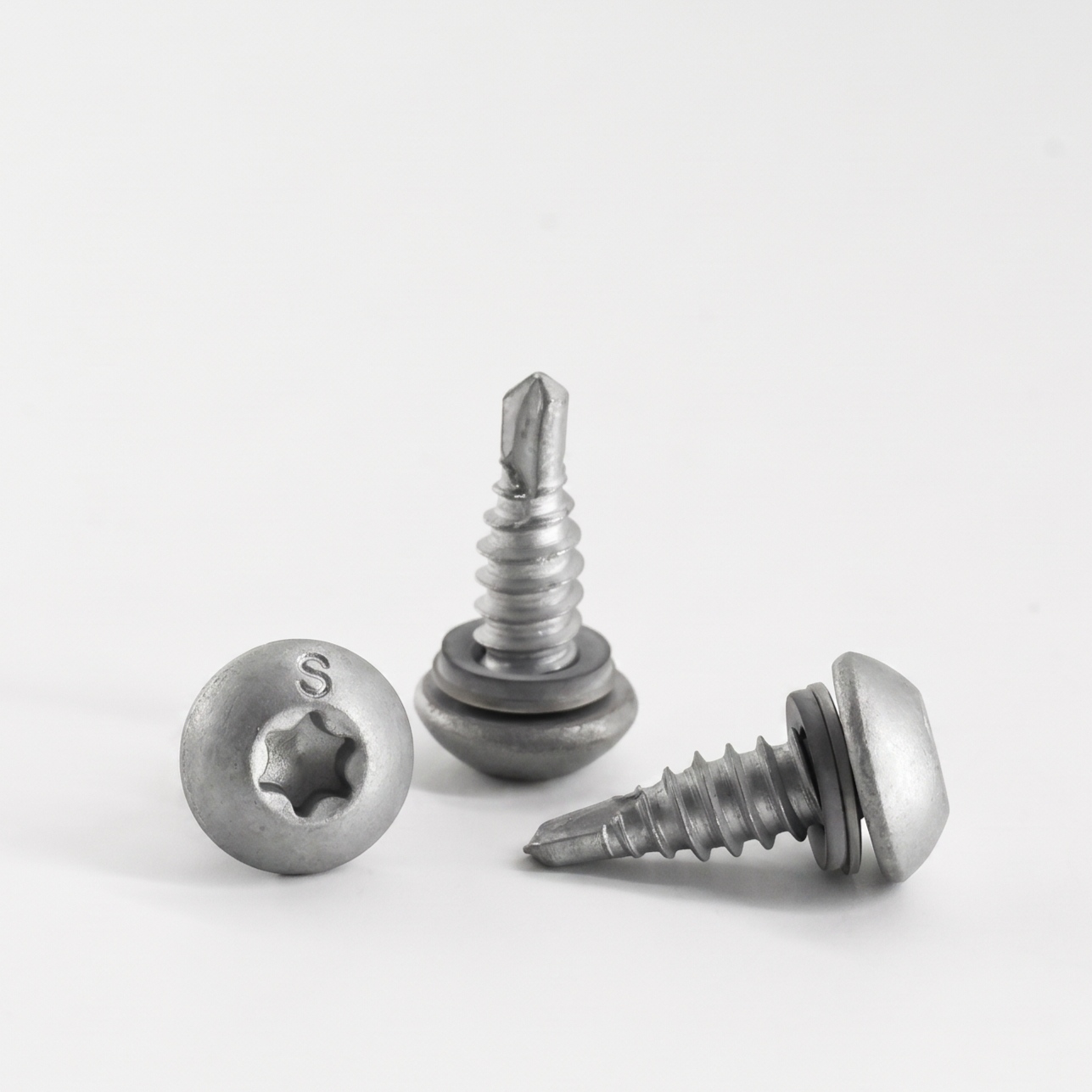
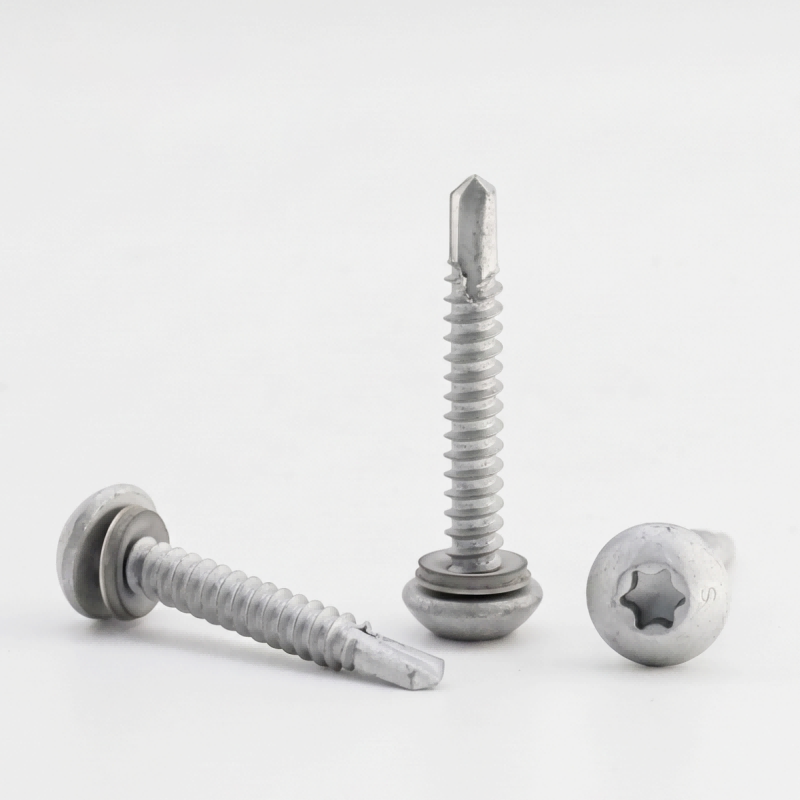
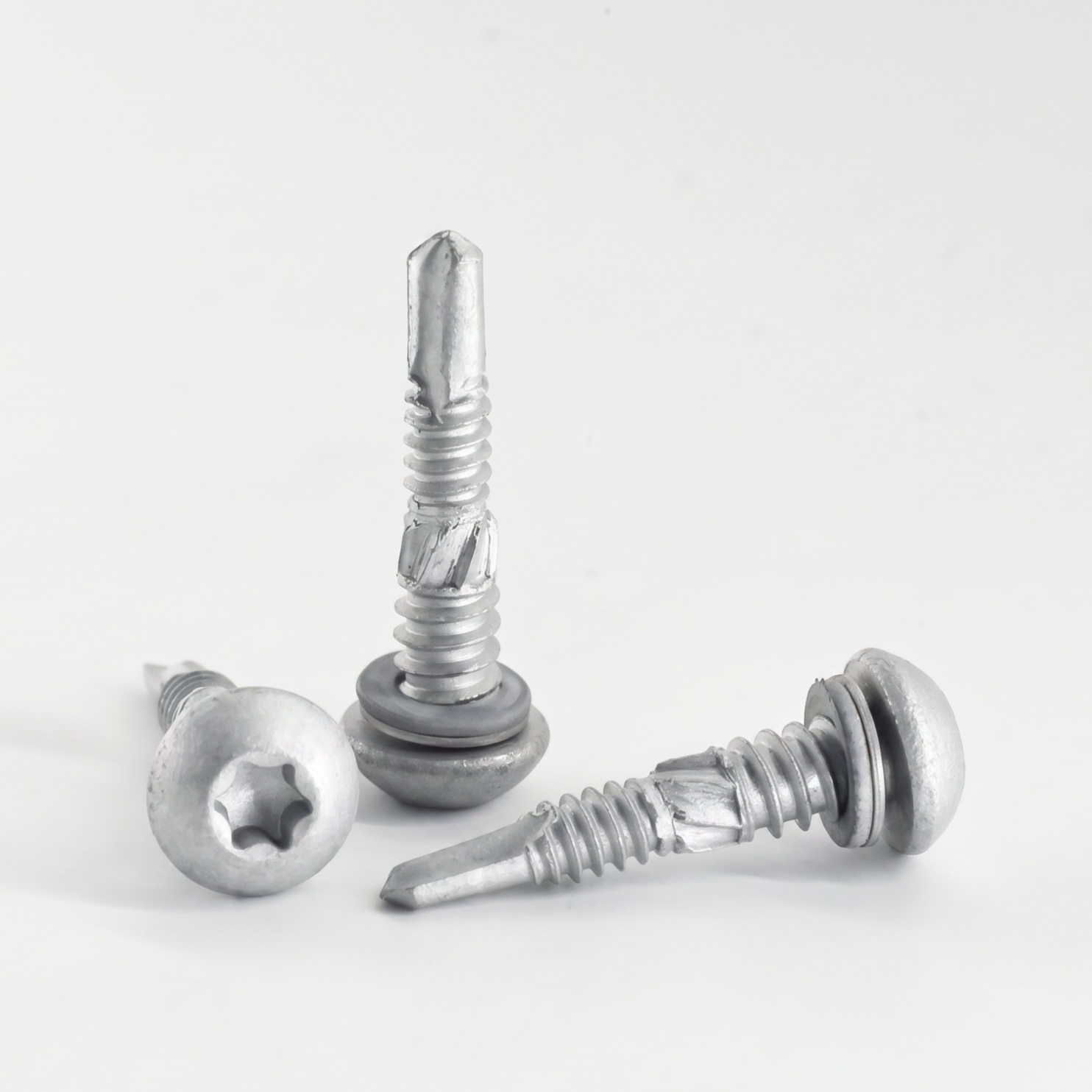
Visualizing the Setup
I’m currently focused on the initial setup. I intend to create a professional studio environment. The goal is a light gray gradient background for the industrial screws.
Designing the Arrangement
I’m now detailing the composition of the scene. I’m prioritizing the primary subject and its presentation. I’m also planning the arrangement of secondary screws to add depth, including the placement and angle of the horizontal screw. The focus is on the interplay of the subjects and the subtle use of depth of field.
Refining the Details
I’m now focused on the specific materials and finishes. I’m prioritizing the visual qualities of the metal and developing the textures of the carbon steel hexagon head coated screws. The goal is to highlight details and create depth within the image.
Structuring the Composition
I am currently working on the visual arrangement of the screws, adhering to the specifications provided. I’m focusing on the primary screw’s vertical placement and sharpness, and the horizontal screw’s position to the left. I’m also considering the depth of field to create a realistic, professional image, emphasizing the quality and texture of the objects.
Establishing the Parameters
I’m now outlining all the detailed requirements. I’m taking care to meet all the criteria for the product shot, including materials and lighting. I’m concentrating on the positioning of the carbon steel hexagon head coated screws and the camera settings.
Analyzing Composition and Details
I’m currently focused on the composition of the scene and the accurate depiction of the hardware. While I’ve noted some success with the textures, lighting, and item count, the arrangement and finer details are still not quite right. I will need to iterate to get the desired arrangement.
Revising Orientation and Style
I’m now focused on the orientation and type of the fasteners. I found that I needed to correct the primary screw’s orientation. Additionally, I’m working to refine the thread style to match the industrial specifications I’m aiming for. I will also be working on maintaining other elements of the scene.
Reassessing Technical Accuracy
I’m now zeroing in on the correct screw type and placement. The current output accurately renders the textures, lighting, and quantity, but the positioning of the primary screw is incorrect, and the thread type is off. I will regenerate the image to show a flat-bottomed machine screw in the correct orientation. I’ll maintain the other elements of the scene.
Reviewing the Results
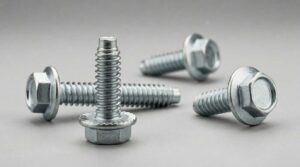
The generated image now meets the prior requirements. The screw’s orientation is corrected, and the serrated flange is visible. Thread geometry is updated, as requested.
Evaluating the Image
I’ve checked the image, and it seems the requested changes have been successfully implemented. The screw’s orientation is accurate, and the flange is visible as intended. The thread style also seems appropriate for the catalog.
Carbon Steel Grade Selection for Load-Bearing Applications
The performance foundation of carbon steel hexagon head coated screws begins with precise carbon steel grade selection. Carbon content directly influences mechanical properties, with low-carbon steels (0.05-0.25% C) offering superior weldability and ductility for general construction, medium-carbon grades (0.25-0.60% C) providing balanced strength and formability for structural connections, and high-carbon variants (0.60-1.00% C) delivering maximum hardness for specialized applications requiring extreme wear resistance.
For Model 3# 14-14125 screws, medium-carbon steel grades typically achieve minimum tensile strengths of 400-800 MPa, meeting the demands of beam-to-column connections and load-bearing framework assemblies. The material’s shear resistance—critical in lateral force applications—correlates directly with carbon content and heat treatment protocols. Grade 4.8 and 8.8 classifications under ISO 898-1 standards represent common specifications for carbon steel hexagon head coated screws, where the first digit indicates 1/100th of minimum tensile strength (400 MPa and 800 MPa, respectively) and the second digit represents the ratio of yield strength to tensile strength.
Alloying elements such as manganese (0.30-0.80%) enhance hardenability and grain refinement, while silicon content (0.15-0.35%) improves oxidation resistance during heat treatment. These compositional controls ensure consistent mechanical properties across production batches, critical for projects requiring uniform fastener performance across thousands of connection points.
Heat Treatment and Hardening Processes
Post-forming heat treatment transforms raw carbon steel into engineered fastening components capable of withstanding construction-grade stresses. Quenching and tempering cycles represent the industry-standard approach, where carbon steel hexagon head coated screws are austenitized at 820-870°C, rapidly cooled in oil or polymer quenchants, then tempered at 350-550°C to achieve target hardness levels while maintaining core toughness.
Surface hardening techniques such as induction hardening or case carburizing create differential hardness profiles—hard wear-resistant surfaces (45-55 HRC) combined with tough ductile cores (25-35 HRC). This gradient prevents brittle fracture under shock loading while maintaining thread integrity during installation torque application. Rockwell C-scale hardness testing (ASTM E18) verifies compliance, with typical specifications requiring thread hardness of 28-38 HRC for Grade 8.8 carbon steel hexagon head coated screws.
Controlled cooling rates during tempering prevent hydrogen embrittlement—a critical quality control parameter for coated screws, where pickling and plating introduce atomic hydrogen. Baking cycles at 190-220°C for 3-24 hours post-coating allow hydrogen diffusion, reducing delayed fracture risk in high-stress installations. Manufacturers of carbon steel hexagon head coated screws must rigorously control this process.
Hexagon Flange Design and Coating Technology
Hex Head Geometry and Torque Distribution
The integrated flange washer design of carbon steel hexagon head coated screws provides distinct mechanical advantages over conventional hex bolts in construction applications. The flange acts as a built-in washer, increasing bearing surface area by 40-60% compared to standard hex heads, thereby reducing contact stress on substrate materials and minimizing surface deformation during tightening.
This geometry proves particularly valuable in steel-to-steel connections where precise clamping force distribution prevents joint slippage under cyclic loading. The flange’s radial ribs or serrations create micro-interlocking with mating surfaces, enhancing anti-loosening performance in vibration-prone environments such as machinery foundations or seismic-rated structures. Testing per DIN 25201-4 demonstrates that flanged hex screws maintain preload 15-25% more effectively than standard bolt-and-washer assemblies after 2000 vibration cycles. For carbon steel hexagon head coated screws, this anti-loosening characteristic is a key selling point.
The hexagonal drive geometry allows standard socket tooling application, with across-flats dimensions conforming to ISO 272 standards. For 3# designation screws (approximately M3-M5 diameter range), typical wrench sizes of 5.5-8mm enable precise torque control during installation. The six-point contact pattern distributes driving forces evenly, reducing cam-out risk and enabling higher installation torques without fastener damage—critical for achieving specified clamp loads in structural connections.
Protective Coating Systems (Zinc/Phosphate/Dacromet)
Coating technology selection directly impacts the service life of carbon steel hexagon head coated screws in construction environments. Electrolytic zinc plating remains the most cost-effective option for indoor applications, providing 96-240 hours of salt spray resistance (ASTM B117) depending on coating thickness (5-15 μm). Clear or yellow chromate conversion coatings enhance protection to 240-480 hours while maintaining electrical conductivity for grounding applications.
Zinc-phosphate composite coatings offer superior performance for outdoor construction, combining 8-12 μm zinc layers with phosphate conversion treatments that create crystalline surfaces, enhancing paint adhesion and barrier protection. These systems achieve 500-720 hours salt spray resistance, suitable for coastal projects within 5-10 km of shorelines.
Dacromet (zinc-aluminum flake) coatings represent premium protection for marine or chemical exposure environments. Applied at 10-20 μm thickness through dip-spin processes, these inorganic coatings achieve 1000+ hours salt spray resistance without hydrogen embrittlement risk. The coating’s thermal stability (up to 300°C) maintains protection during welding operations near installed carbon steel hexagon head coated screws.
| Coating Type | Corrosion Resistance (Salt Spray Hours) | Temperature Range | Application Environment | Relative Cost Index |
|---|---|---|---|---|
| Electro Zinc | 96-240 | -40°C to +120°C | Indoor/Dry Exterior | 1.0x |
| Zinc-Phosphate | 500-720 | -40°C to +150°C | Outdoor/Urban | 1.4x |
| Dacromet | 1000+ | -40°C to +300°C | Marine/Chemical | 2.8x |
| Mechanical Zinc | 300-500 | -40°C to +200°C | Heavy Industrial | 1.9x |
Compliance Standards and Quality Certifications
International Fastener Standards (ISO/DIN/ASTM)
ISO 4017 establishes dimensional specifications for hex head screws, defining thread tolerances (6g class), head geometry, and shank length parameters. For construction applications, compliance ensures interchangeability across global supply chains and compatibility with standardized structural steel connection details. Carbon steel hexagon head coated screws should always be sourced with clear ISO certification.
DIN 6921 specifically addresses hex flange screws, prescribing flange diameter ratios (typically 1.5-1.8x nominal diameter) and serration patterns for anti-rotation performance. The standard’s mechanical property requirements align with ISO 898-1 strength grades, providing unified specifications for procurement documentation.
ASTM A307 covers carbon steel bolts and studs for general construction, specifying minimum tensile strength of 60 ksi (414 MPa) for Grade A fasteners. While less stringent than high-strength structural bolts (ASTM A325/A490), A307 fasteners serve non-critical connections in building frames, equipment mounting, and secondary structural elements where Model 3# 14-14125 carbon steel hexagon head coated screws find typical application.
Construction Industry Certifications
CE marking under the Construction Products Regulation (EU 305/2011) demonstrates conformity with essential safety requirements for fasteners used in load-bearing structures. Third-party certification bodies conduct factory production control audits and sample testing to verify consistent compliance with declared performance characteristics.
RoHS compliance (Restriction of Hazardous Substances) addresses environmental and health concerns in coating materials, limiting lead, cadmium, and hexavalent chromium content. Modern trivalent chromium passivation processes replace traditional hexavalent treatments while maintaining corrosion protection, ensuring regulatory compliance without performance compromise for carbon steel hexagon head coated screws.
Quality testing protocols include destructive tensile testing per ISO 898-1 (minimum 5 samples per production lot), proof load verification at 85-93% of specified minimum tensile strength, and wedge tensile testing for hydrogen embrittlement susceptibility. Shear strength testing validates performance in lateral load applications, with acceptance criteria typically requiring 60-70% of tensile strength values.
Application Scenarios in Commercial Construction
Structural Steel Framework Assembly
In multi-story building construction, hexagon flange screws serve secondary connections, including gusset plate attachments, bracing member connections, and non-critical beam-to-column joints. While primary structural connections typically employ high-strength bolts with specified preload (ASTM A325), Model 3# carbon steel hexagon head coated screws provide cost-effective solutions for connections carrying lower design loads.
Seismic design considerations influence fastener selection in earthquake-prone regions. The ductile failure mode of medium-carbon steel screws allows controlled energy dissipation during seismic events, preventing brittle fractures that could compromise structural integrity. Connection details must account for cyclic loading effects, with proper edge distances (minimum 1.5x bolt diameter) and spacing (3x diameter) preventing tear-out failures.
Load transfer efficiency depends on proper installation torque and achieving adequate clamp force. For M5 Grade 8.8 carbon steel hexagon head coated screws, typical installation torques range from 6-9 N⋅m, creating clamp forces of 8-12 kN. Torque wrenches calibrated per ISO 6789 ensure consistent preload across connection assemblies, critical for friction-type joints where shear resistance derives from clamping force rather than bolt shear strength.
HVAC and Mechanical System Installation
Ductwork mounting and mechanical equipment securing represent high-volume applications for coated hex flange screws. The integrated washer design simplifies installation in overhead applications where separate washer handling proves cumbersome, reducing labor time by 20-30% compared to conventional bolt assemblies. Carbon steel hexagon head coated screws are particularly valued in these settings.
Vibration-prone equipment such as air handling units, pumps, and compressors benefits from the flange screw’s anti-loosening characteristics. The serrated flange creates mechanical interference,e preventing rotation under operational vibration, maintaining connection integrity without requiring thread-locking compounds or lock washers. This proves particularly valuable in maintenance-accessible locations where periodic inspection reveals loosening before functional failure.
Coating selection for HVAC applications must consider condensation exposure and potential chemical contact from refrigerants or cleaning agents. Zinc-phosphate coatings provide adequate protection for standard commercial environments, while Dacromet specifications apply to industrial facilities with corrosive atmospheric conditions or coastal installations.
Procurement Considerations and Commercial Value
Bulk Ordering Specifications
Commercial construction projects typically consume thousands of fasteners, making bulk procurement strategies essential for cost optimization. Minimum order quantities for carbon steel hexagon head coated screws generally range from 10,000 to 50,000 pieces, depending on size and coating specification, with volume discounts of 15-30% available at higher quantities.
Packaging standards influence handling efficiency and inventory management. Standard carton packaging (1,000-5,000 pieces per box) suits small to medium projects, while pallet quantities (50,000-200,000 pieces) optimize logistics for large-scale developments. Weight-based packaging (25 kg boxes) facilitates inventory tracking and material handling compliance with workplace safety regulations.
Lead times vary significantly by coating type and customization requirements. Stock zinc-plated carbon steel hexagon head coated screws typically ship within 7-14 days, while custom Dacromet coatings may require 6-8 weeks for coating application and curing cycles. Strategic procurement planning accounts for these timelines, particularly for phased construction schedules requiring just-in-time material delivery.
Total Cost of Ownership Analysis
Initial unit cost represents only one component of fastener economics. Lifecycle value analysis incorporates installation labor, maintenance requirements, and replacement frequency to determine true ownership costs. Premium coatings commanding 1.5-2.8x base price multipliers often deliver superior value through extended service life, eliminating costly replacement interventions.
Installation efficiency impacts labor costs significantly in large-scale projects. The integrated flange design of carbon steel hexagon head coated screws reduces installation time by 0.3-0.5 minutes per fastener compared to separate washer assemblies—translating to 50-80 labor hours saved per 10,000 fasteners installed. At commercial construction labor rates of $45-75/hour, this efficiency gain offsets 15-25% of material cost premiums for flanged designs.
Replacement frequency reduction provides substantial long-term value. Standard zinc-plated screws in outdoor applications may require replacement every 5-7 years due to corrosion degradation, while Dacromet-coated carbon steel hexagon head coated screws maintain functionality for 15-20+ years. The avoided costs of access equipment, labor mobilization, and operational disruption during replacement make premium coatings economically advantageous for installations with high access costs or critical service requirements.
FAQ
1. What is the difference between countersunk and flange hex head screws in structural applications?
Countersunk screws feature tapered heads designed to sit flush with or below the material surface, providing smooth finished appearances and eliminating snag hazards. However, the reduced head bearing area limits load capacity. Flange hex head screws maintain full head height with integrated washer flanges, maximizing bearing surface area and clamp force distribution. For structural connections requiring high preload and resistance to loosening, carbon steel hexagon head coated screws with flange designs deliver superior mechanical performance, while countersunk configurations suit aesthetic applications or installations requiring flush surfaces for clearance purposes.
2. How do coated carbon steel screws perform in high-humidity or coastal construction sites?
Performance in corrosive environments depends critically on coating selection and thickness. Standard electrolytic zinc coatings (5-8 μm) provide adequate protection for interior applications but degrade within 1-3 years in coastal environments. Zinc-phosphate systems extend service life to 5-8 years in moderate coastal exposure (>1 km from shoreline). For direct marine exposure or high-humidity industrial facilities, Dacromet or hot-dip galvanized coatings (45-85 μm) deliver 15-25 year service life. When specifying carbon steel hexagon head coated screws, match the coating to environmental severity to prevent premature failure.
3. What torque specifications should be applied for 3# 14-14125 model screws in steel-to-steel connections?
For M3-M5 diameter range screws in Grade 8.8 carbon steel, recommended installation torques range from 1.5-2.0 N⋅m (M3), 3.5-5.0 N⋅m (M4), to 6.5-9.0 N⋅m (M5). These values achieve approximately 75% of proof load, providing adequate clamp force while maintaining a safety margin against thread stripping. Lubricated threads (oil or anti-seize compound) require 10-15% torque reduction to achieve equivalent preload. Always verify torque specifications against manufacturer documentation for your specific carbon steel hexagon head coated screws, as connection-specific factors, including joint stiffness, surface conditions, and loading scenarios, may necessitate adjusted values. Calibrated torque tools per ISO 6789 ensure consistent installation quality across connection assemblies.
Conclusion
Carbon steel hexagon head coated screws deliver essential performance characteristics for commercial construction projects requiring reliable fastening under demanding conditions. The synergy between medium-carbon steel metallurgy, precision heat treatment, and advanced coating technologies creates fastening solutions capable of withstanding structural loads, environmental exposure, and operational stresses throughout extended service lives. By understanding material specifications, coating performance parameters, and compliance standards, procurement teams can optimize fastener selection to achieve structural integrity, cost efficiency, and long-term durability in professional applications.
The Model 3# 14-14125 hex flange countersunk screw exemplifies this engineering approach, combining proven design geometry with flexible coating options to address diverse construction requirements from interior framework assembly to exterior mechanical installations. Strategic specification of carbon steel hexagon head coated screws—balancing initial cost against lifecycle value—enables construction professionals to deliver projects meeting performance objectives while optimizing total ownership economics. For B2B buyers, investing in high-quality carbon steel hexagon head coated screws is an investment in structural safety and operational reliability.