
Introduction: A Fastener That Does More
You’re working with a 5.8mm thick Q355B steel plate and need to fasten it to a frame—no pre-drilling, no washers, and the screw head must sit flush. Most fasteners struggle with that. But the Carbon Steel Hex Flange Countersunk Screw fits the bill.
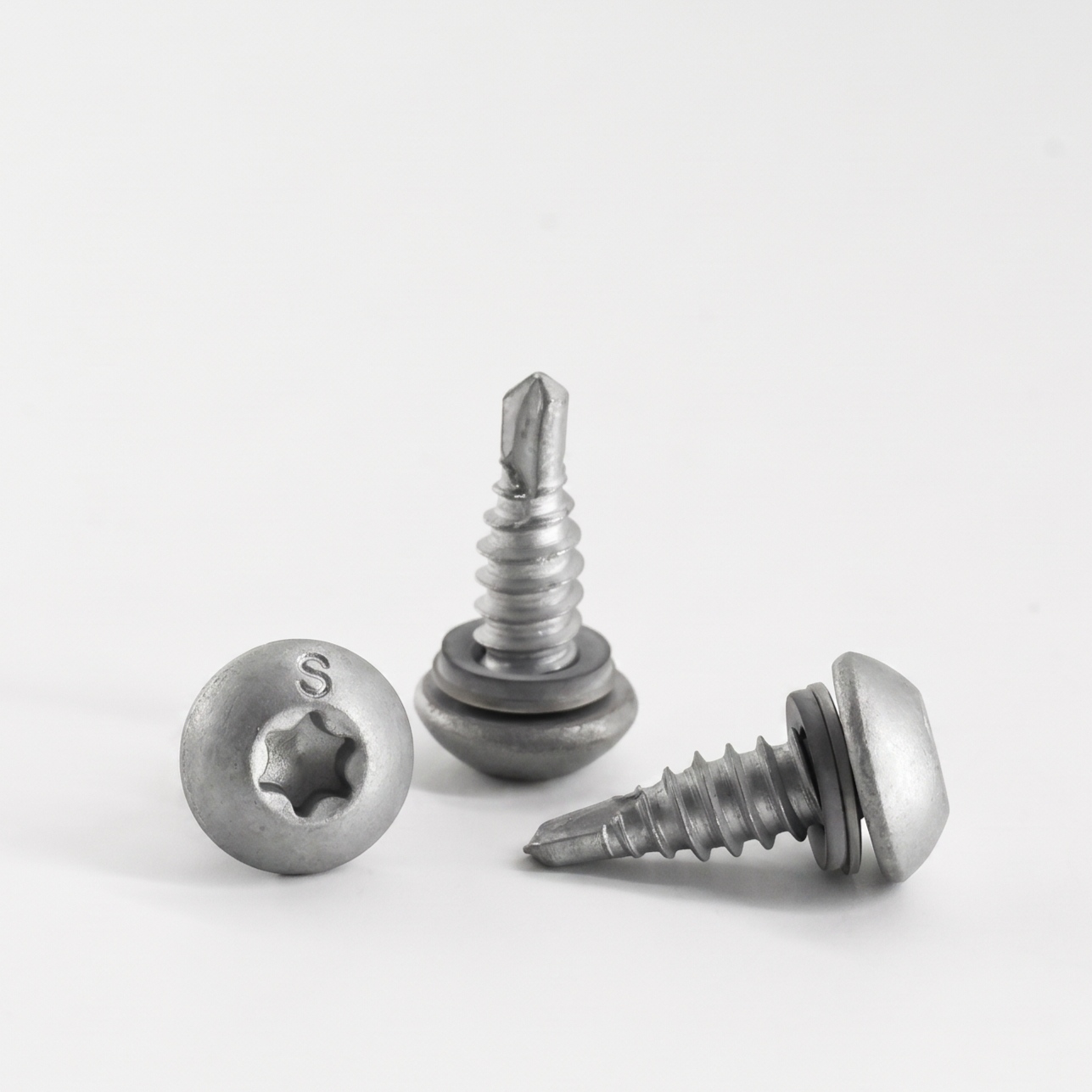
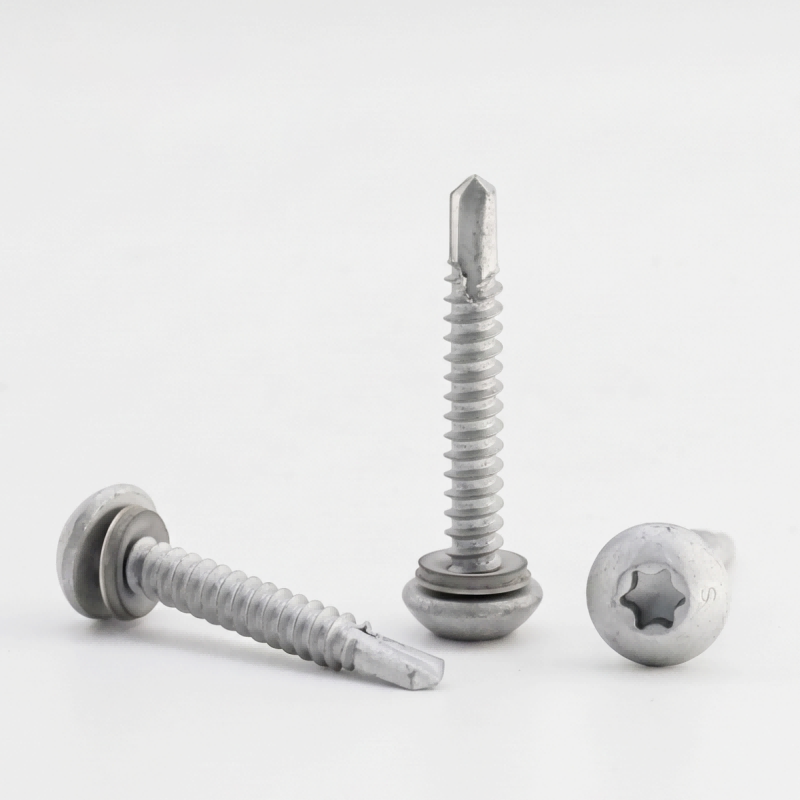
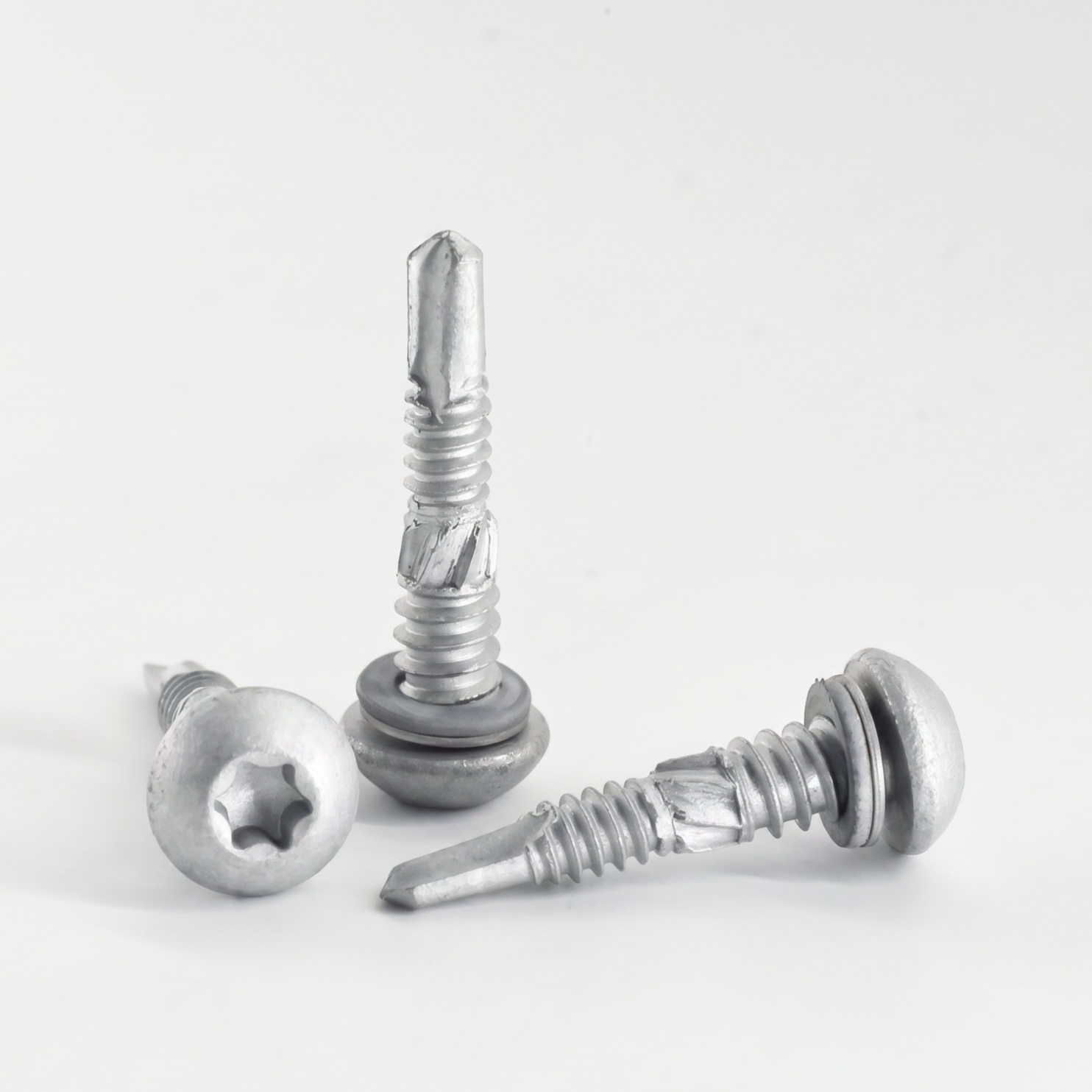
This screw drills its own hole, cuts its own threads, and clamps down tight. Its built-in flange acts like a washer, and the countersunk head ensures a smooth surface. Made from C1022A steel with an anti-corrosion coating, it handles rust like a champ. That’s why it’s popular in heavy machinery, automotive frames, and industrial assembly.
In this guide, I’ll cover where these screws really shine, why they outperform standard bolts, and how to choose the right one—straightforward, useful info you can apply right away.
What Makes a Carbon Steel Hex Flange Countersunk Screw So Special?
Before we dive into applications, let’s understand the fastener itself. The name tells you everything.
Carbon steel – Specifically grade C1022/1022A. That’s a medium‑carbon steel with excellent hardness and tensile strength. It’s tough enough to drill into structural steel without breaking.
Hex flange – The head has a hex drive (uses an M8 magnetic socket) and a built‑in flange. That flange spreads the clamping force evenly. No need for a separate washer.
Countersunk – The head is tapered. When you drive it in, the head sits flush with the surface. No snagging, no protruding head.
Self‑tapping – Yes, this screw drills and taps its own hole. Maximum drilling thickness? 5.8mm into Q355B grade steel or lower. Effective fastening thickness? Up to 110mm. That’s huge.
And don’t forget the coating. The product page mentions functional coatings – anti‑corrosion, waterproofing, and even thermal insulation. For most industrial jobs, the anti‑corrosion coating is a lifesaver. It keeps your Carbon Steel Hex Flange Countersunk Screws from rusting when exposed to moisture, oil, or chemicals.
So now you know the “what.” Let’s talk about the “where” – the real applications where Carbon Steel Hex Flange Countersunk Screws prove their worth every day.
5 Proven Industrial Applications for Carbon Steel Hex Flange Countersunk Screws
I’ve seen these fasteners used in some tough environments. Here’s where they really shine.
1. Heavy Earthmoving Equipment Assembly
Think about a bulldozer blade or an excavator arm. You’ve got thick Q355B steel plates – often 5–6mm thick – that need to be bolted to a frame. Pre‑drilling hundreds of holes takes forever. A Carbon Steel Hex Flange Countersunk Screw drills right through in one step. The hex flange head gives you high torque without stripping. And the countersunk design means the head sits flush – no raised bumps to catch mud or rocks.
Manufacturers of excavators, loaders, and bulldozers have used Carbon Steel Hex Flange Countersunk Screws for years. The C1022A material is hard enough to drill structural steel, but not brittle. The coating protects against hydraulic fluid, rain, and dirt. That’s a proven application.
2. Automotive Frame and Chassis Assembly
Car and truck frames use high‑strength steel. You can’t weld everything – sometimes you need removable fasteners. Ordinary bolts require a tapped hole or a nut on the other side. That’s not always possible in a closed chassis rail. A self‑tapping Carbon Steel Hex Flange Countersunk Screw cuts its own threads into the metal. The flange spreads the load, so you don’t deform the sheet metal. And the countersunk head allows panels to sit flush – important for aerodynamics and clearance.
Real example: semi‑trailer side rails. The rails are often Q355B steel, 4–5mm thick. Assemblers use Carbon Steel Hex Flange Countersunk Screws to attach crossmembers and brackets. Fast, strong, and clean. No pre‑drilling, no loose washers.
3. Industrial Racking and Shelving Systems
Warehouse racking needs to be strong and adjustable. You drill vertical uprights, then bolt on horizontal beams. Pre‑drilling every hole is expensive. With Carbon Steel Hex Flange Countersunk Screws, you can drill on‑site. The screw taps its own hole into the upright’s steel. The hex flange head gives you a good grip with a magnetic socket – no dropped screws when you’re working 10 meters up.
Effective fastening thickness up to 110mm means you can go through two thick uprights and still have thread engagement. That’s a game‑changer for heavy‑duty racking. Many warehouse racking suppliers now specify Carbon Steel Hex Flange Countersunk Screws for their boltless adjustable systems.
4. Construction Steel Framing
In commercial buildings, steel studs and tracks are often joined with self‑drilling screws. But most self‑drillers have small heads that can pull through thin metal. Not this one. The flange on a Carbon Steel Hex Flange Countersunk Screw is wide – it won’t pull through. And the countersunk taper means the head sits below the surface, so you can apply drywall or insulation right over it.
Maximum sheet thickness for drilling: 5.8mm – that’s thicker than most structural studs. So you can fasten through a 3mm track plus a 2mm stud, no problem. Construction crews love Carbon Steel Hex Flange Countersunk Screws because they save time and create a clean finish.
5. Agricultural Machinery (Tractors, Harvesters, Implements)
Farm equipment lives in a harsh world – mud, dust, fertilizer, and constant vibration. Ordinary screws rust and loosen. A coated Carbon Steel Hex Flange Countersunk Screw resists corrosion. The hex flange head doesn’t round off like a Phillips or square drive. And the self‑tapping feature means you can repair equipment in the field without carrying a tap and die set.
The product page mentions anti‑corrosion coatings that protect hulls from seawater. For farm gear, that same coating keeps your Carbon Steel Hex Flange Countersunk Screws alive through manure, urea, and humidity. That’s why agricultural OEMs specify them for harvesters, sprayers, and tillage equipment.
Carbon Steel Hex Flange Countersunk Screws vs. Ordinary Bolts – A Quick Comparison
Let me show you why these screws beat ordinary fasteners. I’ll keep it simple.
| Feature | Ordinary Hex Bolt | Carbon Steel Hex Flange Countersunk Screw |
|---|---|---|
| Pre‑drilling needed? | Yes – requires a drilled hole | No – self‑tapping, drills up to 5.8mm |
| Washer needed? | Yes – separate washer required | No – built‑in flange |
| Head sits flush? | No – bolt head sticks up. | Yes – countersunk, flush surface |
| Drive tool | Standard hex socket or wrench | M8 hex magnetic socket (holds screw) |
| Max fastening thickness | Limited by bolt length | Up to 110mm effective thickness |
| Corrosion protection | Usually, none or basic plating | Advanced functional coating (anti‑corrosion, waterproof) |
| Cost per installed fastener | Higher (labor for drilling + washer + nut) | Lower (one step, no extra parts) |
The bottom line? For thick steel assemblies where you want a flush finish and no pre‑drilling, Carbon Steel Hex Flange Countersunk Screws are the clear winner.
The Coating Advantage – Why It’s Critical for Your Application
The product page talks about functional coatings. Let me focus on the two that matter most for machinery and industry.
Anti‑Corrosion Coating
Machinery gets wet. Hydraulic oil, rain, condensation, washdowns. Uncoated carbon steel rusts in days. A good coating – like the C3 or C4 mentioned – creates a barrier. It’s not just paint; it’s a bonded layer that resists salt spray, chemicals, and humidity.
Real test: Coated Carbon Steel Hex Flange Countersunk Screws can last 500+ hours in salt spray testing (ASTM B117). That’s more than enough for outdoor equipment. So when you see “coated” on the spec sheet, don’t ignore it. It’s the difference between a screw that lasts 2 years and one that lasts 10 years.
Wear Resistance and Lubricity
Some coatings reduce friction. When you’re driving a self‑tapping screw into 5.8mm of steel, friction is your enemy. A low‑friction coating means less torque, less heat, and less chance of stripping the head or breaking the screw. The product page mentions coatings for “reducing friction and enhancing wear resistance” – exactly what you need for high‑volume assembly. So when you choose Carbon Steel Hex Flange Countersunk Screws, pay attention to the coating type.

How to Select the Right Carbon Steel Hex Flange Countersunk Screw
Not all Carbon Steel Hex Flange Countersunk Screws are the same. Here’s a quick checklist.
1. Match the Material Thickness
The maximum drilling thickness is 5.8mm for Q355B grade steel. If your material is harder or thicker, you might need to pre‑drill a pilot hole. For mild steel (Q235) or aluminum, you can go even thicker – but stay under 6mm to be safe. If you exceed 5.8mm, the screw tip may break.
2. Check the Fastening Thickness
These Carbon Steel Hex Flange Countersunk Screws can effectively fasten up to 110mm. That means the combined thickness of all the materials you’re clamping together should be no more than 110mm. That’s huge – most applications are under 20mm. So you’re safe for almost any joint.
3. Pick the Right Coating
-
Indoor, dry environment – Basic zinc plating is fine.
-
Outdoor, humid, or chemical exposure – Go with a C3 or C4 anti‑corrosion coating.
-
High friction or high speed assembly – Look for a coating that adds lubricity.
4. Use the Correct Drive Tool
The spec says M8 Hex Magnetic Socket. Don’t use a regular hex socket – you’ll drop screws. A magnetic socket holds the screw in place, even when you’re reaching into tight spots. That’s a small detail that saves a huge amount of time on the assembly line. Many professionals who use Carbon Steel Hex Flange Countersunk Screws swear by magnetic sockets.
FAQ
Q1: Can I use Carbon Steel Hex Flange Countersunk Screws on stainless steel?
A: You can, but be careful. The screw is made of C1022 carbon steel, which is harder than mild steel but softer than most stainless alloys. If you try to drill into 304 stainless steel thicker than 2mm, you’ll likely break the screw tip. For stainless steel, pre‑drill a pilot hole first. The screw will still tap its threads, but don’t rely on it to drill through. So for stainless, treat your Carbon Steel Hex Flange Countersunk Screws as thread‑formers, not drillers.
Q2: What’s the difference between a self‑tapping screw and a self‑drilling screw?
A: A self‑drilling screw has a drill bit tip – it drills and taps in one go. A self‑tapping screw requires a pilot hole (or a pre‑drilled hole) but then cuts its own threads. The Carbon Steel Hex Flange Countersunk Screw described here is self‑tapping with a sharp point – it can drill through thin sheet (up to 5.8mm), but it’s not a true self‑driller with a drill flute. For best results on material over 3mm, some users pre‑drill a small pilot hole to reduce torque.
Q3: How do I remove a broken Carbon Steel Hex Flange Countersunk Screw?
A: Because it’s countersunk, you can’t grab the head with pliers. Use a screw extractor (easy‑out) kit. Drill a small hole into the screw shaft, then insert the extractor and turn counter‑clockwise. If the screw is seized, apply penetrating oil and heat. To avoid breakage in the first place, use the correct magnetic socket and don’t overtighten. Always buy quality Carbon Steel Hex Flange Countersunk Screws from reputable suppliers.
Q4: Are these screws reusable after removal?
A: Technically, yes – you can screw them back in. But the threads may be worn, especially if they cut into hard steel. For safety‑critical applications (like automotive frames), always use new Carbon Steel Hex Flange Countersunk Screws. For non‑critical racks or panels, reuse is fine as long as the threads still grip. Use your judgment.
Q5: What’s the temperature limit for the coated version?
A: The carbon steel itself is fine up to 300°C (572°F) before it starts to lose temper. The coating, however, may degrade at high temperatures. Typical anti‑corrosion coatings (like zinc or C3/C4) are rated for continuous use up to 120°C (248°F) and intermittent use up to 200°C (392°F). For high‑heat applications like exhaust systems, look for a specialized high‑temp coating or switch to stainless steel. But for most machinery, Carbon Steel Hex Flange Countersunk Screws with standard coating work fine.
Conclusion – Choose the Proven Fastener for Tough Jobs
You’ve seen the specs. You’ve read the applications. Now you know why Carbon Steel Hex Flange Countersunk Screws are a proven performer in heavy machinery, automotive assembly, industrial racking, construction framing, and agricultural equipment.
They drill through 5.8mm of Q355B steel. They fasten up to 110mm in thickness. Their flange replaces a washer. Their countersunk head sits flush. And with the right coating, they resist rust and wear.
For engineers and assembly managers: stop wasting time pre‑drilling holes and adding separate washers. Switch to Carbon Steel Hex Flange Countersunk Screws. You’ll cut labor costs and get a cleaner, stronger joint. That’s not marketing – that’s proven.
Ready to Try Carbon Steel Hex Flange Countersunk Screws in Your Line?
If you’re looking for a reliable supplier, check out the product page at Deep Fastener. They offer C1022A material, multiple coatings, and the exact specs you need – including the M8 hex magnetic drive.
Request a quote or a sample batch today. Test these Carbon Steel Hex Flange Countersunk Screws on your toughest assembly. You’ll see the difference.
Don’t let ordinary bolts slow you down. Get the screw that drills, flanges, and countersinks all in one – the Carbon Steel Hex Flange Countersunk Screw.