
Abstract
For procurement engineers and project specifiers working in construction, HVAC, and industrial assembly, fastener selection is rarely straightforward. The choice between a stainless steel self-drilling flange screw and its carbon steel counterpart carries measurable consequences — spanning corrosion liability, installation efficiency, compliance obligations, and 10-year lifecycle costs.
This article delivers a structured, data-informed comparison across four critical dimensions: material performance, mechanical behavior, regulatory compliance, and total cost of ownership. The objective is not to dismiss carbon steel categorically, but to define precisely when and why stainless steel self-drilling flange screws deliver superior value — and where the unit price premium is not just justified, but commercially necessary.
Understanding the Stainless Steel Self-Drilling Flange Screw
Design Features & Mechanical Principles
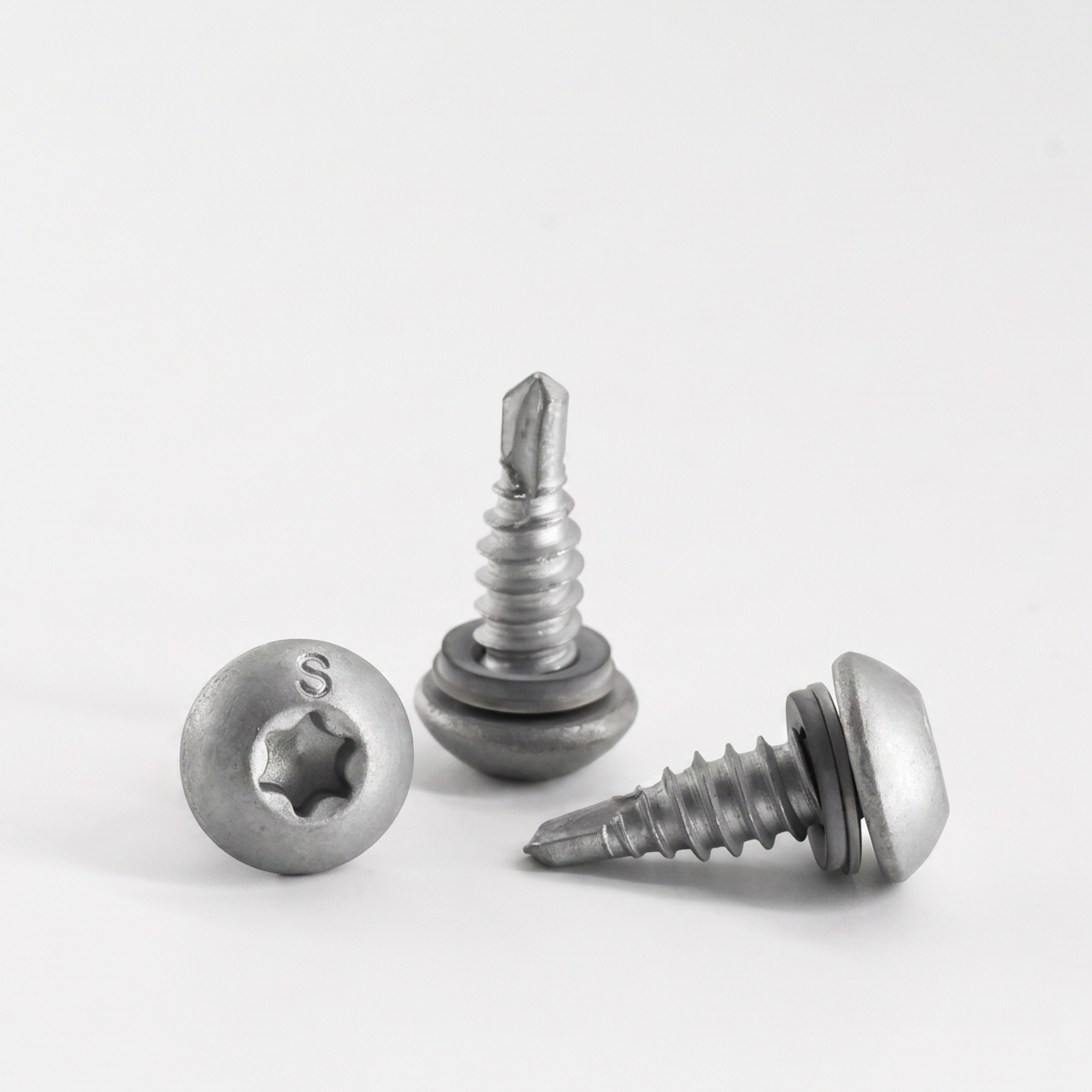
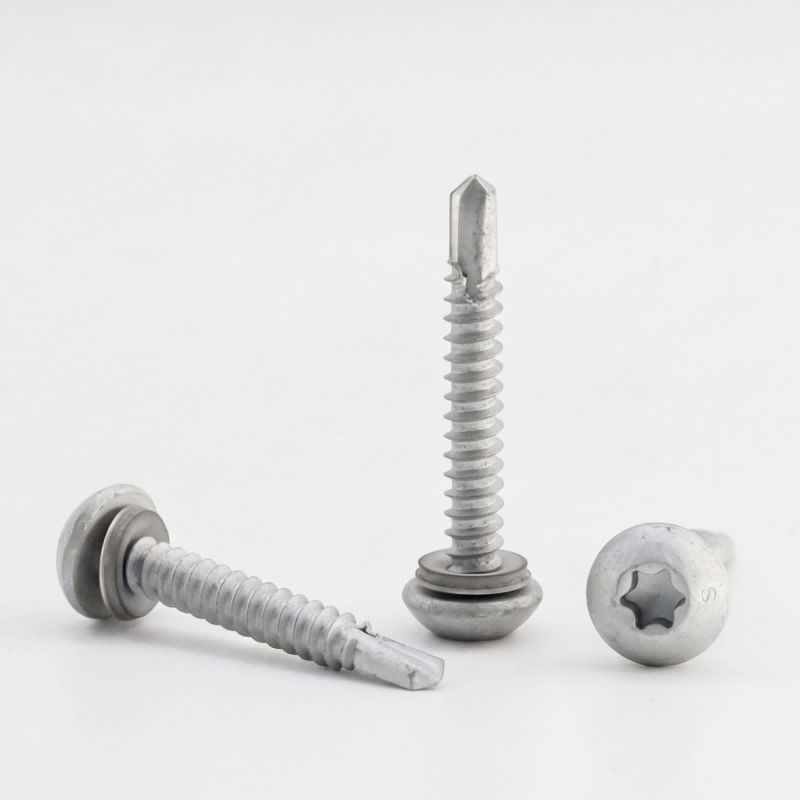
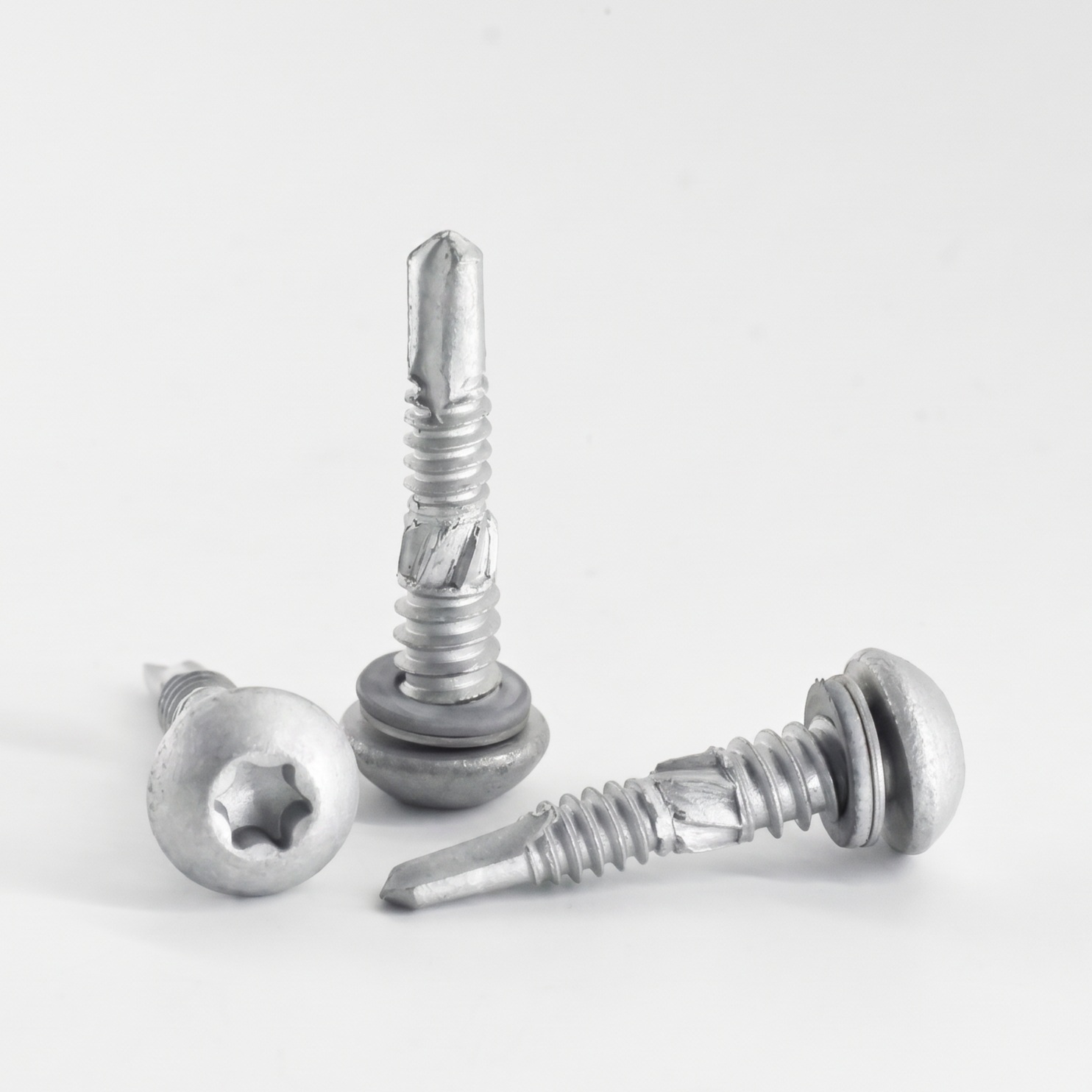
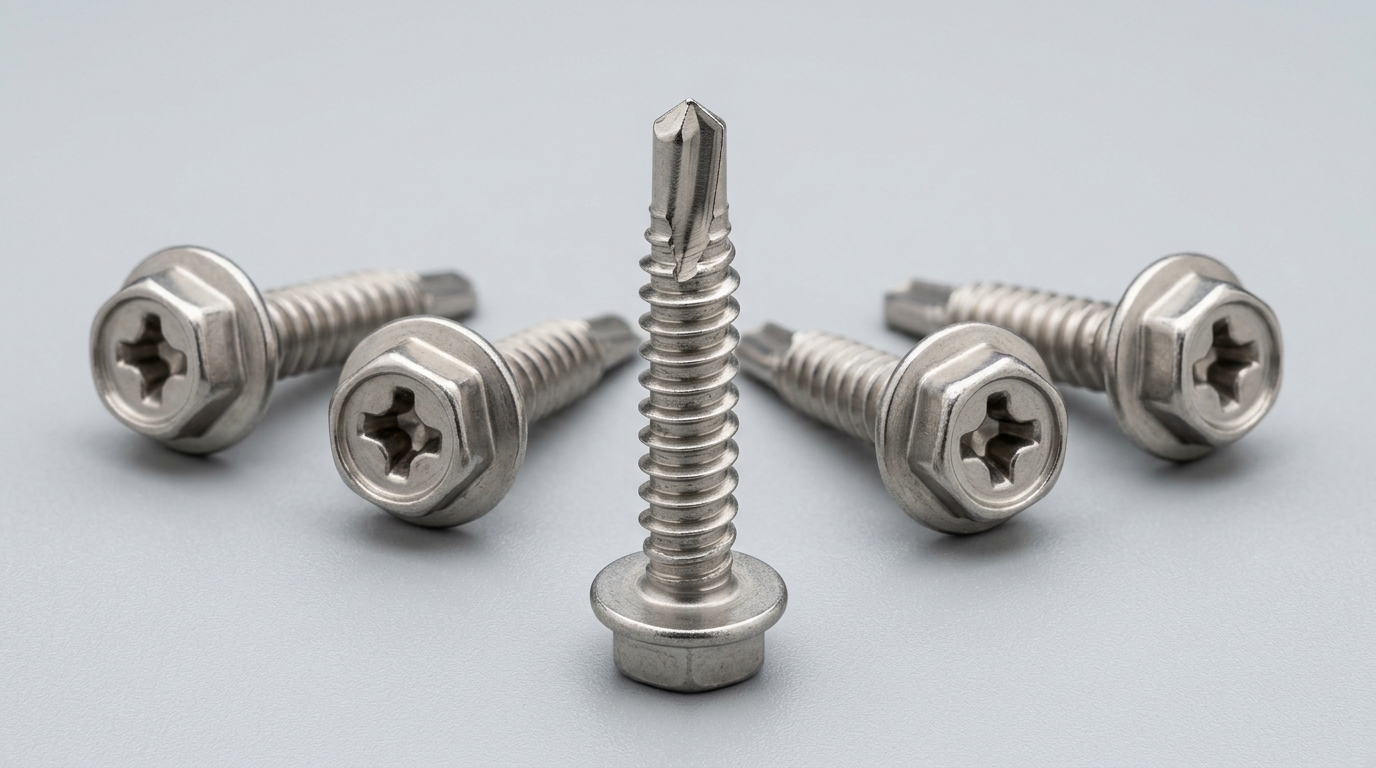
A self-drilling flange screw integrates three functional elements into a single fastener: a hardened drill-point tip, a threaded shank, and an integrated flange (washer-head) bearing surface. This design eliminates the need for pre-drilling, reducing installation steps and labor time significantly in sheet metal and light structural applications.
The drill-point geometry — classified by point size from #2 (thin-gauge sheet metal, ≤1.5 mm) through #5 (heavier steel sections up to 12.7 mm) — determines penetration speed and chip evacuation efficiency. The flange head distributes clamping load across a wider bearing area than a standard hex head, reducing the risk of substrate deformation and pull-through failure, particularly in thin-gauge panels or composite cladding systems.
Thread form on self-drilling flange screws is typically a coarse-pitch, high-low thread optimized for metal-to-metal engagement, providing high pullout resistance with minimal installation torque. The combination of flange seating and thread engagement creates a mechanically complete fastening solution without additional washers or backing plates.
Material Grades & Key Specifications
Stainless steel self-drilling flange screws are predominantly manufactured in AISI 304 and AISI 316 grades. Grade 304 (18% chromium, 8% nickel) offers robust general-purpose corrosion resistance suitable for most architectural and HVAC applications. Grade 316 adds 2–3% molybdenum, providing significantly enhanced resistance to chloride-induced pitting — the critical differentiator for coastal, marine, and chemical-processing environments.
Carbon steel variants, typically case-hardened to achieve the drill-point hardness required for self-drilling performance, rely on surface coatings (zinc plating, Dacromet, or hot-dip galvanizing) for corrosion protection. Once that coating is compromised — by installation torque, UV degradation, or mechanical abrasion — bare steel is exposed.
| Grade | Tensile Strength (MPa) | Hardness (HRC) | Corrosion Resistance | Typical Application |
|---|---|---|---|---|
| 304 Stainless | 520–620 | 32–36 | Excellent (general) | HVAC, roofing, general construction |
| 316 Stainless | 550–650 | 33–37 | Superior (chloride) | Coastal, marine, food processing |
| Carbon Steel (coated) | 800–1000 | 38–44 | Moderate (coating-dependent) | Dry interior, light structural |
Carbon steel achieves higher raw tensile and hardness values — an advantage in heavy-gauge drilling applications. However, this advantage is conditional on environmental suitability, which is where stainless steel consistently outperforms over time.
Stainless Steel vs. Carbon Steel — Performance Comparison
Corrosion & Rust Resistance in Real Environments
The failure mode most commonly reported with carbon steel self-drilling screws in exposed applications is red rust propagation from the drill point outward — initiated during installation when the hardened case is disrupted. Standard zinc electroplating provides approximately 96–200 hours of neutral salt spray resistance per ASTM B117. By contrast, AISI 304 stainless steel typically exceeds 500 hours, and 316 grade surpasses 1,000 hours under the same test protocol.
In real-world coastal environments, carbon steel screws with standard zinc coatings can exhibit visible corrosion within 12–18 months. Galvanic corrosion presents an additional risk when carbon steel fasteners are used with aluminum cladding or dissimilar metal substrates — an electrochemical reaction that accelerates degradation of both the fastener and the surrounding material. Stainless steel’s passive chromium oxide layer is self-repairing, interrupting this process at the surface level.
For humid indoor environments — food processing facilities, swimming pool enclosures, industrial washdown areas — chloride concentrations in the air are sufficient to compromise coated carbon steel within a single operational cycle. Grade 316 stainless, with its molybdenum-enhanced passivation layer, is the specified standard in these settings.
Mechanical Durability & Installation Behavior
A common misconception is that the lower hardness of stainless steel (HRC 32–37 vs. carbon steel’s HRC 38–44) makes it unsuitable for self-drilling applications. In practice, stainless steel self-drilling flange screws perform reliably through steel substrates up to 4–6 mm using a #3 or #4 drill point — covering the majority of HVAC, roofing, and light structural applications.
Where carbon steel maintains a practical advantage is in heavy-gauge drilling (>6 mm steel), where the higher drill-point hardness reduces bit wear and installation time. For these applications, a hybrid approach — using carbon steel for structural penetration and stainless for exposed or weather-facing fasteners — is sometimes specified.
Regarding installation behavior: stainless steel’s work-hardening characteristic requires controlled torque application to prevent galling during drive. Modern cordless installation tools with torque-limiting clutches manage this effectively. Flange seating under dynamic load shows no statistically significant fatigue-life difference between 304 stainless and coated carbon steel in controlled laboratory cycling tests — but stainless maintains its clamping integrity longer in corrosive environments where carbon steel fastener diameter reduces over time due to oxidation.
Compliance Standards & Industry Certifications
Applicable Standards for Self-Drilling Flange Screws
Procurement specifications for self-drilling flange screws reference several overlapping international standards:
- ISO 15480: Defines hexagon flange head self-drilling tapping screws — covering dimensions, mechanical requirements, and performance testing. Applicable to both stainless and carbon steel variants, with material-specific mechanical property classes.
- DIN 7504: The German standard for self-drilling screws (various head forms), widely referenced in European construction and HVAC specifications. DIN 7504-K covers hexagonal flange heads specifically.
- ASTM F2329: Governs hot-dip zinc coating on carbon steel fasteners — relevant only to coated carbon steel variants, not stainless. Stainless steel self-drilling screws are instead evaluated against ASTM F593 (mechanical properties) and ASTM A276 (material composition).
- ASTM B117: The standard salt spray test protocol used to benchmark corrosion resistance across fastener materials and coatings.
For projects requiring documented material traceability — particularly in food-grade facilities, offshore structures, or publicly tendered infrastructure — stainless steel fasteners with mill certifications against ASTM F593 or equivalent EN standards provide a clear compliance pathway that coated carbon steel cannot match.
Application Scenarios & Long-Term Commercial Value
Industry Use Cases Where Stainless Steel Outperforms
Several high-value application environments consistently demonstrate premature carbon steel fastener failure, creating both structural liability and maintenance cost:
- HVAC ductwork and rooftop equipment: Condensation cycling and outdoor exposure degrade zinc coatings within 2–3 years, requiring re-fastening campaigns that dwarf the original material cost differential.
- Metal roofing and wall cladding panels: Rust staining from corroding fasteners causes aesthetic defects that trigger warranty claims from building owners — a liability that stainless steel eliminates entirely.
- Marine and coastal structures: Saltwater aerosol environments demand Grade 316 as the minimum specification. Carbon steel — regardless of coating — is not a viable long-term option.
- Food processing and pharmaceutical facilities: FDA and EHEDG guidelines favor stainless steel fasteners in processing environments. Carbon steel corrosion introduces contamination risk that creates regulatory exposure.
- Solar mounting systems: 25-year system warranties require fasteners with equivalent service life. Carbon steel is incompatible with this requirement in most climatic zones.
Total Cost of Ownership — Beyond the Unit Price
The unit price premium of a stainless steel self-drilling flange screw over a coated carbon steel equivalent typically ranges from 2× to 3.5×, depending on grade and volume. However, this comparison is incomplete without accounting for lifecycle costs:
| Cost Factor | Carbon Steel (Coated) | 304/316 Stainless Steel |
|---|---|---|
| Average service life (exposed) | 3–7 years | 20–25+ years |
| Re-fastening labor (per 1,000 screws) | High (cyclical) | Negligible |
| Warranty claim exposure | Moderate–High | Low |
| Substrate damage from corrosion | Possible | Minimal |
| 10-year TCO index | 1.8–2.4× unit cost | ~1.0× unit cost |
Across a 10-year project lifecycle, the total cost of ownership for stainless steel self-drilling flange screws is consistently lower than carbon steel alternatives in any application with meaningful moisture, chemical, or temperature-cycling exposure. The business case is straightforward: pay the premium once, or pay the replacement cost repeatedly.
FAQ Module
Q1: Can a stainless steel self-drilling flange screw drill through the same material thickness as a carbon steel equivalent?
For steel substrates up to approximately 4–6 mm, yes — a properly specified stainless steel self-drilling screw with a #3 or #4 drill point performs comparably to coated carbon steel. Beyond 6 mm, carbon steel’s higher drill-point hardness provides a practical performance advantage. Specifiers should match drill-point size to substrate thickness regardless of material choice.
Q2: What stainless steel grade is recommended for coastal or high-humidity installations?
Grade 316 stainless steel is the industry standard for coastal, marine, and high-chloride environments. Its molybdenum content provides resistance to pitting corrosion that Grade 304 cannot reliably deliver within 500 meters of saltwater exposure. For inland or general HVAC applications, 304 provides sufficient protection at a lower cost.
Q3: Does the higher upfront cost of stainless steel self-drilling screws justify itself over a 10-year project lifespan?
In virtually all exposed or semi-exposed applications, yes. The combination of eliminated re-fastening labor, reduced warranty liability, and zero substrate damage from corrosion produces a total cost of ownership that favors stainless steel from approximately year 3–4 onward. For interior dry applications with no corrosion exposure, carbon steel remains cost-competitive.
Conclusion
The stainless steel self-drilling flange screw is not simply a premium alternative to carbon steel — it is the technically correct specification for any application where moisture, chemical exposure, dissimilar metal contact, or long-term warranty requirements are present. Its self-repairing passive layer, compliance with ASTM F593 and ISO 15480, and verified 20+ year service life in demanding environments create a fastener that reduces total project risk while lowering lifecycle costs.
For procurement engineers evaluating fastener specifications, the decision framework is clear: reserve carbon steel for dry, protected, short-lifecycle applications where coating integrity can be maintained. For everything else — roofing, HVAC, coastal structures, food-grade facilities, and solar installations — the stainless steel self-drilling flange screw delivers measurably superior commercial value.