
In the construction of steel structures, alongside high-strength bolts used for core load-bearing, there exists an indispensable category of “small yet sophisticated” fasteners—self-drilling screws. These fasteners eliminate the need for pre-drilling, directly performing the three operations of drilling, tapping, and fixing in one step, significantly boosting construction efficiency. As the primary fastener for building steel structure envelope systems and light steel connections, the correct selection and application of self-drilling screws directly impacts the stability and durability of building envelopes.
Today, we comprehensively dissect self-drilling screws, covering both their selection criteria and key usage points.
Understanding the Fundamentals: What is a Self-Drilling Self-Tapping Screw for Structural Steel?
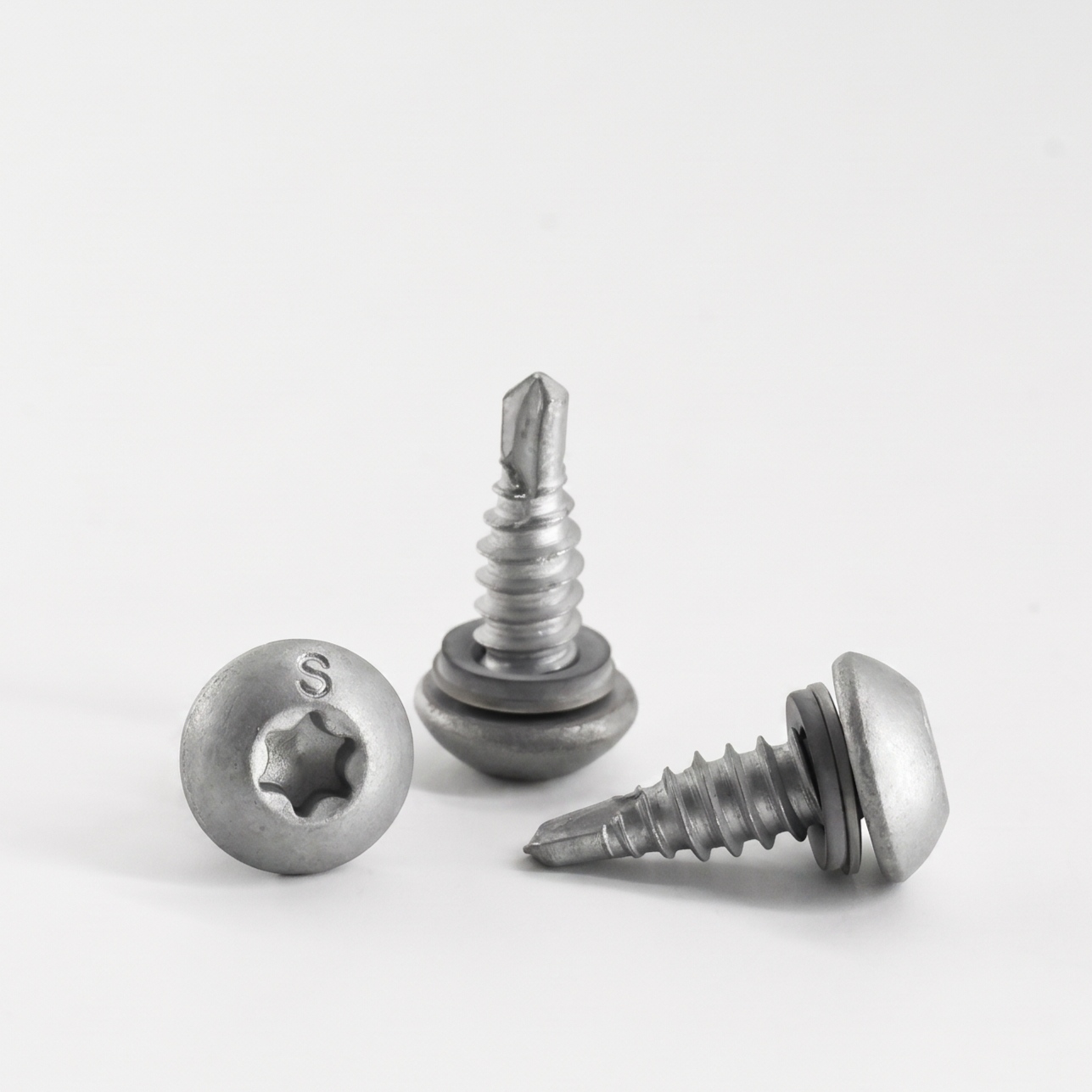
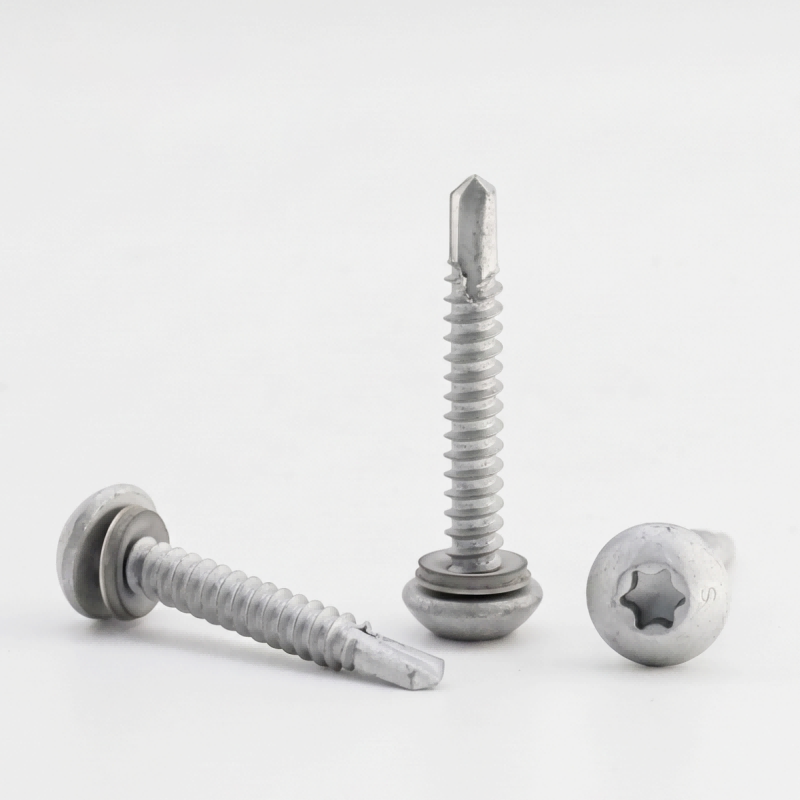
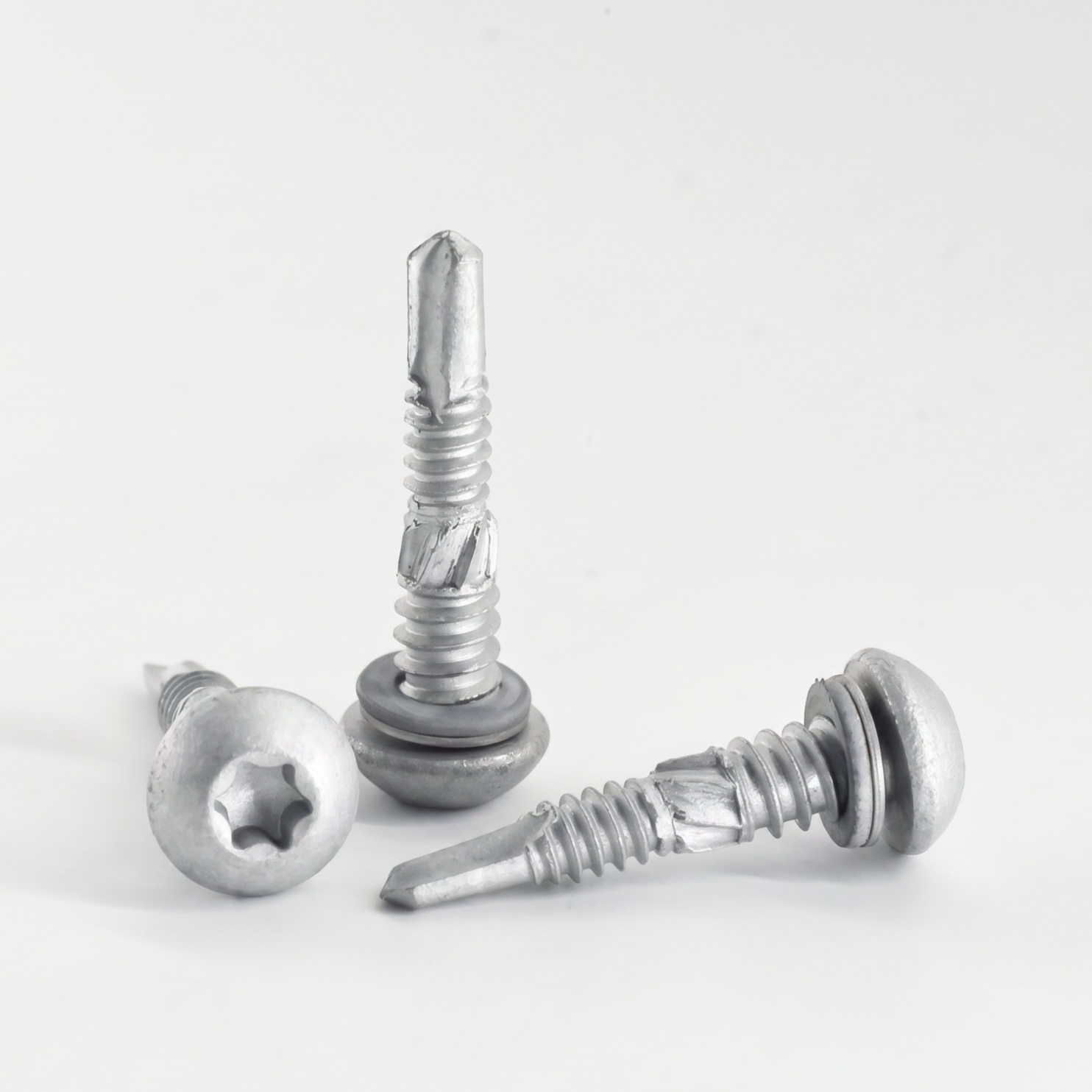
Self-drilling self-tapping screws, fully termed self-drilling self-tapping screws, are fasteners specifically engineered for connecting thin steel plates and light steel structures. Their defining feature is the drill-like cutting edge at the tail end. The head typically adopts common specifications such as a flat head or internal hexagon, while the shank bears continuous knurling. Unlike conventional self-tapping screws, drill-point screws require no pre-drilled holes. Their cutting edge directly drills into structural components, followed by thread engagement for instant fixation—achieving ‘one-step operation, immediate securing’ with remarkable efficiency.
 In building steel structures, self-tapping screws primarily serve to connect non-load-bearing components, particularly suited for installing cladding systems in light steel frameworks. They function as specialised fasteners for joining colour-coated steel sheets, sandwich panels, galvanised steel sheets, and components such as purlins and studs. Typically manufactured from carbon steel or stainless steel, their surfaces undergo corrosion-resistant treatments like galvanisation or blackening to withstand diverse construction environments.

Core Advantages: Why are self-tapping screws favoured in construction?
The widespread application of self-tapping screws in structural building construction stems from three core advantages, perfectly suited to the demands of building envelope work:
- Firstly, high construction efficiency. Traditional thin steel plate connections require pre-drilling with an electric drill followed by self-tapping screws—at least two steps. Self-tapping screws integrate drilling, tapping, and fixing functions, enabling a single operator to complete the task with power tools. This significantly reduces construction cycles and labour costs, particularly during large-scale cladding installations (e.g., factory exterior walls, roof beam steel plate laying).
- Secondly, superior connection stability. The optimised thread design of drill-tapping screws ensures a tight fit with the internal threads of drilled components, preventing loosening after locking. Additionally, some drill-tapping screws feature sealing washers (e.g., EPDM washers) at the head, combining fastening with waterproofing functionality to prevent rainwater ingress through drilled holes, making them suitable for external cladding applications.
- Thirdly, they offer exceptional adaptability. Available in diverse specifications, self-tapping screws can be selected based on the thickness (e.g., 0.8mm-3.0mm thin steel plates) and material (standard steel plates, galvanised sheets) of the components being joined. Options include carbon steel and stainless steel variants, catering to varied indoor connection requirements.
Key Selection Considerations: Choosing the Right Self-Tapping Screws to Avoid Potential Hazards
Though small in size, improper selection of self-tapping screws can lead to issues such as loose connections, corrosion, and compromised waterproofing. For building steel structures, the following four points should be prioritised during selection:
1. Select Base Material According to Connection Materials
Given the varied materials of building steel structure envelope components, drill-point screw material must be matched accordingly:
– For connecting ordinary carbon steel plates or non-galvanised thin steel sheets, carbon steel drill-point screws (with galvanised surface treatment) offer a balance of economy and corrosion resistance; For galvanised steel plates, stainless steel components, or applications in coastal high-salt-mist regions and outdoor exposed environments, 304 or 316 stainless steel self-tapping screws are required to prevent electrochemical corrosion from dissimilar material contact, which could cause fastener failure. In special environments such as high-temperature workshops, high-temperature alloy self-tapping screws must be selected.
2. Selecting Specifications Based on Component Thickness
The diameter and length of self-tapping screws directly impact connection strength and must precisely match component thickness:
– Diameter: Common specifications include 4.2mm, 4.8mm, and 5.5mm. Thicker components (e.g., 2.0mm-3.0mm thin steel sheets) require larger diameters to ensure adequate drilling and connection strength. Regarding length, the effective locking length of the self-tapping screw must cover the combined thickness of the two connected components. The protrusion beyond the second layer should ideally be controlled within 3-5mm. Excessive length may cause thread exposure and insufficient strength, while insufficient length may prevent adequate locking.
3. Selecting Head Types and Functions by Application
Different building scenarios demand distinct self-tapping screw head types and functionalities:
– For external cladding (e.g., roofs, external walls), opt for screws with sealing washers (e.g., large flat head + EPDM washer). The washer fills gaps around the hole, preventing rainwater ingress. For non-waterproof indoor applications (e.g., light steel stud connections in factory interiors), standard round-head or countersunk self-tapping screws suffice. Countersunk types ensure flush component surfaces for decorative requirements. Prioritise hexagon socket or cross-recess drive heads, as hex sockets transmit greater torque, resist stripping, and suit high-strength fastening needs.
4. Prioritise target quality standards; reject non-compliant products
The cutting edge hardness and thread precision of self-drilling screws directly impact drilling performance and connection stability. Select products conforming to national standards (e.g., GB/T 15856.1-2002 Self-drilling and self-tapping screws – Part 1: Self-drilling and self-tapping screws for steel and iron). Genuine self-drilling screws clearly indicate material composition and specifications, featuring sharp cutting edges and uniform threads. Non-standard products may exhibit insufficient cutting edge hardness (failing to penetrate steel plates) or poor thread precision (prone to loosening), and must never be used in structural steel connections.
Precautions for Use: Errors to Avoid at All Costs
Having selected the appropriate self-tapping screws, correct usage is equally critical. The following common errors must be avoided in construction:
- Error One: Use in Core Load-Bearing Components. Self-tapping screws possess limited load-bearing capacity and are only suitable for non-load-bearing envelope systems and light steel structure connections. Their use is strictly prohibited for connecting core load-bearing components such as steel beams or columns, as insufficient strength may create structural safety hazards.
- Error Two: Failure to match material compatibility. For instance, using standard carbon steel self-tapping screws on galvanised steel sheets, or employing untreated screws in coastal regions, will lead to rapid corrosion, compromising connection stability.
- Error Three: Inappropriate torque during installation. Excessive torque may cause thread stripping, component deformation, or seal damage; insufficient torque fails to secure the fastener adequately, leading to loosening. Electric tools with torque adjustment are recommended, with settings adhering strictly to product specifications.
- Error Four: Excessively wide spacing between self-tapping screws. During large-area cladding panel installation, reducing screw usage to save costs can cause uneven stress distribution at connection points. Under prolonged exposure to wind loads, vibration, and other stresses, this may lead to panel deformation or detachment. Spacing must be determined according to construction specifications (typically one screw every 300–500mm).
Conclusion: The Correct Approach to Using Self-Tapping Screws
As a convenient fastener for building steel structure cladding systems, the core value of self-tapping screws lies in their efficient connection and suitability for non-load-bearing applications. When selecting them, adhere to four key principles: material compatibility, specification suitability, application-specific selection, and compliance with national standards. During use, strictly observe the fundamental guidelines: avoid load-bearing applications, control torque, and maintain standardised spacing. Only thus can the advantages of self-tapping screws be fully realised, ensuring the stability and durability of building steel structure cladding systems. For large-scale buildings or projects in special environments, it is advisable to select and use self-tapping screws under the guidance of professional engineers to ensure construction quality meets regulatory requirements.
Among numerous self-tapping screw products, Infasron self-tapping screws have become the preferred brand in the construction industry through stringent quality control. Infasron self-tapping screws are manufactured in strict compliance with the GB/T 15856.1-2002 national standard. Crafted from premium carbon steel or 304/316 stainless steel base materials, they feature a uniformly dense hot-dip galvanised finish offering superior corrosion resistance, making them suitable for diverse complex environments including outdoor and coastal settings. Their cutting edges undergo specialised quenching treatment, delivering high hardness and smooth drilling performance to effortlessly connect thin steel plates of varying thicknesses. Multiple specifications are available, including EPDM sealing washers, countersunk heads, and hexagon sockets, precisely matching diverse construction scenarios such as roof cladding, external wall installations, and light steel framing connections. Moreover, Infasron self-tapping screws undergo comprehensive quality inspection throughout production, ensuring high thread precision and secure fastening. This effectively mitigates operational risks such as loosening or stripping, thereby enhancing construction efficiency and project quality. Whether for standard industrial buildings, large-scale venue enclosures, or coastal construction projects, Infasron self-tapping screws deliver reliable performance to safeguard structural steel cladding systems.
