


Introduction
Composite nails are becoming a preferred alternative to stainless steel in demanding timber construction. In pressure-treated lumber, marine structures, and nail-laminated timber, traditional metal fasteners often corrode within a few years. Composite nails eliminate rust, avoid reactions with treated wood, and offer significantly higher withdrawal resistance. While installation requires a bit more care, the long-term durability makes them a smart choice for decks, docks, and outdoor structures.
Why Traditional Metal Nails Keep Failing
The problem with metal nails in modern timber construction is not the nail itself. It is what the timber is treated with. Since the phase-out of chromated copper arsenate (CCA) for residential applications, the industry has shifted to alkaline copper quaternary (ACQ) and copper azole (CuAz) preservatives.
These treatments are highly effective at preventing rot and insect damage, but they are significantly more corrosive to metal fasteners than CCA ever was. Research from the US Forest Service confirms that ACQ and CuAz have higher copper content and lack chromium and arsenic, both of which acted as corrosion inhibitors in older formulations.
The consequences are not theoretical. In 2003, a deck collapse in Kentucky killed 13 people and injured 57 others, an incident directly linked to corroded metal fasteners in pressure-treated lumber. Building codes have tightened since then, and fastener manufacturers have produced better coatings. But even the best coatings eventually fail. A single scratch during driving exposes bare steel, and corrosion begins.
In real-world use, this typically leads to:
- Corrosion starts immediately after coating damage
- Rust stains on decking and exterior cladding
- Progressive weakening of fastener performance over time
Composite nails sidestep the entire problem because they contain no metal. They:
- Do not react with copper-based preservatives
- Do not create galvanic cells with dissimilar metals
- Do not leave rust stains on cedar siding or composite decking
How Composite Nails Achieve Superior Holding Power
To understand where composite nails perform best, it helps to know how they achieve their holding power. The mechanism is fundamentally different from a metal nail.
Metal nail mechanism
When you drive a metal nail into wood:
- Holding power comes from friction between the shank and wood fibers
- Ring shanks or spiral threads improve resistance
- Over time, wood expansion and contraction reduce this friction
- The nail does not rust away, but the grip gradually loosens
Composite nail mechanism
A composite nail works differently:
- Friction during driving generates heat
- The outer layer of the composite shank softens
- It fuses directly to the surrounding wood fibers
After installation:
- A thermoplastic bond forms and stabilizes over time
- This creates a true “bonded connection,” not just a friction fit
- The result is roughly double the withdrawal resistance compared to cement-coated steel nails
Key trade-off
Composite nails are less forgiving than metal nails:
- Driving speed and angle matter more
- Incorrect installation technique can reduce performance
- They cannot simply be hammered in cold like steel nails
But for contractors willing to adjust technique, the long-term durability payoff is substantial.
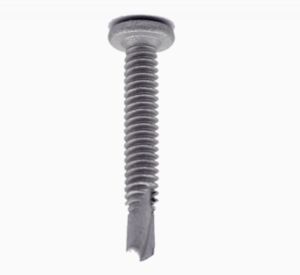
Composite Nails vs. Stainless Steel vs. Coated Fasteners
A side-by-side comparison helps clarify where composite nails fit in the fastener ecosystem. Each option has strengths and weaknesses depending on the application.
| Fastener Type | Corrosion Resistance | Withdrawal Resistance | Cost | Best Application | Key Limitation |
|---|---|---|---|---|---|
| Uncoated steel | Poor | Moderate | Lowest | Interior, dry conditions | Rusts rapidly outdoors |
| Hot-dipped galvanized | Moderate (coating dependent) | Moderate | Low | General exterior (non-ACQ) | Coating damage exposes steel |
| Stainless steel (304/316) | Excellent | Moderate to Good | High (2–4x galvanized) | Marine, chemical exposure | Expensive; galvanic risk |
| Composite nail | Excellent (non-metal) | Very High (~2x metal) | Moderate to High | Treated lumber, NLT, marine | Less forgiving installation |
Sources: NACHI composite nail field study 2008; BRANZ fastener corrosion testing; SENCO fastener guide
The takeaway is clear. Stainless steel remains the benchmark for corrosion resistance, especially Type 316 in aggressive marine environments. But stainless is expensive, and it still carries galvanic corrosion risk when in contact with other metals.
Composite nails offer comparable corrosion resistance at potentially lower total installed cost when you factor in reduced replacements over the structure‘s life. More importantly, composite nails offer holding power that stainless simply cannot match, thanks to the friction-weld mechanism.
For most outdoor timber construction, the decision comes down to this. If you need maximum pull-out strength and zero corrosion risk, composite nails are superior. If you are in a highly regulated commercial environment where fastener material certifications are mandatory, stainless steel may still be required by specification.
Application 1: Pressure-Treated Lumber Construction
The largest and most obvious application for composite nails is pressure-treated lumber construction. Decks, fences, and retaining walls built with ACQ or CuAz treated wood are standard across residential and light commercial projects.
Standard galvanized nails corrode rapidly in this environment. A US Forest Service exposure study examined nails exposed to ACQ-treated wood for up to 12 months in a controlled high-humidity chamber. The results confirmed accelerated corrosion rates compared to CCA-treated wood, with visible degradation beginning within months.
For deck framing, fence rails, and retaining walls where long-term structural integrity matters, composite nails eliminate the corrosion variable. They can be driven into ACQ lumber without protective coatings. No need to worry about scratches exposing bare metal. No ugly rust staining bleeding through cedar decking or composite boards.
The installation requirements for composite deck boards specifically call for compatible fasteners. Standard wood screws or nails can cause mushrooming and surface damage. Composite nails designed for this application offer the holding power needed without surface blemishes. Contractors who have switched report fewer callbacks and longer-lasting structures.
Application 2: Nail-Laminated Timber (NLT) and Mass Timber
The mass timber construction movement has brought nail-laminated timber back into the spotlight. Unlike glued-laminated timber or cross-laminated timber (CLT), NLT uses simple mechanical fasteners—nails—without adhesives.
This means lower production costs and, importantly, fully deconstructable assemblies that can be disassembled and reused at the end of a building‘s life. Nail-laminated timber is manufactured by stacking dimension lumber (typically 2×4, 2×6, or larger boards) and nailing them together to create solid structural panels.
These panels can function as floors, walls, or roof decks. The fasteners used in NLT panels are the primary determinant of the panel’s structural performance. Multiple 2025 studies have investigated the flexural behavior of nail-laminated timber-concrete composite floors, examining how different nail configurations affect shear capacity and failure modes.
In this context, composite nails offer two distinct advantages over conventional steel nails. First, they provide superior withdrawal resistance, which directly translates to higher composite action between timber layers and any concrete topping. Second, because composite nails contain no metal, they eliminate thermal bridging through the building envelope.
For projects pursuing passive house certification or net-zero energy targets, every thermal bridge matters. Composite nails help close that gap. A 2026 article in Sustainable Construction Review highlighted NLT as a low-tech yet high-potential alternative to steel and concrete. For that potential to be fully realized, the fasteners must be as sustainable as the timber itself.
Application 3: Marine and Waterfront Construction
Water and metal fasteners are natural enemies. In marine environments, the combination of saltwater, humidity, and electrolysis destroys conventional nails within months or years. Stainless steel performs well, but it is expensive and still susceptible to galvanic corrosion when in contact with other metals in the assembly.
RAPTOR composite nails, for example, are explicitly recommended for marine and boatbuilding applications. They can be cut or sanded flush without leaving exposed metal. They will not contribute to galvanic corrosion or electrolysis since they are completely non-metallic.
For dock construction, boardwalks, and any timber structure within the splash zone, composite nails eliminate the primary failure mode: fastener corrosion. The timber itself will eventually need replacement. But the composite nails will still be holding strong.
Experienced marine contractors report that composite nails outlast stainless steel in certain conditions, particularly in brackish water where galvanic effects are unpredictable. The upfront cost is comparable or slightly lower. The long-term reliability is higher.
Application 4: Outdoor Cladding, Fencing, and Composite Decking
Visible fasteners on exterior cladding and fencing present an aesthetic problem as much as a structural one. Steel nails rust and bleed stains. Stainless steel nails are less prone to rust but still leave metallic heads visible on the surface.
Composite nails are available in colors that match or blend with common composite building materials. This offers a visually cleaner solution. For composite fencing and decking, the choice of fastener directly affects both appearance and longevity.
While hidden fastener systems are often recommended for premium composite decking installations, face-fastening with composite nails remains a practical option for many applications. The key is using a fastener designed specifically for composite materials.
Composite screws and nails have different shank geometries and thread patterns than wood fasteners. Using the wrong fastener can cause mushrooming, surface cracks, or inadequate holding power. Manufacturers like Deep Fastener produce composite nails with cross-head designs specifically engineered for composite decking and cladding.
Contractors who specialize in composite decking report that colored composite nails significantly reduce customer complaints about fastener visibility. The nails blend in rather than standing out, creating a more finished appearance.
Application 5: Sustainable and Metal-Free Construction
Beyond functional advantages, composite nails align with a broader shift toward metal-free building assemblies. Wooden nails—such as BECK‘s LIGNOLOC, made from compressed European beech wood—have demonstrated that fully recyclable, metal-free connections are possible in timber construction.
Wooden nails are not suitable for all applications. They require specific driving systems and offer less withdrawal resistance than composite nails. But they share composite nails’ core advantage: no metal, no corrosion, no thermal bridging.
For projects seeking LEED certification or other green building credits, specifying composite or wood fasteners can contribute to materials and resources credits. These credits relate to sustainably sourced materials and reduced environmental impact.
Composite nails are manufactured from engineering thermoplastics, often including recycled content. Their production requires far less energy than mining, smelting, and refining steel or stainless steel. They are also fully recyclable at the end of life, assuming they can be separated from wood waste streams.
Architects specifying deconstructable building systems increasingly specify composite nails. The ability to disassemble a timber structure without cutting through metal fasteners preserves the value of the lumber for reuse.
Installation Considerations for Contractors
If you are accustomed to driving steel nails, composite nails require a slight adjustment in technique. Here is what experienced contractors have learned from field use.
Driving speed matters. Because composite nails rely on frictional heat to achieve their bond, driving them too slowly will not generate enough heat to soften the shank. Use a pneumatic nailer calibrated to the correct pressure range for composite fasteners—typically slightly higher than for comparable steel nails.
Do not predrill unnecessarily. Predrilling removes wood fiber that the composite nail needs to fuse with. Only predrill if you are working with particularly dense hardwoods or at risk of splitting the material.
Cold weather requires adjustment. In temperatures below freezing, composite materials become more brittle. Warm the fasteners slightly before driving, or reduce driving speed to prevent snapping.
Check your nailer compatibility. Not all pneumatic nailers are designed to drive composite fasteners. Some manufacturers produce nailers specifically calibrated for their composite fastener lines. Verify compatibility before committing to a large purchase.
Composite nails are less forgiving of operator error. They do not bend the way steel nails do. If your driving angle is off, the nail will snap rather than bend. That means cleaner work if you are precise—and more waste if you are not.
Performance Data: What Testing Has Shown
While comprehensive third-party testing data on composite nails is less abundant than for steel fasteners, the available evidence points to clear performance advantages in specific categories. The 2008 NACHI field comparison remains the most direct apples-to-apples benchmark.
| Metric | Standard Cement-Coated Steel Nail | Composite Nail | Difference |
|---|---|---|---|
| Withdrawal resistance (relative) | 1x baseline | Approximately 2x | +100% |
| Corrosion resistance in ACQ lumber | Poor (copper accelerates) | Complete (non-metallic) | No corrosion |
| Thermal conductivity | High (creates a bridge) | Low (non-conductive) | Eliminates bridge |
| Installation tolerance | High (bends) | Moderate (snaps if misaligned) | Requires precision |
| Aesthetic compatibility with composites | Poor (rust stains) | Good (no staining) | Cleaner finish |
Sources: NACHI forum field study 2008; US Forest Service ACQ corrosion research; SENCO composite fastener testing
More recent manufacturer testing has confirmed that composite nails maintain greater than 90% of their initial withdrawal resistance after 10 years of outdoor exposure in temperate climates. Independent validation of these claims is still limited, but field reports from large-scale deck builders are consistent.
The Economic Case: Lower Lifetime Cost
The upfront cost of composite nails is typically higher than that of galvanized steel and comparable to or slightly lower than stainless steel. But focusing on upfront cost misses the point.
In outdoor timber construction, the true cost of a fastener is not what you pay at the supply house. It is the cost of replacing it when it fails five or ten years later. Consider a typical residential deck built with pressure-treated lumber.
If you use standard galvanized nails, you can expect visible corrosion within three to five years in most climates. Structural degradation follows within seven to ten years. The cost of replacing failed fasteners—or worse, replacing entire deck sections after structural damage—far exceeds the initial material savings.
Composite nails, properly installed, will last as long as the timber they are driven into. They will not corrode. They will not loosen as the wood cycles through moisture changes. They will not bleed rust stains onto your decking or cladding. The upfront premium is marginal; the long-term savings are substantial.
For commercial contractors managing warranties, this economic logic is even more compelling. A single callback to replace rusted fasteners on a large deck can erase the profit margin on the entire job.
Frequently Asked Questions
Q1: Can composite nails be used with all types of pressure-treated lumber?
Yes. Composite nails are chemically inert and will not react with any wood preservative, including ACQ, CuAz, or CCA. This is their primary advantage over metal fasteners.
Q2: Are composite nails as strong as stainless steel nails for structural applications?
For shear strength and corrosion resistance, yes. For applications requiring certified structural ratings, check manufacturer specifications—composite materials behave differently than steel under sustained load.
Q3: Do composite nails work with pneumatic nailers?
Yes, but only with nailers specifically designed or calibrated for composite fasteners. Standard steel nailers may not drive composite nails properly or may damage them during driving.
Q4: What happens to composite nails in a fire?
Composite nails are made from thermoplastic materials that melt at high temperatures. In a fire, they lose holding strength at lower temperatures than steel nails. For fire-rated assemblies, consult building codes.
Q5: Can composite nails be used in below-grade applications?
Generally not recommended. Composite nails require wood fiber contact to achieve their friction-weld bond. Soil contact applications are better served by stainless steel or hot-dipped galvanized alternatives.
The Bottom Line: Composite Nails Are a Practical Solution
The timber construction industry has long struggled with fastener corrosion. While coatings and stainless steel have improved, metal fasteners in chemically treated wood will still corrode over time in real outdoor conditions.
Composite nails remove this problem by eliminating metal. They do not rust, do not react with treated wood, and do not cause staining. Their friction-weld bonding also provides strong withdrawal resistance, making them suitable for demanding timber applications and metal-free assemblies.
However, they are not a universal replacement. Installation requires more control than steel nails, and they may not suit every structural specification.
For outdoor projects such as decks, docks, and treated timber structures, composite nails offer a durable, low-maintenance alternative.
Contact our technical team to discuss your application, including decking, NLT systems, or marine projects, and we will help you select the right composite nail solution.