


Introduction
When constructing outdoor structures, decking, or timber frames, the weakest link is often not the wood itself, but the fasteners. Ordinary steel nails are prone to corrosion, can stain timber, and often fail prematurely—particularly in treated lumber or coastal environments.
Stainless steel structural nails solve these issues by offering superior corrosion resistance, high strength, and decades of reliable performance. They are the preferred choice for engineers and contractors who prioritize durability and long-term reliability.
This guide explains why stainless steel structural nails are essential for timber, compares 304 and 316 grades, outlines expected shear strength, and provides proper installation techniques for Phillips-head stainless steel structural nails.
What Is a Stainless Steel Structural Nail?
A stainless steel structural nail is a high-performance fastener designed for load‑bearing timber connections in demanding environments. Unlike common carbon steel nails, which rust within months in humid or treated wood conditions, a stainless steel structural nail resists corrosion for decades. It is manufactured from austenitic stainless steel grades — typically 304 (A2) or 316 (A4) — which contain chromium (≥10.5%) and nickel to form a passive oxide layer.
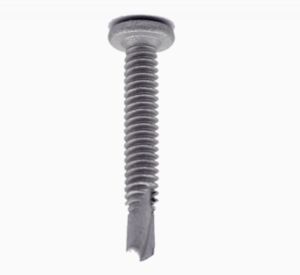
Infasron Fastening System offers a full‑thread stainless steel structural nail with a Phillips head, designed for indoor, outdoor, and highly corrosive environments. The full thread runs the entire shank length, providing maximum withdrawal resistance. Every stainless steel structural nail in this series meets ASTM F1667 standards. The Phillips head drive allows high‑torque installation without cam‑out when using the correct driver bit. This stainless steel structural nail is compatible with fastening linings beneath color‑coated steel panels on roof walls and fixing components to structural elements less than 6 mm thick.
Why Stainless Steel Structural Nails for Timber Connections
Timber framing and outdoor wood structures place unique demands on fasteners. Wood expands and contracts with humidity, treated lumber contains corrosive chemicals, and exterior installations face rain and salt spray. A stainless steel structural nail is engineered to meet all of these challenges. Using stainless steel structural nails for timber ensures that the connection outlasts the wood itself.
Corrosion Resistance in Treated Lumber and Coastal Environments
The most immediate advantage is corrosion resistance. Stainless steel structural nails are strongly recommended for use with ACQ (Alkaline Copper Quaternary) treated lumber, which is highly corrosive to ordinary steel fasteners. ACQ treatment accelerates metal corrosion significantly. A serious deck collapse in Kentucky (2003) that killed 13 people was attributed to fastener corrosion. The industry responded by mandating stainless steel or hot‑dipped galvanized fasteners for ACQ lumber. A stainless steel structural nail performs very well in all combinations of preservative type and hazard class, while ordinary bright steel nails provide the worst corrosion resistance.
For coastal construction, Type 316 stainless steel is specified for applications within 300 feet of saltwater shoreline, as required by building codes. Type 316 contains molybdenum, offering superior resistance to chlorides found in sea spray. Grade 316 stainless steel structural nails have been tested to exceed 1,000 hours in salt spray chambers without visible rust. Selecting a stainless steel structural nail for coastal projects ensures decades of maintenance‑free service. Corrosion-resistant stainless steel structural nails are essential for any project exposed to salt air.
Austenitic stainless steel is also recommended by the UK National House‑Building Council (NHBC) Standard for fixing sheathing and breather membranes, for nails in CCA‑treated wood, and for external structures of cedar and other weather‑exposed timbers. In all these cases, a stainless steel structural nail outperforms galvanized alternatives.
Shear Strength of Stainless Steel Structural Nails
Shear strength — the fastener’s ability to resist lateral forces that could snap it — is a critical parameter. Research published in the ASCE Journal of Structural Engineering examined withdrawal strength and bending yield strength of stainless steel nails. The study found that nail-bending yield strength values for stainless steel were similar to carbon steel data. Therefore, the shear strength of stainless steel structural nails is comparable to that of carbon steel, making them suitable for load‑bearing applications. When evaluating the shear strength of stainless steel structural nails, engineers can rely on published design values.
However, stainless steel nails have lower withdrawal resistance than carbon steel nails of the same diameter due to reduced surface friction. This means the joint design must account for the proper shank type. For structural applications requiring high shear capacity, annular ring shank or screw shank stainless steel structural nails provide greater holding power than smooth shank nails. A ring shank stainless steel structural nail locks into wood fibers, creating a very strong bond.
Annular ring shank nails have a series of rings rolled onto the shank. Screw shank nails rotate as they are driven, spiraling into the material for even greater pull‑out resistance. These deformed shank nails are classified as “deformed” fasteners in building codes and are specifically required for certain load‑bearing assemblies. Using a deformed shank stainless steel structural nail improves both shear and withdrawal performance.
The full‑thread design on many structural nails increases the contact area between the nail and the wood, improving holding power and preventing the nail from backing out over time. When you choose a stainless steel structural nail with a full thread, you gain both corrosion protection and mechanical retention.
Longevity and Service Life
For general outdoor applications, Type 304 stainless steel nails offer a service life of 5‑10 years without rusting. Type 316 stainless steel structural nails extend that to 10‑15 years in moderate conditions. A properly selected stainless steel structural nail provides exceptional performance even in harsh coastal and chemical environments. By comparison, ordinary iron nails last only 1‑2 years outdoors before rust compromises their integrity.
For permanent structures — docks, boardwalks, beachfront decks, and public infrastructure — the extended service life of a stainless steel structural nail justifies the higher upfront cost. Investing in a quality stainless steel structural nail eliminates premature replacement and structural safety concerns.
Stainless Steel Structural Nail Grades — 304 vs. 316 vs. 410
Choosing the correct grade is essential. Not all stainless steel is the same, and each grade affects how a stainless steel structural nail performs over time.
Type 304 (A2) is the most common grade used in construction fasteners. It contains 18% chromium and 8‑10% nickel, with tensile strength of 800‑900 N/mm². This stainless steel structural nail grade is suitable for general outdoor applications where salt exposure is not a concern. It is a standard choice for dry, inland climates, decking, and fencing.
Type 316 (A4) is the premium grade, containing molybdenum for superior resistance to chlorides. Building codes require a stainless steel structural nail of Type 316 for structures within 300 feet of a saltwater shoreline. For decks, docks, boardwalks, and any project in coastal regions, a Type 316 stainless steel structural nail is the only acceptable choice. Corrosion-resistant stainless steel structural nails in 316 grade are mandatory for marine environments.
Type 410 is a martensitic stainless steel with higher hardness but lower corrosion resistance. For load‑bearing and corrosion‑critical connections, a stainless steel structural nail of 304 or 316 is preferred.
Here is a comparison of stainless steel structural nail grades:
| Feature | Type 304 (A2) | Type 316 (A4) | Carbon Steel (Galvanized) |
|---|---|---|---|
| Corrosion resistance | Good | Excellent | Moderate |
| Recommended for | Dry climates, general use | Coastal, marine, high‑chloride | Interior, non‑exposed |
| Tensile strength (N/mm²) | 800‑900 | 800‑900 | 400‑600 |
| Service life (outdoor) | 5‑10 years | 10‑15+ years | 2‑5 years |
| Cost | Medium | High | Low |
| Code acceptance for coastal | No | Yes (within 300 ft) | No |
| Suitability for ACQ lumber | Yes | Yes | Only hot‑dipped |
Shank Types — Smooth, Ring, and Screw Shank
The shank design directly affects both shear strength and withdrawal resistance. Stainless steel structural nails for timber typically come in three shank configurations.
-
Smooth shank nails drive easily but offer the least holding power. Not recommended for structural applications.
-
Annular ring shank nails feature grooves rolled into the shank. Each ring locks into wood fibers. A ring shank stainless steel structural nail is excellent for securing decking, siding, and subflooring in high‑wind areas. This type of stainless steel structural nail provides excellent withdrawal resistance.
-
Screw shank nails turn as they are driven, creating a threading action that provides the highest withdrawal resistance.
For demanding structural connections — such as securing a deck ledger or attaching joist hangers — an annular ring shank or screw shank stainless steel structural nail is the correct choice. The shear strength of stainless steel structural nails with deformed shanks meets or exceeds code requirements.
Installing Phillips Head Stainless Steel Structural Nails
The Phillips head drive is designed for power drivers. Proper installation ensures the fastener performs as intended. When installing Phillips head stainless steel structural nails, follow these guidelines:
-
Use the correct driver bit size — Phillips #2 (PH2) for most nails.
-
Apply firm axial pressure to keep the bit fully engaged.
-
Set the impact driver to the appropriate torque for the wood species.
-
Pre‑drilling is not required for softwoods, but for hardwoods, a pilot hole prevents splitting.
-
Drive the nail flush with the wood surface. Over‑driving damages the surrounding wood.
When using a pneumatic nail gun, ensure compatibility with stainless steel nails. Some systems require periodic cleaning to prevent galling. Proper installation of a stainless steel structural nail extends its service life and ensures code compliance. Installing Phillips-head stainless steel structural nails correctly is straightforward with the right tools.
Building Code Requirements
Stainless steel structural nails must meet ASTM F1667 specification for driven fasteners. Many fasteners are also CE‑marked according to DIN EN 14592 and comply with Eurocode 5. The International Residential Code (IRC) requires fasteners exposed to salt water or located within 300 feet of a salt water shoreline to be stainless steel. For preservative‑treated wood, IRC Section R317.3 specifies that a stainless steel structural nail of grade 304, 316, or 410 is required. Always verify that your stainless steel structural nail meets local building codes.
Common Applications
-
Deck framing and ledger attachment
-
Outdoor timber structures (pergolas, gazebos)
-
Coastal construction (docks, piers, boardwalks)
-
Treated lumber framing (ACQ and CuAz)
-
Siding and trim attachment
-
Joist hangers and structural connectors
-
Roof sheathing and underlayment
In each of these applications, a stainless steel structural nail delivers the corrosion resistance and strength that ordinary fasteners cannot provide. For timber structures exposed to weather, stainless steel structural nails for timber are the industry standard.
FAQ
Q1: Are stainless steel structural nails required for pressure‑treated lumber?
Yes. IRC Section R317.3 requires stainless steel grades 304, 316, or 410 for fasteners in ACQ‑treated wood. A stainless steel structural nail is the most reliable option.
Q2: What is the difference between 304 and 316 stainless steel structural nails?
304 is for general outdoor use. 316 contains molybdenum for superior coastal corrosion resistance. A 316 stainless steel structural nail is required within 300 feet of salt water.
Q3: Do stainless steel structural nails have the same shear strength as carbon steel nails?
Research shows that bending yield strength values are similar. For structural applications, choose an annular ring shank stainless steel structural nail for improved holding power.
Q4: Can I use a Phillips head stainless steel structural nail with standard tools?
Yes. Use a Phillips #2 (PH2) driver bit. Apply firm pressure to prevent cam‑out when driving the stainless steel structural nail.
Q5: How long do stainless steel structural nails last outdoors?
Type 304: 5‑10 years. Type 316: 10‑15+ years. A stainless steel structural nail in moderate coastal conditions will outlast the wood structure.
Q6: What does “full thread” mean on a structural nail?
Full thread means raised threads extend the entire shank length, increasing surface contact. This design makes a stainless steel structural nail ideal for high‑uplift applications.
Q7: Can stainless steel nails be used with a pneumatic nail gun?
Yes, but ensure compatibility. A stainless steel structural nail is harder than standard steel, so pneumatic systems may require more frequent cleaning.
Q8: Why do stainless steel structural nails cost more than galvanized nails?
The chromium, nickel, and molybdenum content provides superior corrosion resistance. A stainless steel structural nail lasts 3‑5 times longer than a galvanized nail in outdoor conditions.
Conclusion
A stainless steel structural nail is the foundation of any long‑lasting, code‑compliant timber structure. From decking and coastal construction to treated lumber framing and outdoor buildings, choosing the correct grade (304 or 316) and shank type (ring or screw) ensures corrosion resistance, reliable shear strength, and decades of service life. Understanding the differences between grades, selecting proper shank designs, and following correct Phillips head installation techniques are essential. Specifying a stainless steel structural nail for timber applications provides the lasting performance that ordinary fasteners cannot deliver. Whether you need corrosion-resistant stainless steel structural nails for a coastal deck or high-strength fasteners for treated lumber, a quality stainless steel structural nail is the right choice.
Ready to source stainless steel structural nails for your next project? We offer full‑thread, Phillips-head stainless steel structural nails for indoor, outdoor, and highly corrosive environments. Please feel free to contact us anytime with any questions or needs.