


Abstract
This comprehensive guide addresses the bulk procurement needs of professional contractors seeking cost-effective, high-quality stainless steel nails.
It covers material specifications, volume pricing structures, and supply chain considerations, serving as a strategic resource for construction businesses evaluating wholesale fastener suppliers in competitive commercial markets.
Whether you’re managing multi-site residential developments, coastal infrastructure projects, or industrial installations, understanding the technical and financial dimensions of wholesale nail procurement directly impacts project timelines, budget performance, and structural integrity.
This analysis provides actionable intelligence for purchasing managers, general contractors, and procurement specialists navigating the complexities of large-scale fastener sourcing.
Material Composition and Performance Standards
Stainless Steel Grade Classifications (304 vs 316)
The key decision in wholesale stainless steel nail procurement focuses on choosing the grade, with 304 and 316 alloys offering different performance and cost profiles. 304 stainless steel (containing 18% chromium and 8% nickel) provides excellent corrosion resistance in typical atmospheric conditions, making it ideal for interior use, dry climates, and non-marine settings. This grade generally costs 15-25% less than 316, making it the more affordable option for large-scale residential framing, interior finishing, and warehouse construction projects.
316 stainless steel includes 2-3% molybdenum along with 16-18% chromium and 10-14% nickel, offering enhanced resistance to corrosion caused by chlorides. This composition is essential for coastal construction, chemical processing plants, and marine infrastructure where salt exposure speeds up material deterioration. Field research shows that 316 nails retain their structural strength in saltwater spray environments for over 20 years, whereas 304 types might develop surface pitting within 5-7 years under the same conditions.
For contractors bidding on projects within 5 miles of coastlines, the price premium for 316 grade is a calculated investment rather than an optional upgrade. The cost differential—typically $0.08-$0.15 per pound in bulk orders—becomes negligible when weighed against warranty obligations and replacement labor costs. Industrial applications involving chemical exposure, food processing facilities, or pharmaceutical manufacturing similarly require 316 specification to meet regulatory compliance standards.
Compliance with ASTM and ISO Fastener Standards
Professional-grade wholesale suppliers offer certification documentation that verifies compliance with ASTM F594 (Stainless Steel Bolts, Hex Cap Screws, and Studs) and ISO 3506 (Mechanical Properties of Corrosion-Resistant Stainless Steel Fasteners) standards. These specifications establish minimum tensile strength requirements, corrosion resistance benchmarks, and dimensional tolerances that distinguish commercial-grade products from substandard imports.
ASTM F594 requires a minimum tensile strength of 75,000 psi for the 304 alloy and 85,000 psi for the 316 alloy, along with proof load requirements that ensure fasteners retain their structural integrity under operational stress. ISO 3506 classification uses a property class system (A2-70, A4-80), where the first digit indicates the alloy group and the second indicates tensile strength in MPa divided by 10. A2-70 corresponds to 304 stainless steel with a tensile strength of 700 MPa, while A4-80 signifies 316 alloy with a capacity of 800 MPa.
Third-party testing protocols verify manufacturer claims by using random sampling, tensile testing, salt spray chamber exposure (ASTM B117), and spectroscopic analysis to confirm chemical composition. Reputable wholesale suppliers hold ISO 9001:2015 certification and supply mill test certificates (MTCs) that document batch-specific material properties. Contractors should request these certifications for orders exceeding 100,000 units to ensure consistency across multi-phase projects and reduce liability risks from fastener failure.
Bulk Procurement Models for Commercial Buyers
Volume-Based Pricing Structures
Wholesale stainless steel nail pricing functions on tiered systems where the cost per unit drops significantly as order quantities increase. Typically, Minimum Order Quantities (MOQ) begin at 10,000 units for pallets with mixed sizes, but for dedicated production runs exceeding 100,000 units, manufacturer-direct pricing is available, removing distributor markups. Recognizing these thresholds helps contractors combine orders over different project stages or establish purchasing cooperatives with local partners.
Standard pricing tiers follow this general framework:
- 10,000-49,999 units: Base wholesale rate (typically 40-50% below retail)
- 50,000-249,999 units: 8-12% additional discount
- 250,000-999,999 units: 15-20% reduction from base wholesale
- 1,000,000+ units: Custom negotiated rates, often 25-35% below base tier
Contract negotiation leverage rises considerably at the 500,000-unit mark, enabling manufacturers to justify dedicated production scheduling. Contractors should ask for blanket purchase orders with scheduled delivery windows, securing pricing while preserving inventory flexibility. This method is especially beneficial during steel commodity price fluctuations, as 90-180 day price locks safeguard project budgets from raw material price changes.
Payment terms also increase with volume, shifting from prepayment requirements on small orders to Net-30 or Net-60 terms for established accounts ordering 250,000+ units quarterly. Some suppliers provide 2/10 Net-30 terms (a 2% discount for payment within 10 days), which can lead to significant savings on six-figure orders.
Packaging and Logistics Optimization
Efficient bulk nail packaging ensures product protection, ease of handling, and freight efficiency. Standard setups involve corrugated cartons holding 25-50 lbs of nails, placed on 48″x40″ GMA pallets with 40-50 cartons per pallet (total weight: 1,000-2,500 lbs). Buyers with large orders can request customized packaging options such as:
- Bulk boxes: 500-1,000 lb containers for centralized job site distribution
- Compartmentalized pallets: Mixed sizes in divided sections for multi-application projects
- Moisture-barrier wrapping: Essential for coastal storage or extended inventory periods
Freight cost calculation involves understanding the difference between dimensional weight and actual weight, especially for lighter nail sizes where cube utilization limits capacity. A standard 53′ trailer can hold 26 standard pallets when single-stacked or 52 pallets when double-stacked with appropriate bracing. Contractors ordering over 500,000 units frequently qualify for full truckload (FTL) shipping, which decreases per-unit shipping costs by 30-40% compared to less-than-truckload (LTL) rates.
Table Placeholder: Bulk Order Pricing Matrix
| Order Quantity | Unit Price Range | Lead Time | Packaging Options | Estimated Freight (per 1000 units) |
|---|---|---|---|---|
| 10,000-49,999 | $0.45-$0.65 | 7-14 days | Standard cartons | $8-$12 (LTL) |
| 50,000-249,999 | $0.38-$0.52 | 14-21 days | Standard/custom mix | $5-$8 (LTL/partial FTL) |
| 250,000-999,999 | $0.32-$0.45 | 21-35 days | Custom available | $3-$5 (FTL) |
| 1,000,000+ | $0.28-$0.38 | 35-60 days | Fully customizable | $2-$4 (FTL/direct) |
Note: Prices reflect 2.5″ x 0.131″ 304 stainless steel common nails. Specialty sizes and 316 grade carry 15-30% premiums.
Technical Specifications for Contractor Applications
Size Range and Load-Bearing Capacity
Wholesale stainless steel nail inventories usually range from 1″ to 4″ in length, with wire gauges from 6d (0.113″ diameter) to 60d (0.207″ diameter). Structural applications require accurate matching of nail dimensions to the material’s thickness and load needs. The 3x rule offers a basic guideline: the nail length should be three times the thickness of the material being secured, with two-thirds of the nail penetrating the substrate.
Shear strength ratings vary significantly by size and alloy:
- 2″ x 0.113″ (304): 150-180 lbs shear capacity per nail
- 3″ x 0.148″ (304): 280-320 lbs shear capacity
- 3″ x 0.148″ (316): 310-350 lbs shear capacity (12% improvement)
For structural framing applications, building codes usually specify fastener schedules that detail nail size, spacing, and quantity based on load calculations. Typical framing applications employ 16d (3.5″ x 0.162″) nails spaced 16″ on-center for wall plates, whereas hurricane-rated construction might require 8d (2.5″ x 0.131″) ring-shank nails placed every 6″ along sheathing edges.
Finishing applications use smaller profiles (1″-2″ lengths, 0.099″-0.113″ diameters) where aesthetic discretion is more important than holding power. Trim carpentry, exterior siding, and architectural millwork gain from stainless steel’s corrosion resistance without the visual degradation caused by galvanized coatings.
Surface Finish Options and Installation Compatibility
Surface treatment greatly affects both how well it performs and how efficiently it can be installed. Bright polished finishes provide the highest corrosion resistance by creating a uniform chromium oxide layer, whereas passivated finishes are chemically treated (usually with nitric or citric acid) to strengthen the protective oxide layer and eliminate surface impurities from manufacturing. Pneumatic nailer compatibility is a crucial specification for high-volume applications.
Collated stainless steel nails must meet exact dimensional tolerances—diameter variations greater than ±0.003″ can lead to jamming in magazine-fed systems. Wire-weld collation, where nails are held together by thin wire welded across shanks, offers better feed reliability than plastic strip collation, especially in high-speed framing nailers operating at 2-3 nails per second.
Substrate considerations influence nail selection beyond simple length calculations:
- Hardwood applications: Require pilot holes for nails exceeding 2.5″ length to prevent splitting
- Treated lumber: Demands 316 grade due to copper-based preservative corrosion
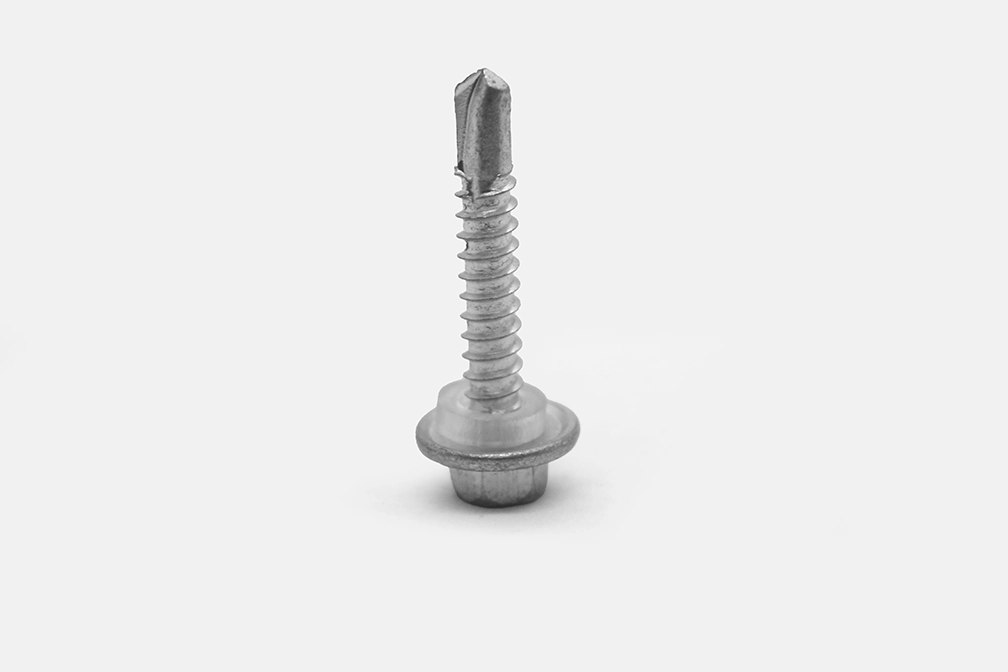
- Metal substrates: Necessitate self-drilling points or pre-punched holes for gauges below 0.148″
Contractors should specify ring-shank or spiral-shank profiles for applications requiring enhanced withdrawal resistance, such as roof decking, subflooring, or high-wind-zone construction. These deformed-shank nails provide 40-60% greater holding power than smooth-shank equivalents, though they require 15-20% more driving force.
Supply Chain and Vendor Evaluation Criteria
Manufacturer vs. Distributor Sourcing Strategies
Direct manufacturer partnerships provide the highest cost efficiency for contractors with steady volume needs over 500,000 units each year. This approach removes distributor markups of 15-25% and grants access to custom specifications, dedicated production runs, and priority during supply shortages. However, manufacturers usually impose strict MOQs, often exceeding 100,000 units per SKU, and have long lead times of 45-90 days, which can be challenging for contractors with fluctuating project pipelines.
Regional distributor networks offer inventory flexibility and quicker turnaround times (7-14 days), but they come with higher per-unit costs. This method is ideal for contractors handling various project types that need different nail specifications without the need for large capital investments in bulk stockpiling. Hybrid strategies are often the best choice for many commercial operations: form direct relationships with manufacturers for high-volume staple sizes (2.5″-3.5″ common nails) while keeping distributor accounts for specialty items and urgent restocking.
Inventory management trade-offs involve balancing carrying costs with volume discounts. Storing 500,000 nails needs about 200 sq ft of warehouse space (assuming standard pallet stacking), with yearly carrying costs (insurance, facility overhead, capital opportunity cost) usually amounting to 18-25% of the inventory value. Contractors should analyze the break-even points where savings from bulk purchases surpass the carrying costs during the anticipated consumption periods.
Quality Assurance and Defect Rate Benchmarks
Professional wholesale suppliers implement statistical process control (SPC) with random sampling protocols testing 0.5-1.0% of production runs. Industry-standard defect tolerances for stainless steel nails maintain <0.5% rejection rates across dimensional accuracy, material composition, and surface finish criteria. Acceptable defect categories include:
- Dimensional variance: ±0.005″ length, ±0.003″ diameter
- Surface imperfections: <2% of surface area showing pitting, scratches, or discoloration
- Collation defects: <1 per 1,000 nails for wire-weld strips
Contractors should negotiate return policies that permit rejecting shipments with defect rates over 1%, with the supplier covering return freight and providing expedited replacements. Suppliers committed to quality supply Certificate of Conformance (CoC) documentation with each shipment, confirming adherence to specified ASTM/ISO standards and including batch traceability codes for quick response to field performance problems.
Third-party inspection services provide independent verification for high-stakes projects where fastener failure involves substantial liability. SGS, Bureau Veritas, and Intertek offer pre-shipment inspection (PSI) services that test material composition, dimensional accuracy, and mechanical properties for fees usually between $800 and $2,000 per inspection—an insignificant insurance against the expense of extensive fastener replacement in finished structures.
FAQ Module
What is the typical lead time for bulk orders of 500,000+ stainless steel nails?
Lead times for large-volume orders typically range from 35 to 60 days depending on the complexity of specifications and the capacity of the manufacturer. Standard sizes in 304 grade usually ship within 35 to 45 days, whereas 316 grade or custom specifications may take 50 to 60 days.
Contractors can shorten lead times by 15 to 20 days through advance scheduling with blanket purchase orders, enabling manufacturers to allocate production capacity before formal order placement. Expedited production involves 10 to 15% surcharges but can reduce timelines to 21 to 28 days for urgent project needs.
How do 304 and 316 stainless steel nails differ in coastal construction projects?
Coastal environments within 5 miles of saltwater require 316 grade stainless steel because chloride-induced corrosion quickly damages 304 alloy. The molybdenum in 316 forms a more stable passive oxide layer that resists pitting and crevice corrosion in marine atmospheres.
Field data indicates that 316 nails retain their structural integrity for over 20 years in areas exposed to direct saltwater spray, whereas 304 variants show surface degradation within 5-7 years. Building codes in coastal areas increasingly mandate the use of 316 grade for exterior applications, making it a compliance requirement rather than an optional upgrade.
Can wholesale suppliers provide custom packaging for multi-site distribution?
Most wholesale suppliers accommodate custom packaging requests for orders exceeding 250,000 units, including site-specific labeling, compartmentalized pallets with mixed sizes, and direct-to-jobsite shipping schedules. Custom packaging typically adds 3-8% to base pricing but eliminates contractor handling costs and reduces theft/loss in distributed inventory systems.
Some suppliers offer vendor-managed inventory (VMI) programs where they maintain consignment stock at contractor facilities, replenishing based on consumption patterns—particularly valuable for contractors managing 5+ simultaneous projects requiring coordinated material flow.
Conclusion
Strategic bulk procurement of stainless steel nails involves balancing material specifications, pricing models, and supplier reliability to optimize the total cost of ownership across commercial construction portfolios.
Professional contractors need to go beyond simple unit-price comparisons to assess grade certifications (such as 304 versus 316 suitability), volume discount structures, logistics capabilities, and quality assurance protocols that collectively influence project success.
The 25-35% cost savings achievable through informed wholesale sourcing directly enhance competitive positioning in bidding processes while ensuring fastener performance aligns with structural requirements and warranty commitments.
By establishing manufacturer-direct relationships for high-volume staples, maintaining distributor partnerships for specialty items, and applying rigorous supplier evaluation criteria, construction companies can transform fastener procurement from a tactical purchasing activity into a strategic advantage that supports profitable growth across various commercial applications.