


Preventing rust starts with selecting the right galvanised carbon steel nail for the application. A high-quality nail with an appropriate zinc coating thickness—especially a hot-dip galvanized carbon steel nail—provides reliable corrosion protection by allowing zinc to act as a sacrificial layer that corrodes before the steel core. However, corrosion resistance depends on more than just galvanization. The coating method, zinc coverage, installation environment, and fastener specifications all influence how long the nail can maintain its performance in construction and industrial applications. Choosing the right corrosion-resistant fastener helps ensure stronger, more durable connections in demanding conditions.
Why Does a Galvanised Carbon Steel Nail Resist Rust and Corrosion?
Rust forms when iron reacts with oxygen and moisture, creating iron oxide on the steel surface. Since carbon steel nails are mainly composed of iron, they naturally require additional protection when exposed to outdoor or humid environments. A galvanised carbon steel nail improves corrosion resistance by adding a protective zinc coating that shields the steel core from environmental exposure.
The zinc coating provides two layers of protection. First, it creates a physical barrier that reduces direct contact between steel and moisture or oxygen. More importantly, zinc is more chemically active than steel, meaning it acts as a sacrificial layer. If the coating is scratched during installation or use, the zinc corrodes preferentially and helps protect the exposed steel underneath through cathodic protection.
The durability of a galvanised carbon steel nail depends largely on zinc coating thickness, coating uniformity, surface adhesion, and the conditions where the fastener is installed. A thicker and more consistent zinc layer generally provides longer-lasting corrosion protection, especially in exterior construction applications. Standard corrosion evaluations, such as neutral salt spray testing according to ASTM B117, are commonly used to compare the performance of different galvanized coatings. In practice, hot-dip galvanized coatings typically provide substantially better corrosion resistance than thinner electro-galvanized coatings.
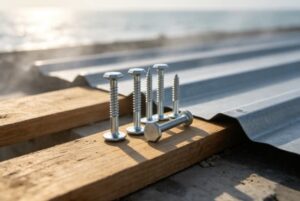
Hot-Dip Galvanized vs. Electro-Galvanized: Which Provides Better Rust Protection?
The corrosion resistance of a galvanised carbon steel nail depends greatly on the galvanizing process used. The two most common methods—hot-dip galvanizing and electro-galvanizing—create different zinc coating structures and are suitable for different application environments.
Hot-dip galvanizing is produced by immersing carbon steel nails into molten zinc, creating a metallurgical bond between the zinc coating and the steel substrate. This process forms a thicker protective layer that covers the nail surface, including edges and corners that are often vulnerable to corrosion. Because of its durability, hot-dip galvanized carbon steel nails are widely used for outdoor construction, fencing, roofing, decking, and other applications exposed to moisture or changing weather conditions.
Electro-galvanizing, on the other hand, applies zinc through an electrochemical plating process. The resulting coating is thinner and provides basic corrosion resistance for applications where exposure to moisture is limited. These nails are commonly selected for indoor projects, furniture assembly, and other low-corrosion environments where cost efficiency is a priority.
For projects requiring long-term corrosion protection, hot-dip galvanized nails are generally the preferred choice because their thicker zinc coating provides better resistance against weather exposure. However, the best option depends on factors such as installation environment, expected service life, substrate material, and project requirements.
Comparison: Hot-Dip vs. Electro-Galvanized Carbon Steel Nails
| Характеристика | Горячее цинкование | Электрооцинкованная |
|---|---|---|
| Coating thickness | 1.4 – 3.9 mils | 0.14 – 0.28 mils |
| Zinc layer formation | Metallurgical bond via molten zinc | Electroplated deposit |
| Salt spray resistance (ASTM B117) | 500+ hours (up to 2,500 hrs in industrial grades) | 24 – 72 hours |
| Best suited for | Exterior, coastal, high-moisture, pressure-treated wood | Interior, dry environments |
| Relative cost | Higher | Lower |
| Corrosion protection | Long-term, sacrificial | Short-term, limited |
Which Coating Standards Define the Quality of a Galvanised Carbon Steel Nail?
When sourcing оцинкованные гвозди из углеродистой стали for construction or industrial applications, understanding coating standards helps ensure consistent corrosion resistance and long-term fastening performance. These standards define requirements for zinc coating quality, thickness, and durability, allowing buyers to select reliable corrosion-resistant fasteners for different environments.
One of the most widely recognized specifications in North America is ASTM A153, which defines hot-dip zinc coating requirements for iron and steel hardware. This standard helps verify that galvanized products have sufficient zinc coverage to protect the underlying steel from moisture, oxidation, and environmental exposure.
Another commonly referenced specification is ASTM F2329, which provides requirements for hot-dip galvanized coatings on steel fasteners. Although different standards may apply depending on the fastener type and application, compliance with recognized coating specifications provides greater confidence in product consistency and corrosion protection.
For European applications, BS EN 14592 provides guidance for timber fasteners used in structural applications, including durability considerations based on different exposure conditions. When purchasing hot-dip galvanized carbon steel nails, buyers should also consider coating thickness reports, material specifications, and quality inspection records to ensure the fasteners meet project requirements.
How to Choose the Right Galvanised Carbon Steel Nail for Your Application?
Choosing the right galvanised carbon steel nail requires more than selecting a zinc-coated fastener. The installation environment, connected materials, expected service life, and corrosion exposure level all influence which type of nail will provide the best performance.
Interior applications such as furniture assembly, cabinetry, and dry indoor framing usually have lower corrosion requirements. In these environments, electro-galvanized nails can provide sufficient protection while offering a more economical fastening solution.
Exterior applications require stronger corrosion resistance. For roofing, decking, fencing, siding, and other structures exposed to rain, humidity, and temperature changes, hot-dip galvanized carbon steel nails are generally preferred because their thicker zinc coating provides improved protection against weather exposure.
For applications involving colour-coated steel panels or metal structures, selecting the correct nail design is also important. A galvanised carbon steel nail with a hexagonal small flange head can provide both corrosion resistance and improved load distribution, helping create a more secure mechanical connection.
Coastal and high-humidity environments require additional consideration because salt exposure accelerates zinc and steel corrosion. In these conditions, heavy-duty hot-dip galvanized nails or additional protective coatings may be required depending on the expected service life and project specifications.
Pressure-treated lumber is another important application area. Because some treated woods contain copper-based preservatives that can increase corrosion risk, standard steel nails may not provide adequate durability. Hot-dip galvanized nails are commonly selected for pressure-treated wood applications because their thicker zinc coating offers better protection in chemically treated environments.
The table below summarises common applications and the recommended galvanisation type:
| Среда применения | Recommended Nail Type | Key Consideration |
|---|---|---|
| Interior, dry | Electro-galvanized | Cost-effective for low-risk settings |
| Exterior general (decking, fencing, roofing) | Hot-dip galvanized | Thick zinc coating for weather exposure |
| Coastal / salt air | Hot-dip galvanized (heavy-duty) | Maximum coating thickness; may require polymeric topcoat |
| Pressure-treated wood | Hot-dip galvanized | Resists copper-induced corrosion |
| Structural steel-to-steel | Galvanised structural nails | Full thread and flange head for secure fastening |
How to Install Galvanised Carbon Steel Nails to Maximize Corrosion Resistance?
Even a high-quality galvanised carbon steel nail can lose part of its corrosion protection if the zinc coating is damaged during installation or storage. Proper handling, suitable installation methods, and choosing the right nail design for the application all help maintain the performance of corrosion-resistant fasteners in construction and industrial projects.
Avoid over-driving the nail. Excessive impact from hammers or nail guns can damage or remove the zinc coating around the nail head and shank, exposing the steel underneath to moisture and accelerating corrosion. Using the correct driving depth and selecting suitable head designs, such as flange head nails where required, can help distribute installation force more evenly and reduce coating damage.
Pre-drill when working with hard substrates. Driving nails directly into dense hardwoods or difficult materials may create excessive friction that affects the zinc coating. Preparing an appropriate pilot hole can reduce installation stress, improve fastening accuracy, and help preserve the protective layer on galvanized steel fasteners.
Store nails in dry conditions before installation. Proper storage is important for maintaining galvanized coating quality. Prolonged exposure to moisture can cause white rust, a zinc corrosion product that primarily affects the coating surface rather than the steel core. Although white rust is less damaging than red rust, heavy buildup may indicate improper storage conditions and should be inspected before use.
Choose the correct nail length and substrate compatibility. The nail specification should match the thickness and type of materials being fastened. Using a nail that is too short may reduce holding strength, while excessive penetration may create unnecessary installation issues. For specific applications, verify the recommended nail size, penetration depth, and load requirements to ensure a secure and durable connection.
Select the appropriate nail design for the application. Features such as full threads, shank design, and head configuration influence holding performance. In applications exposed to vibration, movement, or outdoor conditions, choosing the correct galvanised carbon steel nail design helps maintain connection stability and reduces the risk of moisture entering around the fastener.
Common Failure Causes of Galvanised Carbon Steel Nails and How to Prevent Corrosion
Even high-quality оцинкованные гвозди из углеродистой стали can experience reduced performance when exposed to unsuitable environments, improper installation, or insufficient coating protection. Understanding common failure causes helps buyers and contractors select the right corrosion-resistant fasteners for long-term performance in construction and industrial applications.
Coating depletion is one of the most common reasons galvanized nails eventually lose corrosion protection. Over time, the zinc layer gradually sacrifices itself while protecting the steel core underneath. The speed of zinc consumption depends on factors such as humidity, salt exposure, industrial pollutants, and installation location. This is why zinc coating thickness and quality are key factors when evaluating the expected service life of galvanized steel fasteners.
Mechanical damage during installation or handling can create weak points in the protective coating. Excessive driving force, incorrect tools, or improper installation methods may damage the zinc layer around the nail head or shank, allowing moisture to reach the exposed steel. Although surrounding zinc can still provide limited cathodic protection, extensive coating damage may reduce the overall corrosion resistance of the fastener.
Galvanic corrosion may occur when galvanised nails are installed in direct contact with dissimilar metals, such as copper or brass. When moisture acts as an electrolyte, an electrochemical reaction can accelerate zinc consumption. This consideration is especially important for mixed-metal structures, roofing systems, and outdoor fastening applications where different materials are installed together.
Using a coating level that does not match the environment is another common cause of premature corrosion. For example, electro-galvanized nails may provide insufficient protection in highly exposed outdoor conditions, while standard hot-dip galvanized nails may require additional protection in aggressive coastal or industrial environments. Selecting the correct galvanised carbon steel nail based on exposure conditions and verifying compliance with relevant ASTM or EN standards can help prevent avoidable failures.
Application Examples: Choosing the Right Galvanised Carbon Steel Nail for Different Environments
Selecting the correct galvanised carbon steel nail depends on more than corrosion resistance alone. Factors such as exposure conditions, connected materials, installation requirements, and expected service life all influence the most suitable fastening solution. The following examples show how different environments require different approaches to galvanized fastener selection.
Scenario 1: Coastal Deck Construction
A contractor building a deck in a coastal area faces challenges from salt air, high humidity, and continuous outdoor exposure. In this environment, standard electro-galvanized nails may not provide sufficient long-term corrosion protection.
A suitable solution is the use of hot-dip galvanized carbon steel nails with a thicker zinc coating designed for exterior applications. When combined with compatible pressure-treated lumber and proper installation practices, these corrosion-resistant fasteners help maintain structural reliability under demanding weather conditions.
For coastal projects, contractors typically evaluate coating quality, material compatibility, and applicable corrosion requirements before selecting the appropriate galvanized nail specification.
Scenario 2: Industrial Roofing Installation
An industrial roofing project requires fasteners that can secure colour-coated steel panels while maintaining corrosion resistance under outdoor conditions. In this type of application, the nail design is as important as the coating protection.
Гвозди из оцинкованной углеродистой стали with suitable head designs, such as hexagonal small flange heads, can help distribute installation pressure more evenly and reduce the risk of damaging the panel surface. The zinc coating provides protection against weather exposure, while the correct shank design helps improve fastening stability and holding performance.
For metal roofing and similar construction applications, selecting the right combination of coating type, head design, and fastener dimensions is essential for long-term performance.
Scenario 3: Interior Framing in a Climate-Controlled Warehouse
An indoor framing project in a dry, climate-controlled warehouse has significantly lower corrosion requirements compared with outdoor applications. In this environment, electro-galvanized carbon steel nails may provide sufficient protection while offering a more cost-effective solution.
Because the fasteners are not exposed to continuous moisture, salt, or temperature changes, a thinner zinc coating can often meet the application requirements. Choosing the appropriate galvanization method helps avoid unnecessary costs while ensuring reliable performance for indoor construction projects.
Заключение
Choosing the right galvanised carbon steel nail depends on the coating type, zinc thickness, and application environment. Hot-dip galvanized carbon steel nails provide reliable corrosion protection for outdoor, coastal, and high-moisture conditions, while electro-galvanized options are suitable for lower-corrosion indoor applications. Selecting the appropriate coating standard and installation method helps ensure durable fastening performance over the long term.
Need help selecting the right corrosion-resistant fasteners for your project? Contact our team to discuss your requirements and find suitable galvanised carbon steel nails for your construction or industrial applications.