


Introdução
You’re bolting down a structural steel frame, assembling heavy machinery, or building an automotive chassis. In these environments, failure is not an option—especially when loads are measured in tons, and every connection point is critical.
This is where the carbon steel hex flange countersunk screw comes into play. Designed for demanding structural and industrial applications, it is widely used where strength and reliability are non-negotiable. But the real question engineers, procurement teams, and maintenance professionals often ask is simple: can it truly handle heavy loads in real-world conditions?
Choosing the wrong fastener in high-stress assemblies doesn’t just cause downtime—it can lead to serious safety risks and costly structural failure. That’s why understanding the actual load-bearing capability of this screw matters before making a decision.
What Makes a Carbon Steel Hex Flange Countersunk Screw Strong?
The strength of any fastener starts with its material and manufacturing process. A carbon steel hex flange countersunk screw is engineered from high-quality carbon steel, which offers superior mechanical strength compared to many standard materials. This makes it ideal for load-bearing and structural applications where reliability is paramount.
The specific material composition matters enormously. For example, the carbon steel hex flange countersunk screw manufactured by Infasron Fastening System uses C1022/1022A material. This grade of carbon steel is specifically formulated for fasteners that require both strength and formability. It undergoes rigorous heat treatment and processing to achieve the mechanical properties specified in standards like GB/T 3098.
Understanding Strength Grades
When evaluating whether a carbon steel hex flange countersunk screw can handle heavy loads, you need to look at its strength grade. Fasteners are classified by property classes that indicate their tensile strength and yield strength.
For carbon steel hex flange countersunk screws, common strength grades include 8.8, 10.9, and 12.9. Here’s what these numbers mean in practical terms:
-
Grade 8.8: Minimum tensile strength of 800 MPa, yield strength of 640 MPa. Suitable for general heavy-duty applications.
-
Grade 10.9: Minimum tensile strength of 1,000 MPa, yield strength of 900 MPa. Designed for high-stress environments.
-
Grade 12.9: Minimum tensile strength of 1,200 MPa, yield strength of 1,080 MPa. The highest strength class commonly available.
For context, a typical stainless steel fastener might offer 500–700 MPa tensile strength. The carbon steel hex flange countersunk screw, particularly in higher grades, delivers significantly more strength—often double that of standard stainless alternatives.
The Design Features That Enable Heavy Load Performance
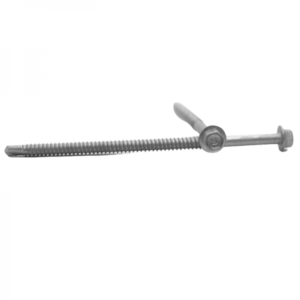
Strength isn’t just about material—it’s about design. The carbon steel hex flange countersunk screw incorporates several engineering features that make it particularly well-suited for heavy loads.
The Hex Flange: Load Distribution Engine
The flange is not just a decorative feature. The integrated flange acts as a built-in washer, distributing the clamping force over a larger area. This does two critical things for heavy load applications. First, it reduces the risk of the screw pulling through the material. Second, it prevents damage to the workpiece surface by spreading the load more evenly.
The flange head design provides enhanced load distribution and grip, making it ideal for high-torque or heavy-load applications. In demanding environments, the integrated flange eliminates the need for a separate washer, simplifying assembly while maintaining excellent load-bearing performance.
Countersunk Head: Flush Finish Without Sacrificing Strength
The countersunk design allows the screw head to sit flush with or below the surface of the workpiece. This is crucial for applications where protruding heads would interfere with moving parts, create snag hazards, or compromise aesthetics. A carbon steel hex flange countersunk screw achieves a flush finish while maintaining the strength needed for heavy loads. Some engineers express concern that countersunk heads may reduce load capacity due to the head geometry, but modern design and material selection compensate for this effect.
Self-Tapping Capability
Many carbon steel hex flange countersunk screws are self-tapping, meaning they can create their own threads as they’re driven into the material. The self-tapping capability ensures that the screw creates a tight grip within the steel, which enhances joint integrity. For applications involving sheet metal or thin-walled structures, this feature is invaluable.
The effective fastening thickness of some models reaches up to 110mm, demonstrating that this screw is designed for substantial material penetration and robust connections. The maximum sheet thickness for drilling is specified at 5.8mm, indicating the screw can handle a range of substrate thicknesses while maintaining strong engagement.
How Coatings Enhance Load Capacity and Durability
A carbon steel hex flange countersunk screw is often coated to enhance its performance in demanding environments. These coatings aren’t just about corrosion protection—they directly impact the screw’s ability to handle heavy loads over time.
Corrosion Protection: Preserving Strength
Corrosion is a silent killer of fastener strength. Rust and oxidation weaken the material, reduce thread engagement, and can cause catastrophic failure under load. High-quality coatings prevent corrosion, ensuring that the carbon steel hex flange countersunk screw maintains its mechanical properties throughout its service life.
The coating on fasteners serves multiple functions: waterproofing, dustproofing, and providing additional performance characteristics that enable special properties in specific environments. Anti-corrosion coatings prevent corrosion of metallic materials, extending service life significantly.
Friction Reduction and Wear Resistance
In industrial applications, coatings commonly protect metal products, reduce friction, and enhance wear resistance. Lower friction during installation means more consistent torque application, which translates to more reliable clamping force. Enhanced wear resistance means the threads stay sharp and effective longer, maintaining their load-bearing capacity over many cycles of use.
Real-World Applications: Where Heavy Load Meets the Carbon Steel Hex Flange Countersunk Screw
The real performance of a carbon steel countersunk hex flange screw is best proven in demanding industrial environments. These fasteners are widely used across industries where structural integrity, vibration resistance, and long-term reliability are critical.
Construction and Structural Steel
In construction and steel structures, fasteners must withstand both static and dynamic loads over long service periods. The carbon steel hex flange countersunk screw is commonly used to secure load-bearing components where joint failure is not acceptable. Its countersunk design allows a flush surface, which helps avoid interference with other structural layers and reduces potential safety risks in exposed assemblies.
Automotive Manufacturing
In automotive applications, fasteners are exposed to continuous vibration, temperature variation, and mechanical stress. Carbon steel hex flange countersunk screws are frequently used in body panels, chassis assemblies, and interior structures. The integrated flange improves load distribution on sheet metal, reducing the risk of pull-through, while the countersunk head provides a smooth surface finish that supports aerodynamic and assembly requirements.
Heavy Equipment and Industrial Machinery
Heavy machinery assembly requires fasteners that can perform under high loads and long operating cycles. In these environments, the carbon steel hex flange countersunk screw is valued for its strength and stability. Its high-strength carbon steel construction ensures reliable performance in equipment exposed to shock loads, vibration, and continuous operation.
Aerospace and Energy Sectors
In aerospace and energy-related equipment, where safety standards are extremely strict, high-strength fasteners are essential. Carbon steel hex flange countersunk screws in higher strength grades such as 10.9 and 12.9 are used in selected structural applications where load reliability and material performance are critical under demanding operating conditions.
Carbon Steel Hex Flange Countersunk Screw vs. Other Fasteners
How does the carbon steel hex flange countersunk screw compare to other fastening options for heavy loads? Here’s a breakdown:
| Caraterística | Parafuso de cabeça escareada com flange sextavada em aço carbono | Standard Hex Bolt + Washer | Stainless Steel Countersunk Screw |
|---|---|---|---|
| Resistência à tração | Up to 1,200 MPa (Grade 12.9) | Varies by grade, typically 400–1,000 MPa | 500–700 MPa |
| Load Distribution | Integrated flange spreads the load widely | Washer required, potential for misalignment | Limited to the head bearing area |
| Installation | Self-tapping capability; one-piece design | Multiple components; separate washer required | Similar to carbon steel but with lower strength |
| Surface Finish | Flush countersunk design | Protruding head | Flush possible but lower strength |
| Resistência à Corrosão | Enhanced with coatings | Coating-dependent | Excellent inherent resistance |
| Aplicações típicas | Automotive, construction, heavy equipment | Estrutura geral | Marine, food processing |
The carbon steel hex flange countersunk screw offers a unique combination of high strength, integrated load distribution, and flush finish that few other fasteners can match.
How to Choose the Right Carbon Steel Hex Flange Countersunk Screw for Your Heavy Load Application
Selecting the right fastener for heavy loads requires careful consideration of several factors.
Match the Strength Grade to Your Load Requirements
For moderate-heavy loads, Grade 8.8 may suffice. For high-stress applications where safety margins are critical, Grade 10.9 or 12.9 is recommended. Always consult the manufacturer’s specifications and consider the minimum tensile strength required for your application.
Consider the Substrate Material
The carbon steel hex flange countersunk screw is suitable for sheet materials up to Q355B grade and below. If you’re working with harder or thicker materials, you may need to consider alternative fasteners or different specifications.
Evaluate the Operating Environment
Will the fastener be exposed to moisture, chemicals, or extreme temperatures? The coating on your carbon steel hex flange countersunk screw should be selected to match the environmental conditions. Anti-corrosion coatings are essential for outdoor or marine applications, while friction-reducing coatings may be more appropriate for high-cycle applications.
Verify the Effective Fastening Thickness
The effective fastening thickness determines how much material the screw can securely engage. For example, some carbon steel hex flange countersunk screws offer an effective fastening thickness of up to 110mm. Ensure your chosen screw has sufficient length and thread engagement for your specific application.
Installation Best Practices for Maximum Load Capacity
Even the strongest carbon steel hex flange countersunk screw will fail if installed incorrectly. Follow these best practices to ensure optimal performance.
Use the Correct Drive Tool
The carbon steel hex flange countersunk screw typically requires a specific drive tool. For example, some models use an M8 Hex Magnetic Socket. Using the correct tool ensures proper torque application and prevents cam-out or stripping.
Apply Proper Torque
Over-torquing can strip threads or break the screw. Under-torquing results in insufficient clamping force. Always follow the manufacturer’s torque specifications. For hex flange screws, the integrated flange provides a visual indication of proper seating—the flange should be in full contact with the workpiece surface.
Ensure Proper Hole Preparation
For self-tapping carbon steel hex flange countersunk screws, the pilot hole size and depth are critical. Too small, and the screw may break during installation. Too large, and thread engagement will be insufficient. Follow the manufacturer’s recommendations for hole size and preparation.
Consider the Countersink
To achieve a truly flush finish, the workpiece should be countersunk to match the screw head angle. This ensures the flange bears evenly on the material surface, maximizing load distribution.
Conclusão
So, can a carbon steel hex flange countersunk screw handle heavy loads? Yes—when the correct grade, size, and coating are properly selected. With tensile strengths up to 1,200 MPa and a design that improves load distribution, it is well-suited for demanding structural and industrial applications.
In real use cases such as automotive assemblies, steel structures, and heavy machinery, its combination of high-strength carbon steel, integrated flange, and protective coating helps maintain reliable performance under load.
However, no fastener is universal. The carbon steel hex flange countersunk screw performs best where strength, flush installation, and load distribution are key requirements, so correct specification is essential.
If you’re evaluating fastening solutions for heavy-duty applications, Infasron Fastening System (Nantong) Co., Ltd. offers GB/T 3098-compliant carbon steel hex flange countersunk screws with multiple coating options. You can review specifications or contact their technical team to find the right fit for your project.