
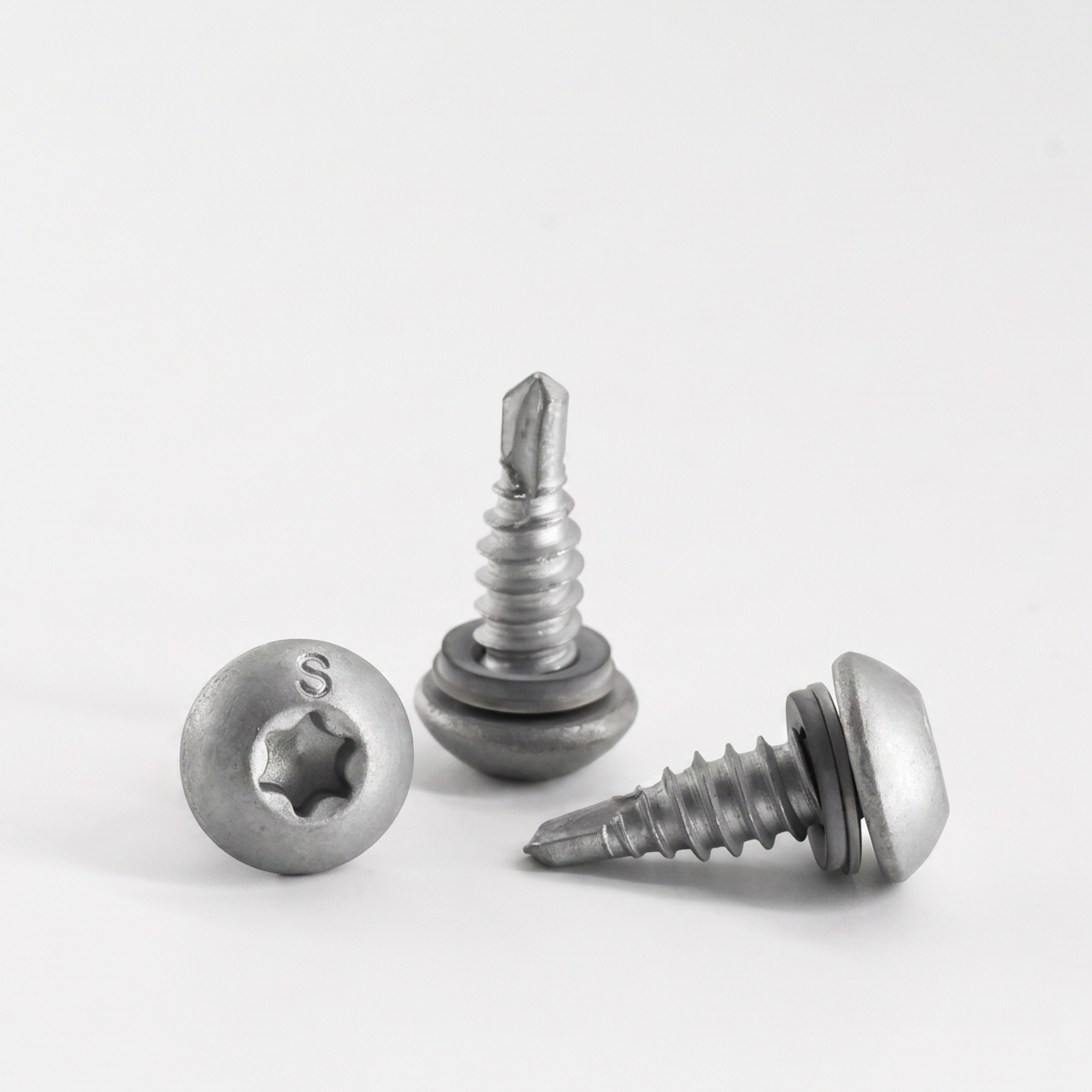
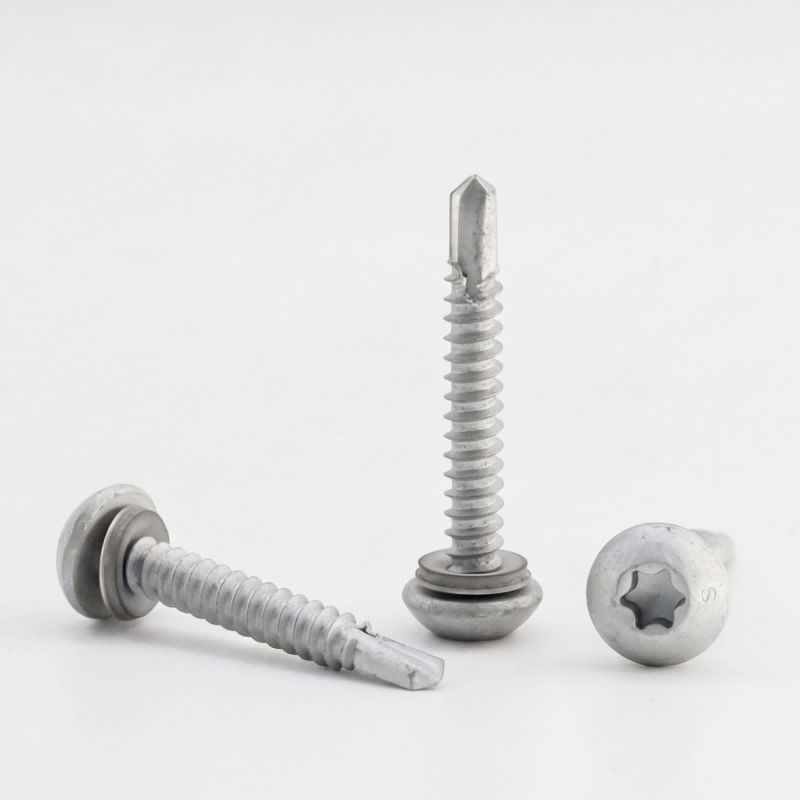
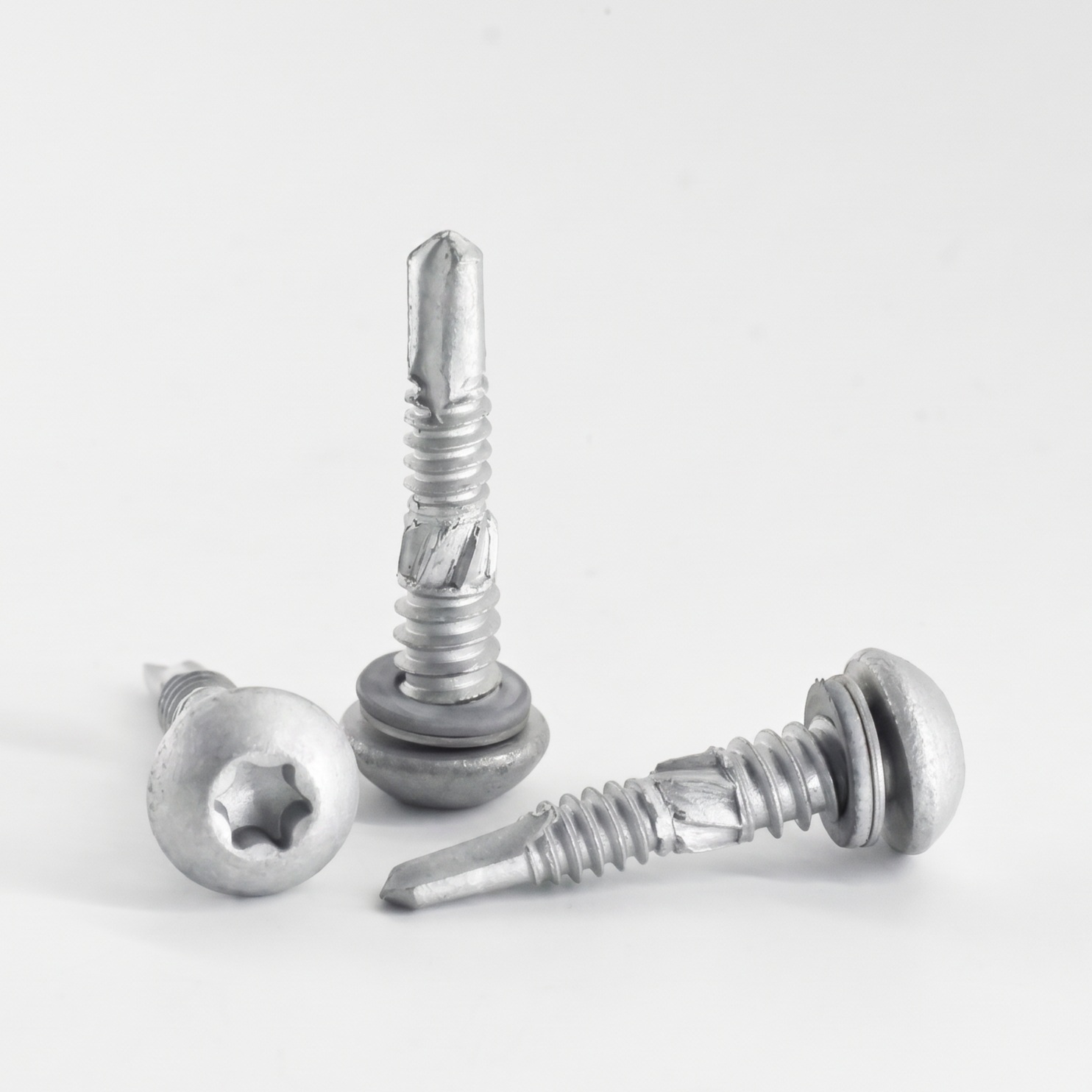
Carbon steel hex flange structural screws deliver outstanding mechanical performance for heavy-duty structural connections, yet their long-term reliability in outdoor and industrial environments hinges entirely on the quality of their surface treatment. Bare carbon steel corrodes rapidly when exposed to moisture, chlorides, and industrial pollutants—making anti-corrosion coating selection a critical engineering decision rather than an afterthought.
This article provides a rigorous comparative analysis of leading coating technologies, including Ruspert triple-layer systems and hot-dip galvanising, evaluating each against real-world corrosivity classifications and procurement criteria. Whether you are specifying fasteners for solar mounting structures, port infrastructure, or steel-frame buildings, this guide equips procurement engineers and project specifiers with a structured framework to match coating performance to environmental demand—maximising service life while managing total cost of ownership.
1. Why Rust Resistance Matters for Structural Fasteners
1.1 Corrosion Failure Modes in Structural Connections
Corrosion in structural fasteners is rarely uniform surface oxidation. The two most damaging mechanisms are galvanic corrosion and crevice corrosion, both of which can silently undermine joint integrity long before visible rust appears.
Galvanic corrosion occurs when carbon steel fasteners contact dissimilar metals—aluminium purlins in solar racking systems or stainless steel gusset plates in architectural steelwork—creating an electrochemical cell that accelerates metal loss at the anode (typically the fastener). The hex flange geometry, which creates a large bearing surface contact zone, can actually concentrate this risk if the flange-to-substrate interface traps moisture.
Crevice corrosion develops in the confined space between the flange face and the substrate, where oxygen depletion creates a localised anodic environment. In high-chloride coastal zones, this mechanism can perforate an uncoated fastener shank within 18–24 months. The structural consequence is not merely aesthetic: a corroded M16 Grade 10.9 bolt can lose more than 30% of its proof load capacity before the joint visibly distorts, creating a latent load-bearing failure risk that standard inspection protocols may miss.
1.2 Environmental Exposure Classifications
ISO 9223 provides the internationally recognised framework for categorising atmospheric corrosivity, directly informing fastener coating specifications:
- C2 (Low): Inland rural environments, minimal pollution—standard zinc electroplating is typically sufficient.
- C3 (Medium): Urban and light industrial atmospheres, moderate humidity—requires enhanced zinc coatings or Ruspert systems.
- C4 (High): Industrial zones, coastal areas with moderate salinity—hot-dip galvanising or Ruspert systems with> 1000 h salt spray performance mandatory.
- C5 (Very High): Marine splash zones, chemical processing environments—demands zinc-rich composite coatings or duplex systems.
Misclassifying exposure category by even one level can reduce effective fastener service life by 40–60%, directly increasing maintenance costs and structural inspection frequency. Procurement engineers must obtain site-specific corrosivity data before finalising coating specifications.
2. Carbon Steel Hex Flange Screw: Base Material & Mechanical Profile
2.1 Material Grade and Mechanical Properties
Carbon steel hex flange structural screws are manufactured from medium-carbon or alloy steel, heat-treated to achieve defined mechanical property classes under ISO 898-1. The two dominant grades in structural applications are:
- Grade 8.8: Minimum tensile strength 800 MPa, proof load stress 600 MPa. Suitable for general structural steel connections where controlled tightening is employed.
- Grade 10.9: Minimum tensile strength 1040 MPa, proof load stress 940 MPa. Specified for high-strength friction grip (HSFG) applications, heavy equipment mounting, and seismic-zone steelwork.
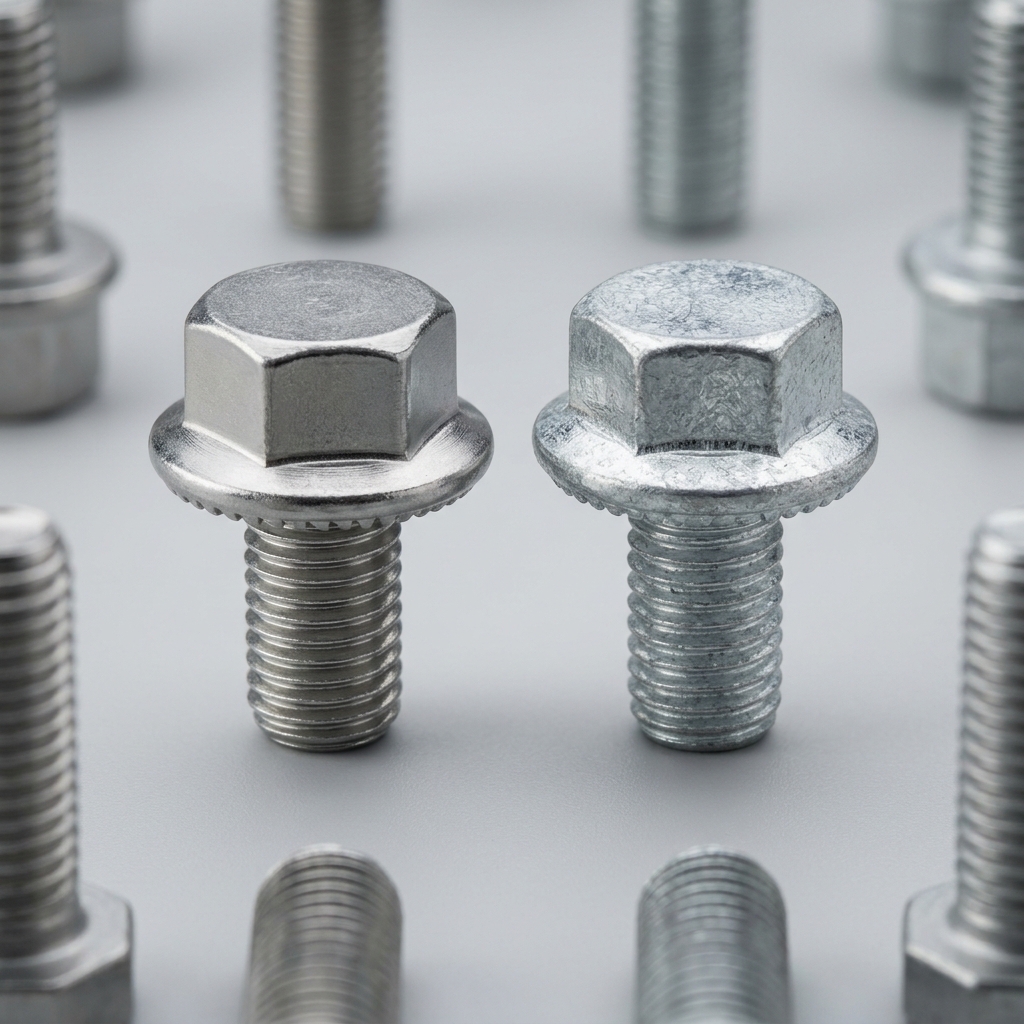
The hex flange design provides a critical mechanical advantage over standard hex head fasteners: the integrated flange distributes clamping load over a larger bearing area, reducing surface pressure on softer substrates such as aluminium profiles or composite panels. This eliminates the need for a separate washer in most applications, reducing component count and installation time. The serrated underside variant adds rotational resistance, maintaining clamp force under vibration loading—a key requirement in highway infrastructure and wind energy installations.
2.2 Standard Specifications and Dimensional Parameters
Carbon steel hex flange structural screws are governed by DIN 6921, ISO 4162, and ASME B18.2.3.9M, ensuring dimensional interchangeability across global supply chains.
| Parametr | Specification Range |
|---|---|
| Thread Size | M8 – M24 |
| Strength Grade | 8.8 / 10.9 / 12.9 |
| Flange OD Range | 17.9 mm (M8) – 50.9 mm (M24) |
| Applicable Standards | DIN 6921, ISO 4162, ASME B18.2.3 |
| Thread Pitch Tolerance | 6g (standard) / 6H after coating |
| Recommended Coating by Environment | C3: Ruspert / C4–C5: HDG or Ruspert HT |
The flange OD-to-shank ratio is engineered to maintain a consistent bearing pressure distribution. Thread pitch tolerance class 6g is maintained for uncoated and thin-film coated fasteners; hot-dip galvanised versions require re-tapping to 6AZ tolerance to accommodate zinc layer build-up.
3. Anti-Corrosion Coating Technologies: Comparative Analysis
3.1 Ruspert Coating — Triple-Layer Protection System
Ruspert is a proprietary composite coating system developed for high-performance structural fasteners operating in C3–C5 environments. It functions through three synergistic layers:
- Zinc phosphate conversion base layer: Chemically bonds to the steel substrate, providing micro-porosity that anchors subsequent layers and offers initial corrosion inhibition.
- Zinc-rich metallic intermediate layer: Provides sacrificial cathodic protection equivalent to conventional zinc plating but at a controlled, thin-film thickness (8–12 µm total system).
- Organic resin topcoat: A chromate-free polymer seal that blocks electrolyte penetration and provides UV resistance.
The critical performance metric is salt spray resistance exceeding 1000 hours per ISO 9227, compared to 96–200 hours for standard electroplated zinc. Because the total coating thickness remains under 15 µm, thread tolerance compatibility is fully maintained—Ruspert-coated fasteners install without re-tapping and retain precise torque-tension relationships essential for structural preloading. This makes Ruspert the preferred choice when dimensional accuracy and corrosion performance must coexist.
3.2 Hot-Dip Galvanising — Heavy-Duty Barrier Protection
Hot-dip galvanising (HDG) per ASTM A153 immerses fasteners in molten zinc at approximately 450°C, producing a metallurgically bonded zinc-iron alloy coating. Zinc layer thickness for fasteners typically ranges from 45 to 85 µm, providing both barrier protection and sacrificial anode cathodic protection—zinc corrodes preferentially, protecting the underlying steel even when the coating is mechanically damaged.
HDG is cost-effective for high-volume structural projects in C4–C5 environments such as bridges, port cranes, and coastal utility towers. However, the thick zinc deposit requires thread re-tapping to restore dimensional tolerances, adding processing cost and lead time. Specifiers must explicitly state “re-tapped to 6AZ” in procurement documents to avoid installation torque anomalies.
Coating Performance Comparison
| Parametr | Ruspert | Hot-Dip Galvanising | Electroplated Zinc | Dacromet |
|---|---|---|---|---|
| Odporność na mgłę solną | ≥1000 h | ≥1500 h | 96–200 h | ≥480 h |
| Grubość powłoki | 8–15 µm | 45–85 µm | 5–12 µm | 8–10 µm |
| Thread Tolerance Impact | None | Re-tapping required | Minimal | Minimal |
| Applicable Corrosivity | C3–C5 | C4–C5 | C2–C3 | C3–C4 |
| Typical Application | Solar, steel frame | Marine, bridge | General indoor | Automotive, light structural |
| Wskaźnik kosztów względnych | Medium-High | Średni | Niski | Średni |
4. Application Scenarios and Procurement Decision Guide
4.1 Industry-Specific Use Cases
Carbon steel hex flange structural screws with engineered anti-corrosion coatings serve critical roles across multiple industries:
- Steel Structure Buildings: Grade 10.9 Ruspert-coated hex flange screws are specified for secondary steel connections in pre-engineered metal buildings where dimensional precision and C3–C4 corrosion resistance must coexist with rapid installation.
- Solar Mounting Systems: Aluminium-to-steel interface joints in ground-mount and rooftop PV arrays create galvanic risk. Ruspert coating with a non-conductive topcoat seam effectively interrupts the galvanic cell while meeting 25-year service life requirements.
- Port Infrastructure: Quayside crane rail fasteners and jetty structural connections operate in C5-M (marine) environments. Hot-dip galvanised hex flange screws with 85 µm zinc thickness provide the sacrificial protection depth required for 20+ year maintenance intervals.
- Highway Guardrail Systems: Vibration loading from traffic demands serrated-flange variants. HDG coating resists road salt (chloride) exposure classified at C4, while the flange geometry eliminates washer loss during high-volume mechanical installation.
4.2 Coating Selection Criteria for Procurement Engineers
A structured decision framework for coating selection should evaluate four dimensions:
- Service Life Expectation: Match salt spray test hours to ISO 9223 corrosivity category. C5 environments demand ≥1000h systems; C3 environments can be served cost-effectively by Ruspert or enhanced zinc.
- Total Cost of Ownership (TCO): HDG has lower unit cost but adds re-tapping and extended lead time. Ruspert commands a 15–25% price premium but eliminates dimensional rework and reduces maintenance inspection frequency.
- Regulatory Compliance: Ruspert chromate-free formulations satisfy RoHS Directive 2011/65/EU and REACH SVHC restrictions. Dacromet formulations must be verified for hexavalent chromium content before European project specification.
- Lead Time and Supply Chain: HDG is available from regional galvanisers with 5–10 day turnaround for standard sizes. Ruspert coating is applied at specialist facilities; procurement should plan for 15–20 day lead times on non-stock specifications.
FAQ
Q1: How many hours of salt spray resistance can Ruspert-coated carbon steel hex flange screws achieve compared to standard zinc plating?
Ruspert-coated fasteners achieve a minimum of 1000 hours of neutral salt spray resistance per ISO 9227, with premium formulations reaching 1500 hours. Standard electroplated zinc provides only 96–200 hours depending on deposit thickness. This represents a 5–10× performance advantage, making Ruspert the appropriate specification for C3 and above environments where electroplating is inadequate.
Q2: Does hot-dip galvanising affect the thread tolerance of hex flange structural screws, and how should procurement specify this?
Yes. The 45–85 µm zinc deposit of HDG significantly exceeds standard thread tolerance allowances. Procurement documents must specify “re-tapped after galvanising to tolerance class 6AZ per ISO 965-4” for external threads, and nut threads should be over-tapped to 6H/6AZ. Failure to specify this results in installation torque values that do not correlate to design preload, creating a structural safety risk.
Q3: Which anti-corrosion coating is compliant with both European (CE/ETA) and North American (IBC/AISC) structural fastener standards?
Hot-dip galvanising per ASTM A153 (North America) and EN ISO 1461 (Europe) is the most universally recognised coating for dual-market compliance. Ruspert coatings can achieve compliance when accompanied by third-party test reports demonstrating conformance to EN 13811 or equivalent performance criteria. Procurement engineers should request ETA (European Technical Assessment) documentation and ICC-ES evaluation reports from fastener suppliers when dual-jurisdiction compliance is required.
Wnioski
Carbon steel hex flange structural screws are not inherently corrosion-resistant—but with the correct surface treatment, they become highly durable fastening solutions capable of performing across C3 to C5 corrosivity environments for decades. The selection between Ruspert and hot-dip galvanising is not a question of which coating is superior in absolute terms, but which system best aligns with the project’s environmental classification, dimensional requirements, regulatory obligations, and lifecycle cost model.
For projects demanding dimensional precision with strong corrosion performance—solar structures, pre-engineered buildings, seismic connections—Ruspert delivers the optimal balance. For high-volume, heavy-exposure infrastructure where sacrificial zinc depth matters most—marine ports, bridges, highway systems—hot-dip galvanising remains the economically sound, proven choice.
Procurement engineers should treat coating specification as a structural engineering decision, not a procurement commodity choice. Engaging suppliers with documented salt spray test data, traceable material certifications, and coating process quality records is the most effective safeguard against premature fastener failure and the costly structural remediation it necessitates.