
Résumé
Timber framing demands fasteners that perform under sustained structural loads, resist pull-through failure, and meet increasingly stringent building code requirements. The carbon steel flange structural screw has emerged as the preferred solution across commercial and residential wood construction — replacing traditional lag bolts, through-bolts, and standard hex-head screws in many critical connection scenarios.
What distinguishes this fastener category is the convergence of three engineering advantages: high-grade carbon steel delivering verified tensile and shear capacity, a flanged bearing head that distributes clamping force across a wider substrate contact area, and purpose-engineered thread geometry optimized for wood fiber engagement. Together, these characteristics translate into faster installation, measurable labor savings, and defensible structural performance under third-party certification.
This article examines the mechanical properties, technical specifications, compliance framework, and commercial value proposition of the carbon steel flange structural screw — providing procurement managers, structural engineers, and construction contractors with the technical depth needed to make confident specification decisions for timber framing projects.
1. What Makes a Carbon Steel Flange Structural Screw Different
1.1 Material Composition & Mechanical Properties
The performance baseline of any structural fastener begins with its material. Carbon steel flange structural screws are typically manufactured from medium-to-high carbon steel — commonly SAE 1022 or equivalent grades — subjected to case hardening or through-hardening heat treatment processes. This produces a fastener with a hardened outer case resistant to torsional stress during installation and a ductile core that absorbs dynamic loading without brittle fracture.
Key mechanical benchmarks for a properly specified carbon steel flange structural screw include:
- Tensile strength: typically 120,000–150,000 psi (827–1,034 MPa), depending on diameter and heat treatment
- Proof load: engineered to sustain sustained tension without permanent deformation
- Rockwell hardness: surface hardness in the C28–C38 range, balancing drill-point penetration with shear resistance
- Résistance au cisaillement: critical for lateral wood connection loads, typically 60–70% of tensile rating
This material profile gives the carbon steel flange structural screw a clear mechanical advantage over stainless steel alternatives in pure load capacity, and over zinc alloy or lower-grade fasteners in hardness and fatigue performance. For structural wood connections where load tables must be documented and verified, the predictability of carbon steel’s mechanical properties is a procurement asset in itself.
1.2 Flange Head Design & Load Distribution Mechanics
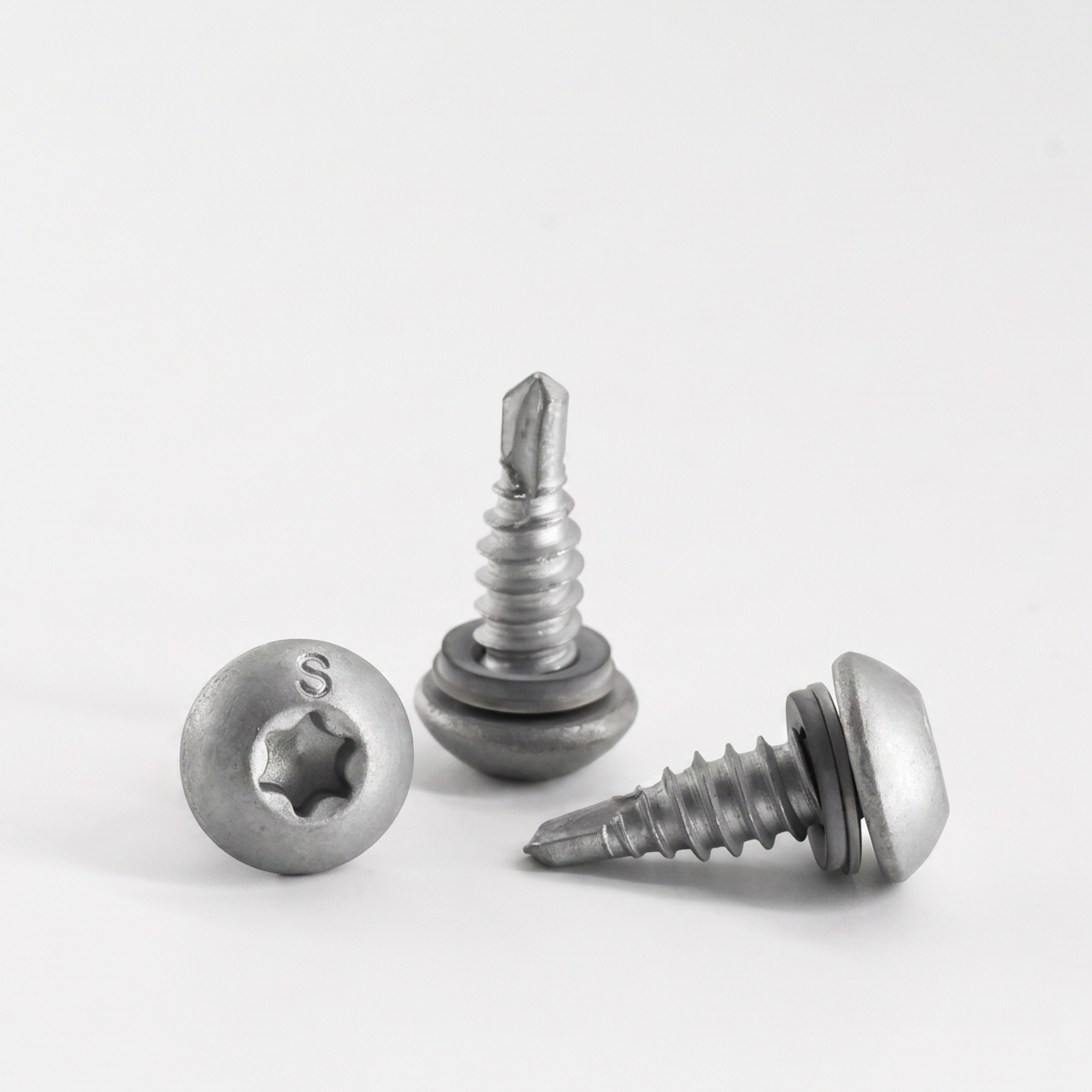
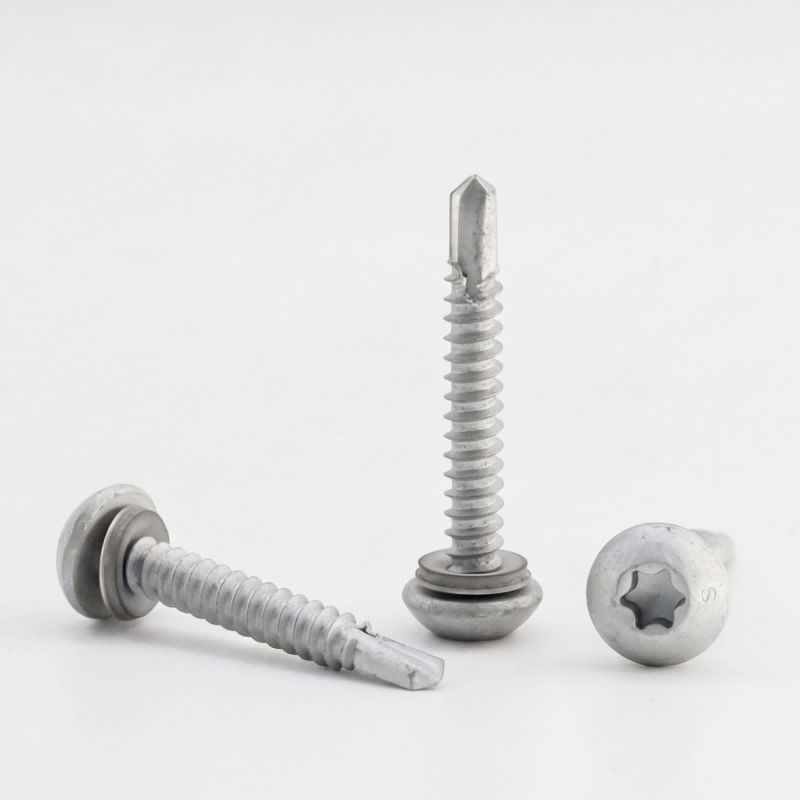
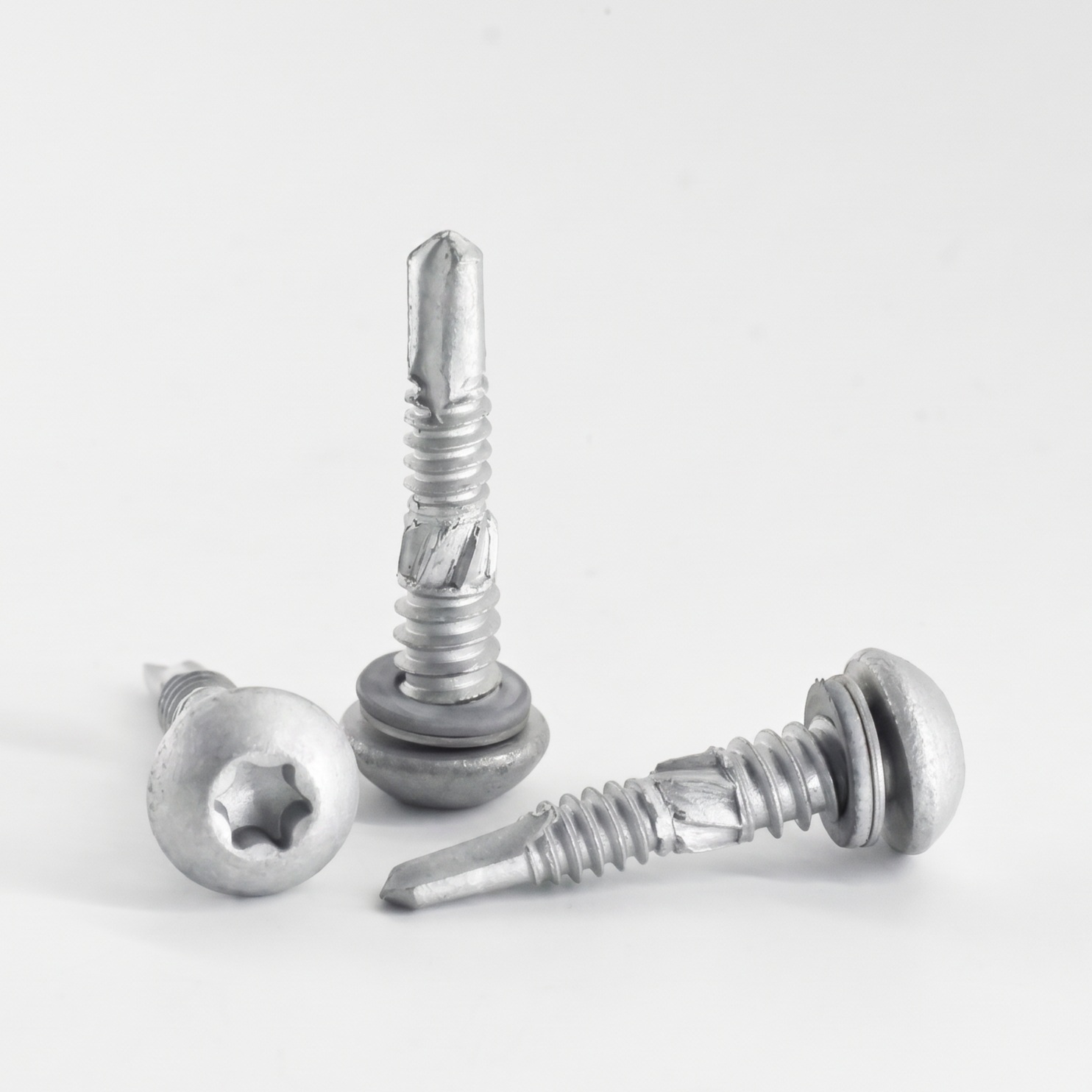
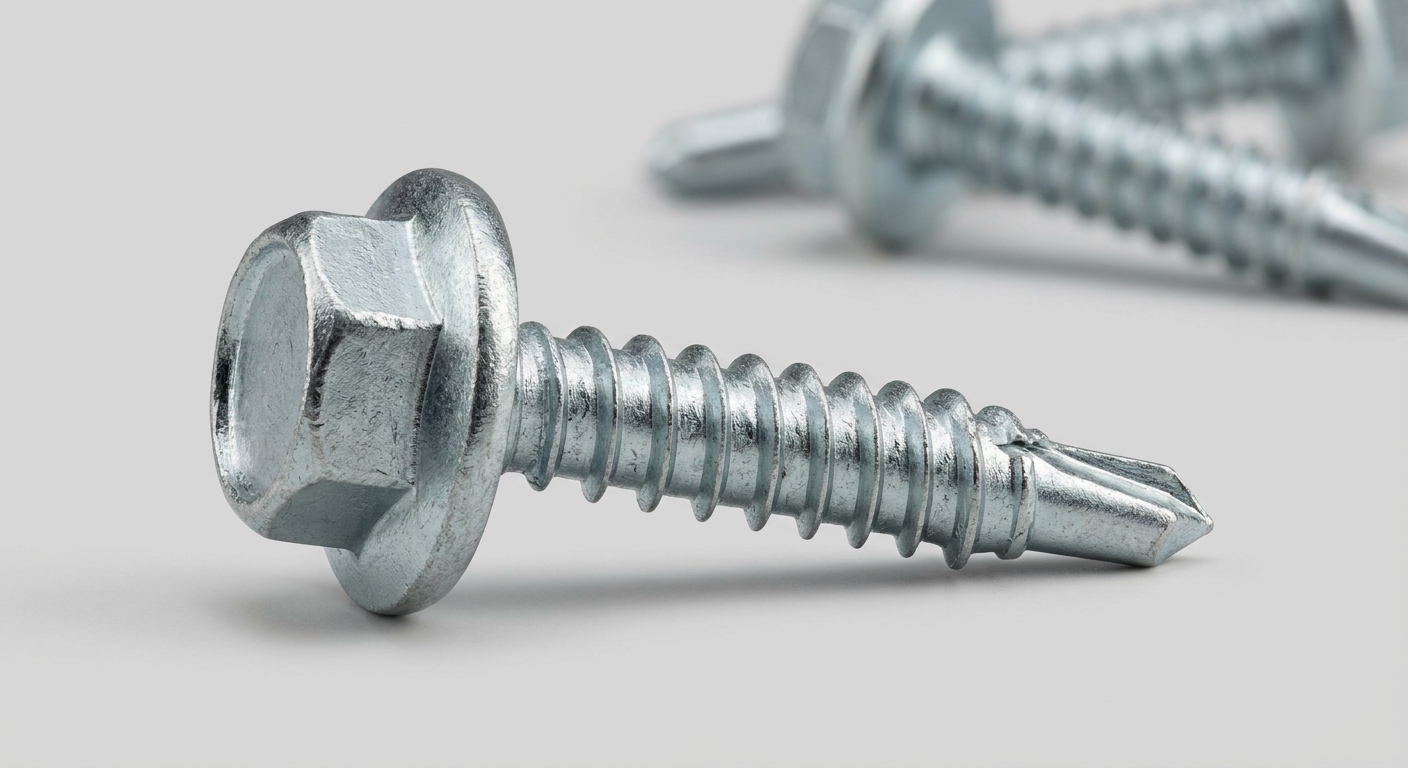
The defining geometric feature of this fastener is its integrated flange — a widened bearing collar formed integrally with the hex or socket drive head. Where a standard hex-head screw concentrates clamping force beneath a relatively narrow head diameter, the flange head distributes that same force across a significantly larger contact surface area.
This geometry produces three measurable structural benefits:
- Reduced pull-through stress: The increased bearing area lowers the unit pressure exerted on wood fibers directly beneath the head, dramatically reducing pull-through failure risk in engineered lumber and cross-laminated timber (CLT) panels where face grain density varies.
- Improved clamping uniformity: The flange maintains consistent perpendicular seating even in countersunk or slightly irregular substrate surfaces, reducing eccentric loading at the connection point.
- Elimination of washers: Unlike standard structural hex bolts that require a separate hardened washer to achieve adequate bearing area, the flange head integrates this function — reducing component count and installation time simultaneously.
For ledger board connections and post-to-beam joints where pull-out and pull-through resistance are co-critical failure modes, the flange head geometry is not a cosmetic detail — it is a load path engineering decision.
2. Key Technical Specifications & Performance Parameters
The following table presents representative specifications for carbon steel flange structural screws across common timber framing sizes. Actual values vary by manufacturer and certification lot.
| Thread Diameter | Shank Length | Type de tête | Résistance à la traction | Résistance au cisaillement | Type d'entraînement | Coating/Finish | Code Compliance |
|---|---|---|---|---|---|---|---|
| 1/4″ (6.3 mm) | 1-1/2″ – 3″ | Flange Hex | 18.5 kN | 11.2 kN | Hex/Socket | Zinc EG | ICC-ES |
| 5/16″ (7.9 mm) | 2″ – 5″ | Flange Hex | 28.0 kN | 16.8 kN | Hex/Socket | Zinc EG | ICC-ES / IBC |
| 3/8″ (9.5 mm) | 2-1/2″ – 6″ | Flange Hex | 40.5 kN | 24.3 kN | Hex/Socket | HDG / Zinc | ICC-ES / IBC |
| 1/2″ (12.7 mm) | 3″ – 8″ | Flange Hex | 72.0 kN | 43.2 kN | Hex/Socket | HDG | ICC-ES / IBC / IRC |
2.1 Thread & Drive System Specifications
Carbon steel flange structural screws for timber framing applications use a coarse thread pitch — typically 9–11 threads per inch (TPI) for larger diameters — specifically engineered for maximum wood fiber engagement. Coarse threads cut more aggressively into wood cell structure, generating higher withdrawal resistance per unit of embedment length compared to fine-thread fasteners designed for metal-to-metal connections.
Self-drilling point options (Type 17 or auger tip variants) are available for direct installation into solid sawn lumber and LVL without pilot holes up to specific diameter thresholds. For engineered wood products with higher density — including parallel strand lumber (PSL) and laminated strand lumber (LSL) — pre-drilling remains recommended to prevent splitting and ensure thread engagement geometry is maintained.
Drive recess compatibility is standardized across hex socket (SAE and metric) and external hex configurations, enabling installation with standard impact drivers and torque-controlled tools — a practical advantage on high-volume framing sites.
2.2 Coating & Corrosion Protection Options
Interior dry-service applications typically specify electrogalvanized (EG) zinc coating at 0.2–0.5 mil thickness, providing adequate corrosion resistance within conditioned building envelopes. For semi-exposed conditions — covered decks, crawl spaces, or exterior-adjacent framing — hot-dip galvanized (HDG) coating at 1.0–1.7 mil provides a substantially more durable zinc barrier.
A critical procurement consideration is compatibility with preservative-treated lumber. ACQ (Alkaline Copper Quaternary) and CA (Copper Azole) treatments are highly corrosive to standard zinc coatings. Specifying carbon steel flange structural screws with HDG coating meeting ASTM A153 Class D or equivalent, or with stainless steel as an alternative for the most aggressive exposures, is essential for code-compliant installation in treated wood applications.
3. Compliance Standards & Structural Code Requirements
3.1 Relevant Building Code & Certification References
Structural screws used in load-path connections must carry documented third-party approval to be specified on permitted projects in most jurisdictions. The primary certification pathway in the United States is ICC-ES (International Code Council Evaluation Service), which issues ESR (Evaluation Service Report) approvals referencing IBC (International Building Code) and IRC (International Residential Code) load tables.
An ICC-ES approved carbon steel flange structural screw will include:
- Published allowable load tables for withdrawal and lateral (shear) loads by wood species group
- Specific installation requirements incorporated into the approval scope
- Compatibility statements for treated lumber types and exposure categories
- Reference to ASTM F1667 or equivalent manufacturing standards
Procurement teams should request the current ESR number and verify its active status before specifying any structural screw for permitted work. Expired or superseded approvals create liability exposure during inspection.
3.2 Installation Requirements for Structural Approval
Code-compliant installation of a carbon steel flange structural screw is not simply a matter of driving the fastener flush. Key installation parameters that are typically defined within ICC-ES approvals include:
- Edge distance: minimum 1.5× to 2× fastener diameter from the wood member edge
- End distance: minimum 3× to 4× fastener diameter from member ends to prevent splitting
- Spacing: minimum on-center spacing between adjacent fasteners in a connection group
- Pre-drilling: required for dense engineered lumber species and for fasteners within minimum edge/end distances
- Torque control: some approvals specify minimum installation torque to ensure full thread engagement and flange seating
Failure to observe these parameters — even with a properly certified fastener — can void the load table values and create non-compliant connections that will not pass structural inspection.
4. Timber Framing Applications & Commercial Value
4.1 Primary Structural Wood Connection Scenarios
The carbon steel flange structural screw addresses a broad range of connection types where traditional hardware has historically required more complex installation:
- LVL beam-to-post connections: High withdrawal and shear demands are met with clustered flange screw patterns replacing through-bolt assemblies, reducing drilling time and hardware count
- Ledger board attachments: Flange head pull-through resistance is directly relevant to lateral deck loads transferred through ledger-to-rim joist connections
- Post-to-beam joints: Moment-resisting connections in exposed timber framing benefit from the flange’s consistent bearing geometry on rough-sawn surfaces
- Mass timber assemblies: CLT and glulam panel connections increasingly specify structural screws over traditional lag hardware for both performance and aesthetic reasons in exposed structure applications
- Shear wall framing: High-density screw patterns in shear wall hold-down zones benefit from the installation speed advantage of structural screws versus anchor bolt systems
4.2 Total Cost of Ownership vs. Conventional Fasteners
The unit price of a carbon steel flange structural screw is higher than a standard construction screw — but total installed cost tells a different story. Consider the following comparative factors:
| Cost Factor | Lag Bolt + Washer Assembly | Carbon Steel Flange Structural Screw |
|---|---|---|
| Components per connection | 3 (bolt + washer + nut or pilot hole) | 1 |
| Installation tool | Drill + impact wrench | Impact driver |
| Pre-drilling required | Always | Diameter-dependent |
| Installation time per fastener | 3–5 minutes | 45–90 seconds |
| Hardware procurement complexity | Multiple SKUs | Single SKU |
| Load table documentation | Engineer-calculated | ICC-ES approved |
For contractors managing large-volume timber framing projects, these efficiency gains compound significantly. Reducing installation time per connection by 60–70% across hundreds of structural joints translates directly to measurable labor cost reduction and schedule compression — outcomes that matter to both general contractors and project owners.
FAQ
1. What load capacity should I specify when sourcing a carbon steel flange structural screw for LVL beam connections?
For LVL beam connections, specify based on the published ICC-ES load tables for your target fastener diameter and the LVL species group designation. A 3/8″ carbon steel flange structural screw in Douglas Fir-Larch LVL typically yields allowable withdrawal values of 350–500 lbs per fastener at standard embedment depths. Always confirm values against the current ESR for your specific product and apply the appropriate duration-of-load and wet-service adjustment factors per NDS (National Design Specification) requirements.
2. Is a flange head structural screw compliant with ICC-ES standards for use in treated lumber applications?
Compliance depends on coating specification. An ICC-ES approval will explicitly state compatible preservative treatment types and required coating standards. For ACQ or CA treated lumber, HDG coating meeting ASTM A153 is the standard minimum requirement. Verify the ESR’s treatment compatibility section before procurement — standard EG-coated screws are not approved for direct contact with ACQ-treated wood in most jurisdictions.
3. How does the flange head design reduce pull-through failure compared to a standard hex head structural screw?
Pull-through failure occurs when the fastener head is forced through the wood substrate under tensile loading. The flange head’s larger bearing diameter — typically 40–60% greater contact area than a standard hex head of equivalent drive size — distributes the tensile load over more wood fiber, reducing unit bearing stress below the wood’s crushing strength threshold. This is particularly significant in engineered lumber products where localized density variation can create weak points directly beneath a narrow fastener head.
Conclusion
The carbon steel flange structural screw represents a mature, well-documented fastener solution that addresses the core performance requirements of modern timber framing: verified tensile and shear capacity from heat-treated carbon steel, superior pull-through resistance from integrated flange geometry, and code-defensible installation through ICC-ES certification.
For procurement teams, the specification decision simplifies to three criteria: confirm the ESR approval covers your connection type and lumber treatment, select the coating appropriate to your exposure condition, and verify dimensional compatibility with your connection design. For engineering teams, the published load tables and standardized installation parameters provide the documentation foundation required for permitted structural work.
Against conventional lag bolt assemblies, the carbon steel flange structural screw delivers a compelling total cost argument — fewer components, faster installation, and a single-SKU procurement pathway that reduces supply chain complexity on large framing projects. As mass timber construction and engineered lumber applications continue expanding across commercial and mid-rise residential sectors, the structural screw’s role as the default connection fastener will only strengthen.