
Resumen
In structural fastener procurement, the cost of misspecification is rarely limited to a single line item. A screw selected with the wrong thread pitch, insufficient tensile rating, or inadequate surface treatment can compromise joint integrity, trigger project delays, or require full disassembly under load conditions — all at significant expense.
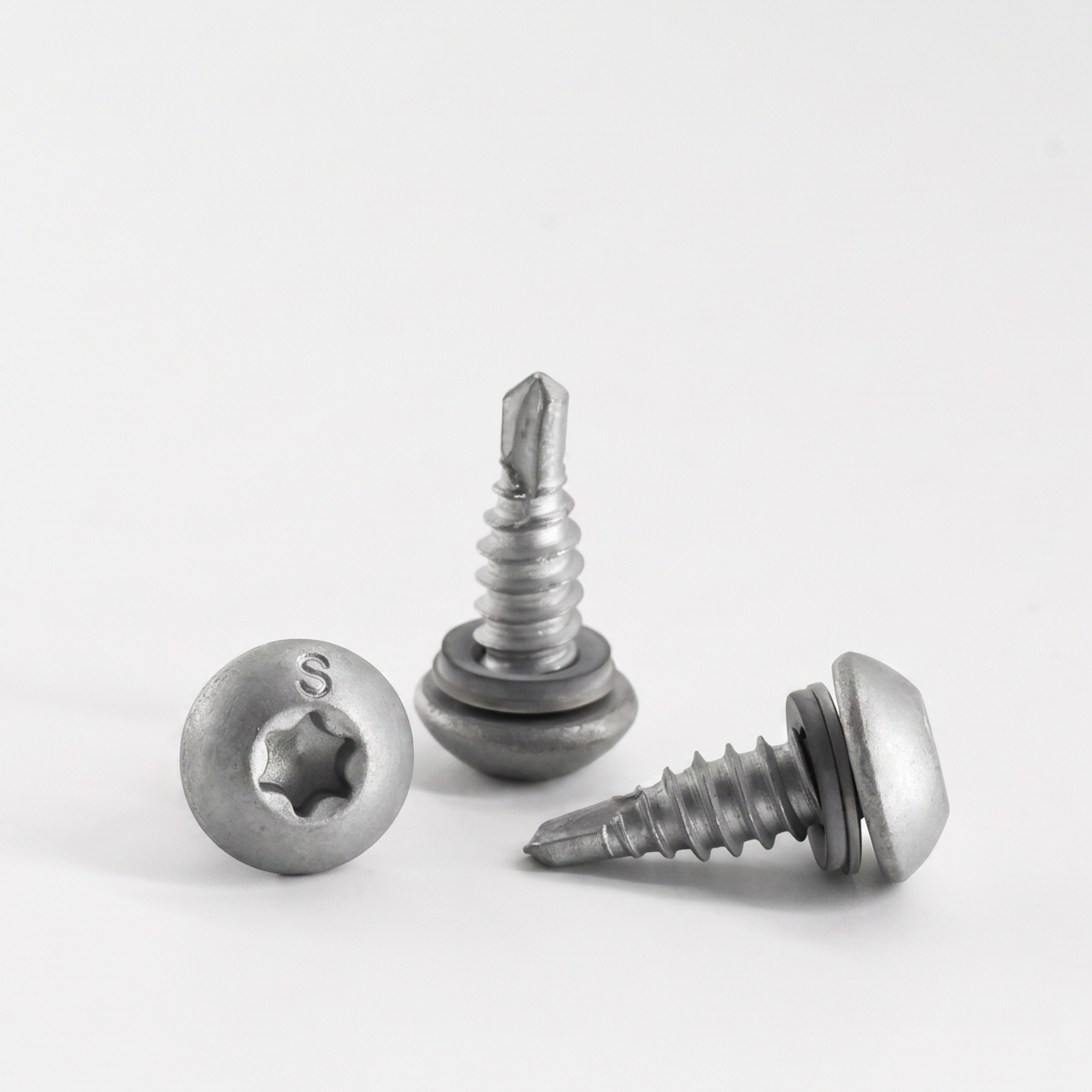
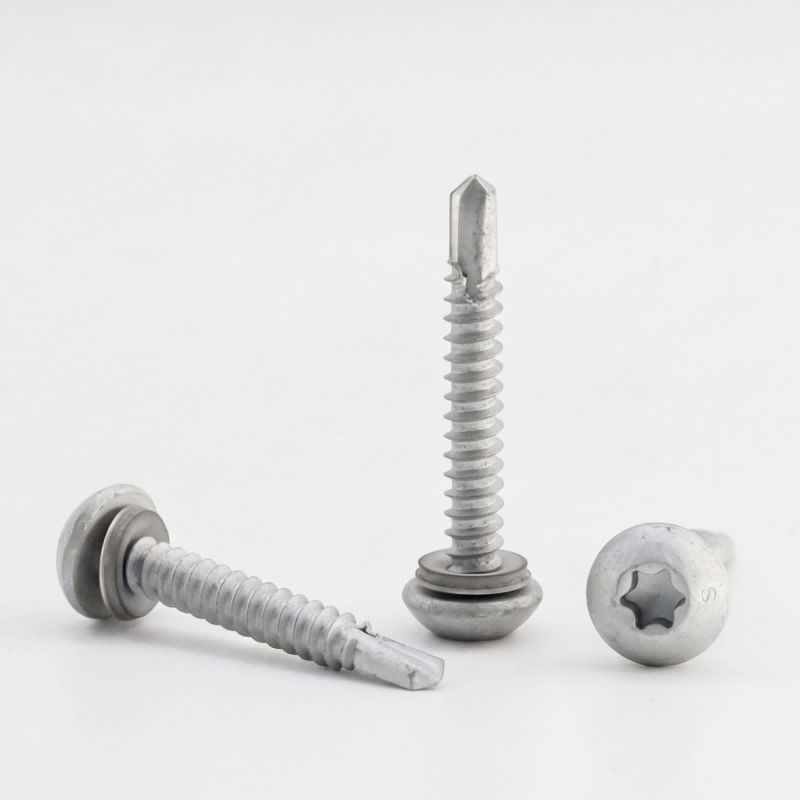
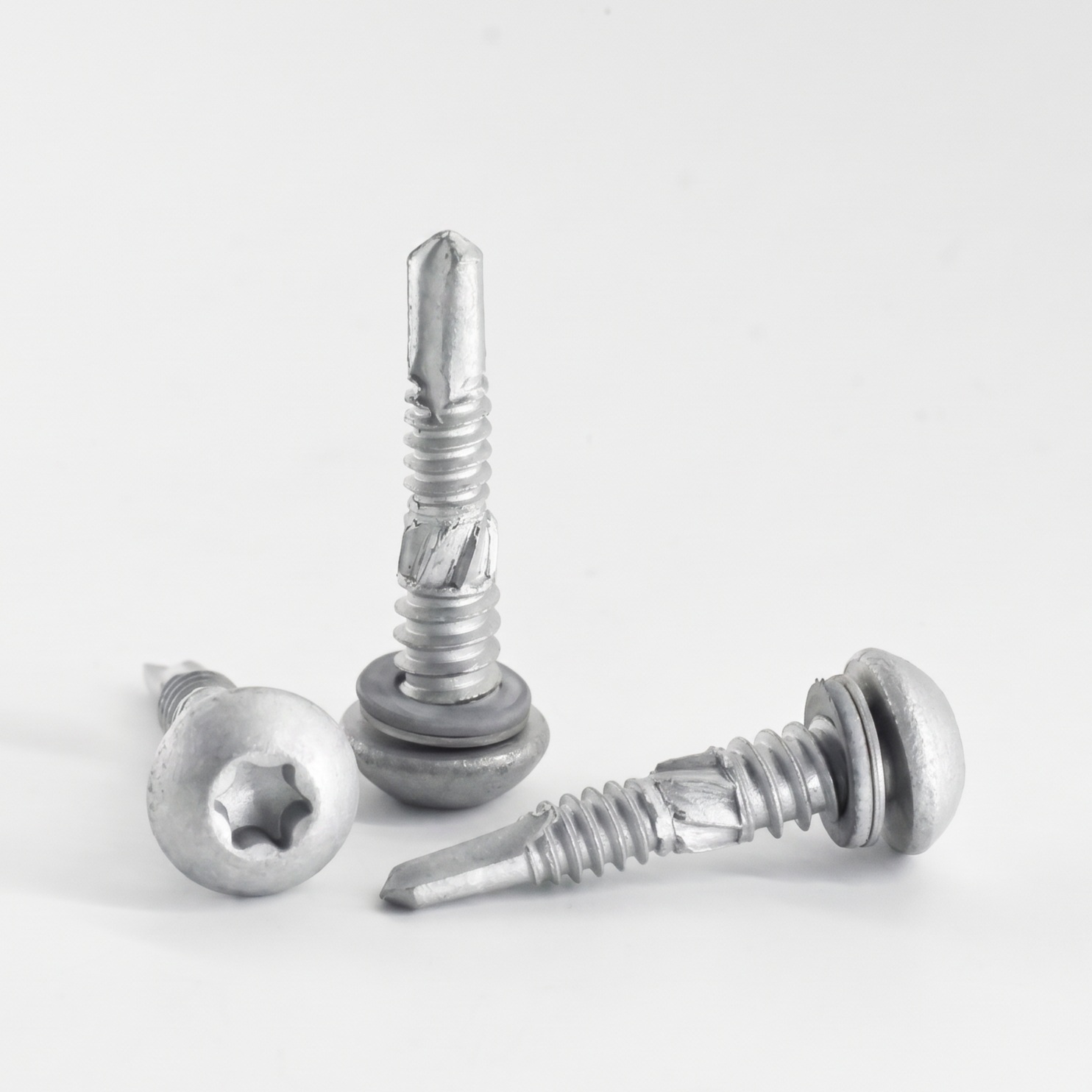
Carbon Steel Structural Screws are among the most specified fasteners in heavy industrial and construction procurement, yet sourcing decisions are frequently made on price alone, bypassing critical engineering parameters. This article addresses that gap.
Whether you are specifying fasteners for steel-to-steel connections, structural timber framing, or modular construction assemblies, the decision framework remains consistent: define dimensions precisely, verify material grade against load requirements, match surface treatment to exposure conditions, and confirm supplier compliance documentation before committing to volume orders.
This guide walks procurement engineers and technical buyers through each of these decision layers — providing the specification vocabulary and evaluation criteria needed to reduce risk and improve sourcing outcomes.
1: Core Dimensional Specifications Every Buyer Must Define
Screw Dimensions — Diameter, Length, and Thread Pitch
Dimensional accuracy is the foundation of structural screw specification. Three parameters govern fit, load transfer, and installation performance: nominal diameter, grip length, and thread pitch.
Nominal diameter determines the cross-sectional area available to resist shear and tensile forces. For light structural applications, M6 and M8 are common; M10 and M12 are standard in medium-to-heavy structural assemblies. Oversizing diameter without recalculating hole tolerances causes installation interference; undersizing creates stress concentrations at the joint.
Grip length — the unthreaded shank portion — must span the full thickness of the clamped material. If threads engage within the joint interface rather than beyond it, clamping force is compromised and fatigue resistance drops. Buyers should specify grip length based on total stack thickness, not screw length alone.
Thread pitch selection depends on material and load type. Coarse threads (e.g., M10×1.5) offer faster installation and better resistance to stripping in softer substrates. Fine threads (e.g., M10×1.25) provide higher preload for a given torque and superior vibration resistance in metal-to-metal joints. Self-tapping variants eliminate pre-tapping requirements in sheet steel applications but require specific point geometry and hardness ratings.
Point type also affects installation: sharp points suit thin sheet metal, blunt points are standard for pre-drilled structural assemblies, and self-drilling points integrate the drilling and fastening step for speed-critical applications.
Head Geometry and Drive Compatibility
Head profile and drive type determine torque transmission efficiency, tool accessibility, and whether the fastener can be flush-mounted or must protrude above the substrate surface.
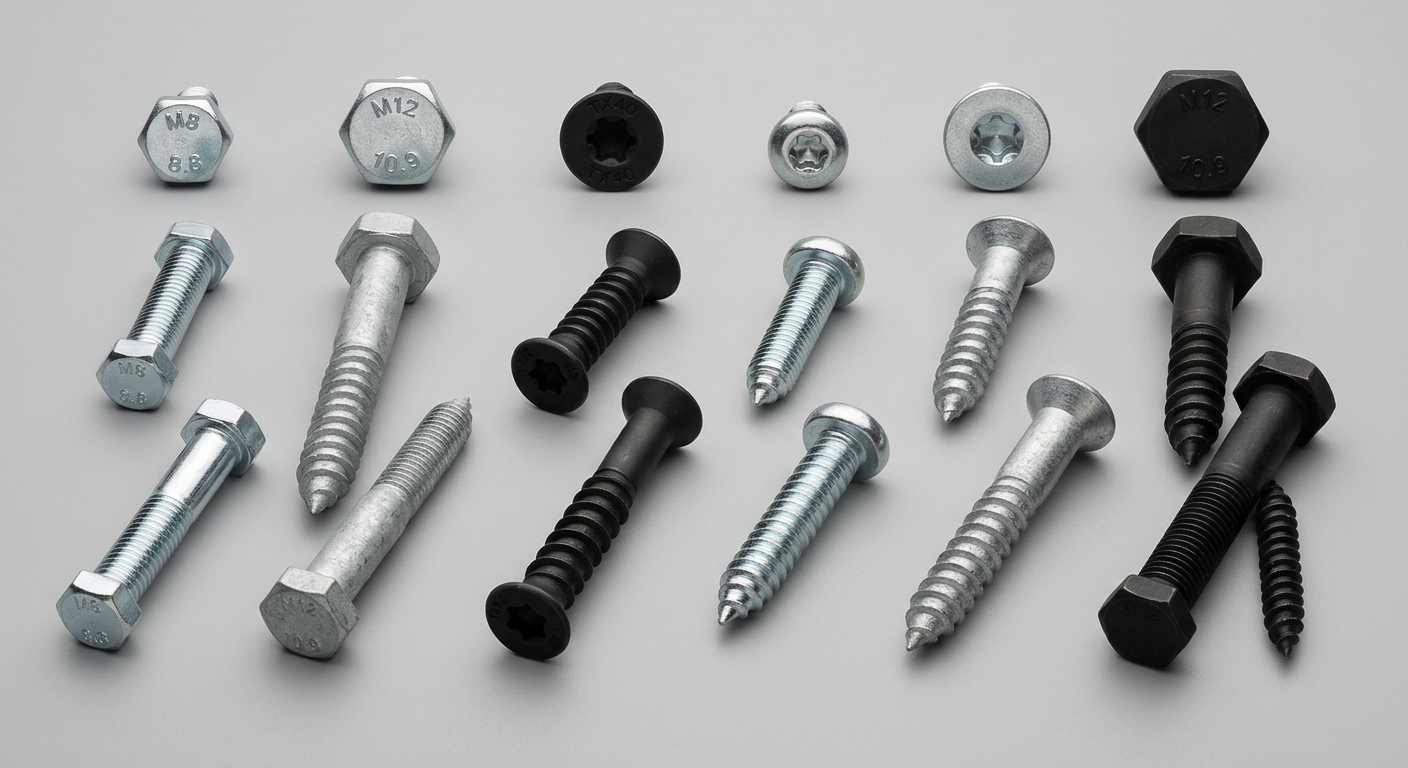
Hex heads are the default for high-torque structural applications — they accept standard open-end and socket wrenches, support high clamping loads, and are easily inspected visually post-installation. Flat (countersunk) heads are preferred where surface flush is required, common in architectural metalwork and decking systems. Pan and wafer heads distribute clamping load across a wider bearing surface, reducing pull-through risk in thinner materials.
Drive type governs both installation torque capacity and tool compatibility on-site. Hex socket (Allen) drives provide excellent torque-to-size ratios and resist cam-out under high load. Torx (star) drives offer superior cam-out resistance and are increasingly specified in automated assembly environments. Phillips drives remain common in lower-torque applications but are generally unsuitable for high-preload structural joints due to cam-out risk.
| Spec Dimension | Variables to Compare |
|---|---|
| Nominal Diameter | M6 / M8 / M10 / M12 / Custom |
| Thread Pitch | Coarse / Fine / Self-tapping |
| Tipo de cabeza | Hex / Flat / Pan / Wafer |
| Tipo de accionamiento | Hex Socket / Torx / Phillips |
| Standard Length Range | 20mm – 200mm |
| Point Type | Sharp / Blunt / Self-drilling |
2: Material Grade, Mechanical Properties, and Compliance Standards
Carbon Steel Grades and Mechanical Performance
Not all carbon steel screws are structurally equivalent. Grade designation directly governs tensile strength, proof load, and hardness — the three mechanical properties that determine whether a fastener will perform safely under design loads.
Under the SAE J429 system, Grade 5 (medium carbon steel, quenched and tempered) delivers a minimum tensile strength of 120,000 psi (827 MPa) and is appropriate for general structural use. Grade 8 (medium carbon alloy steel) achieves 150,000 psi (1,034 MPa) minimum tensile strength and is specified where high preload or dynamic loading is present.
Under ISO 898-1, the equivalent designations are Class 8.8 (similar performance to Grade 5) and Class 10.9 (comparable to Grade 8). Class 10.9 fasteners are commonly specified in steel frame connections, heavy equipment mounting, and preloaded bolted joints per EN 14399.
Hardness is equally important: Rockwell hardness values must remain within specified ranges to prevent hydrogen embrittlement risk during electroplating processes. Buyers should request hardness test data alongside tensile certificates, particularly for high-strength grades.
Proof load — the maximum axial force a fastener can withstand without permanent deformation — is the critical design input for preloaded structural joints. Specifying screws by proof load rather than nominal grade provides a more reliable engineering basis for joint design.
Regulatory and Industry Compliance Requirements
Structural fastener procurement requires documented compliance, not assumed conformance. Key standards buyers must reference include:
- ASTM F1852: Covers twist-off type tension control structural bolt assemblies in carbon steel — relevant for high-preload structural connections.
- ISO 898-1: Defines mechanical properties for metric carbon and alloy steel bolts and screws across property classes.
- EN 14399: European standard for high-strength structural bolting assemblies for preloading — mandatory for CE-marked structural applications in European markets.
- IFI-111: Industry standard covering inch-series structural screws, widely referenced in North American industrial procurement.
Procurement teams should require mill certificates (confirming raw material chemistry), mechanical test reports (tensile, proof load, hardness), and third-party inspection documentation for any structural-grade fastener order. Suppliers unable to provide traceable documentation should be disqualified from structural sourcing programs.
3: Surface Treatment and Environmental Performance
Common Surface Coatings for Carbon Steel Structural Screws
Carbon steel’s primary vulnerability is corrosion. Surface treatment selection directly determines service life, maintenance frequency, and total cost of ownership across the fastener’s operational life.
Zinc electroplating (clear or yellow chromate) provides moderate corrosion protection — typically 72–200 hours salt spray resistance per ASTM B117. It is cost-effective for indoor or sheltered structural applications but insufficient for direct outdoor exposure without additional sealing.
Hot-dip galvanizing (HDG) deposits a thick zinc-iron alloy layer (typically 45–85 µm), delivering 500–1,000+ hours salt spray resistance. HDG is the standard treatment for outdoor structural steel applications, bridge components, and coastal construction. Note that HDG coating thickness affects thread fit — Class 2A/2B thread tolerances may require adjustment for HDG fasteners.
Black oxide provides minimal corrosion protection (typically <100 hours salt spray) and is primarily used for aesthetic purposes or in oil-lubricated indoor environments. It is not appropriate for structural outdoor use.
Dacromet (zinc-aluminum flake coating) offers 500–1,000 hours salt spray resistance in a thinner coating profile than HDG, making it suitable for precision-threaded structural fasteners where dimensional tolerance is critical. It also eliminates hydrogen embrittlement risk — an advantage over electroplating for high-strength grades.
Matching Surface Treatment to Application Environment
| Environment | Recommended Treatment | Salt Spray Rating |
|---|---|---|
| Indoor dry / controlled | Zinc electroplate | 72–200 hrs |
| Outdoor sheltered | Yellow zinc / Dacromet | 200–500 hrs |
| Outdoor exposed | Hot-dip galvanized | 500–1,000+ hrs |
| High humidity / coastal | HDG + sealant or Dacromet | 1,000+ hrs |
| Chemical contact | Specify per chemical resistance data | Application-specific |
Matching treatment to environment at the specification stage — rather than defaulting to the lowest-cost option — prevents premature corrosion failure and eliminates costly field replacement programs.
4: Application Scenarios and Commercial Sourcing Considerations
Typical Industrial Applications for Carbon Steel Structural Screws
Carbon Steel Structural Screws serve load-bearing roles across a wide range of industrial sectors. Understanding load type — shear versus tension — is the primary application-driven spec driver.
Steel-to-steel connections in structural frames and equipment bases typically impose combined shear and tension loads. These applications require high-grade fasteners (Class 10.9 or Grade 8), precise torque control, and surface treatments compatible with galvanic contact conditions.
Structural timber framing in prefabricated and modular construction uses self-drilling or coarse-thread screws with wafer or hex heads to achieve rapid assembly without pre-drilling. Load ratings must comply with applicable timber connection design codes.
Heavy equipment assembly — including agricultural machinery, mining equipment, and industrial presses — demands vibration-resistant fastener systems. Fine-thread variants with locking features (nylon insert, serrated flange) are commonly specified to maintain preload under cyclic loading.
Modular and prefabricated construction drives demand for dimensional consistency across large batch orders, where fastener-to-fastener variation directly affects assembly line throughput and joint quality.
Key Sourcing Factors — MOQ, Lead Time, and Supplier Qualification
For B2B industrial buyers, supplier capability is as important as product specification. Key sourcing evaluation criteria include:
- Batch consistency: Request dimensional and mechanical test data across multiple production lots to verify process control capability.
- Traceability documentation: Mill certificates, heat numbers, and test reports must accompany each shipment for structural-grade fasteners.
- MOQ flexibility: Established structural fastener suppliers typically offer tiered MOQ structures — critical for project-based procurement where volumes vary by phase.
- Lead time reliability: Verify production and shipping lead times against project schedules. Strategic suppliers maintain buffer stock for standard structural sizes.
- Supplier audit criteria: ISO 9001 certification is a baseline requirement; IATF 16949 or equivalent process certifications indicate higher manufacturing discipline for precision structural fasteners.
PREGUNTAS FRECUENTES
Q1: What carbon steel grade is recommended for high-load structural screw applications in outdoor environments?
For outdoor high-load applications, ISO 898-1 Class 10.9 (or SAE Grade 8 equivalent) combined with hot-dip galvanizing is the standard specification. Class 10.9 delivers the tensile strength required for preloaded structural joints, while HDG provides durable corrosion protection in exposed conditions. For coastal or chemically aggressive environments, Dacromet coating on Class 10.9 fasteners is an alternative that avoids hydrogen embrittlement risk.
Q2: How do I determine the correct screw length and diameter for a steel-to-steel structural joint?
Screw diameter should be selected based on calculated shear and tensile loads at the joint, referencing applicable structural design codes. Length must ensure that the threaded portion engages fully beyond the joint interface, with grip length matching the total clamped stack thickness. As a practical rule, a minimum of two full thread pitches should extend beyond the nut face after installation.
Q3: What certifications should a supplier provide to confirm compliance with structural screw standards?
Suppliers should provide: (1) mill certificates confirming raw material chemical composition, (2) mechanical test reports covering tensile strength, proof load, and hardness per ISO 898-1 or ASTM standards, (3) salt spray test reports per ASTM B117 for surface treatment verification, and (4) ISO 9001 quality management certification. For European structural projects, CE marking documentation per EN 14399 may also be required.
Conclusión
Specifying Carbon Steel Structural Screws correctly is a multi-variable engineering and procurement decision. The critical checkpoints are consistent regardless of application: define dimensional parameters (diameter, grip length, thread pitch, point type) before selecting head geometry and drive type; verify material grade against mechanical performance requirements and applicable compliance standards; match surface treatment to actual exposure conditions rather than defaulting to the lowest-cost option; and qualify suppliers on documentation capability and batch consistency, not price alone.
A structured specification process reduces the risk of joint failure, project delays, and costly field remediation. It also strengthens supplier relationships by establishing clear, measurable acceptance criteria from the outset. For procurement teams managing large-volume structural fastener programs, investing time in specification precision at the sourcing stage consistently delivers lower total cost of ownership over the project lifecycle.