
초록
Corrosion-induced fastener failure is one of the most persistent and costly challenges in structural engineering — particularly in assemblies that join dissimilar metals or combine metal connectors with timber substrates. Conventional single-material screws force engineers into an uncomfortable trade-off: carbon steel delivers the tensile strength required for structural loads but corrodes rapidly in aggressive environments, while stainless steel resists oxidation but sacrifices mechanical performance and inflates material costs.
The flange bimetallic structural screw resolves this dilemma through a metallurgically engineered dual-material architecture. By pairing a high-tensile carbon steel shank with a corrosion-resistant stainless steel or coated head — and integrating a load-distributing flange — this fastener simultaneously addresses galvanic corrosion, moisture ingress, and structural pull-out risk. This article provides procurement engineers and project specifiers with a detailed technical analysis of the design principles, performance parameters, compliance standards, and application economics that justify specifying bimetallic structural screws in demanding mixed-material projects.
The Corrosion Problem in Structural Fastening
Why Standard Screws Fail in Mixed-Material Environments
When two metals with different electrochemical potentials come into direct contact in the presence of an electrolyte — moisture, condensation, or atmospheric humidity — galvanic corrosion initiates immediately. The more anodic metal (typically carbon steel) becomes the sacrificial anode and undergoes accelerated oxidation. In steel-to-aluminum connections, for example, aluminum sits significantly higher on the galvanic series than carbon steel, creating a potential difference that drives electron transfer and rapidly degrades the fastener shank.
This mechanism is not theoretical. In timber-frame structures with steel joist hangers, standard carbon steel screws exposed to seasonal moisture cycles can exhibit measurable section loss within 18–24 months. In coastal or industrial atmospheric environments classified as C4 or C5 under ISO 9223, corrosion rates accelerate by a factor of three to five compared to rural inland conditions. The consequences extend beyond surface rust: thread cross-section reduction directly diminishes pull-out strength, and oxide expansion within the substrate interface generates stress concentrations that initiate micro-cracking in aluminum extrusions and timber fiber separation.
Solar mounting systems present a particularly acute version of this problem. Aluminum racking profiles bolted to galvanized steel roof structures using standard carbon steel hardware create a three-metal galvanic cell — aluminum, zinc, and iron — where fastener degradation can compromise the entire array’s structural warranty within five years.
The Cost of Corrosion-Related Structural Failure
The financial impact of fastener corrosion extends well beyond the replacement cost of individual screws. A 2019 NACE International study estimated global corrosion costs at over $2.5 trillion annually, with structural fastener failure representing a disproportionate share of maintenance expenditure in construction and infrastructure.
For commercial and industrial projects, the cost model is compounded across several dimensions. Re-fastening labor in timber-frame or modular construction typically costs 8–12× the original fastener material cost per replacement cycle, because access scaffolding, structural inspection, and load redistribution are required before any fastener can be replaced. Warranty liability for facade cladding systems or prefabricated building modules is frequently voided when non-compliant fasteners are identified during inspection. Procurement fragmentation — maintaining separate fastener SKUs for corrosive and non-corrosive zones — increases inventory complexity and introduces installation error risk when contractors substitute materials on-site.
Specifying a single, corrosion-resistant structural fastener that meets both mechanical and environmental performance requirements eliminates these cascading cost vectors.
How Bimetallic Construction Solves the Problem
Dual-Material Architecture — Steel Core + Stainless or Coated Cap
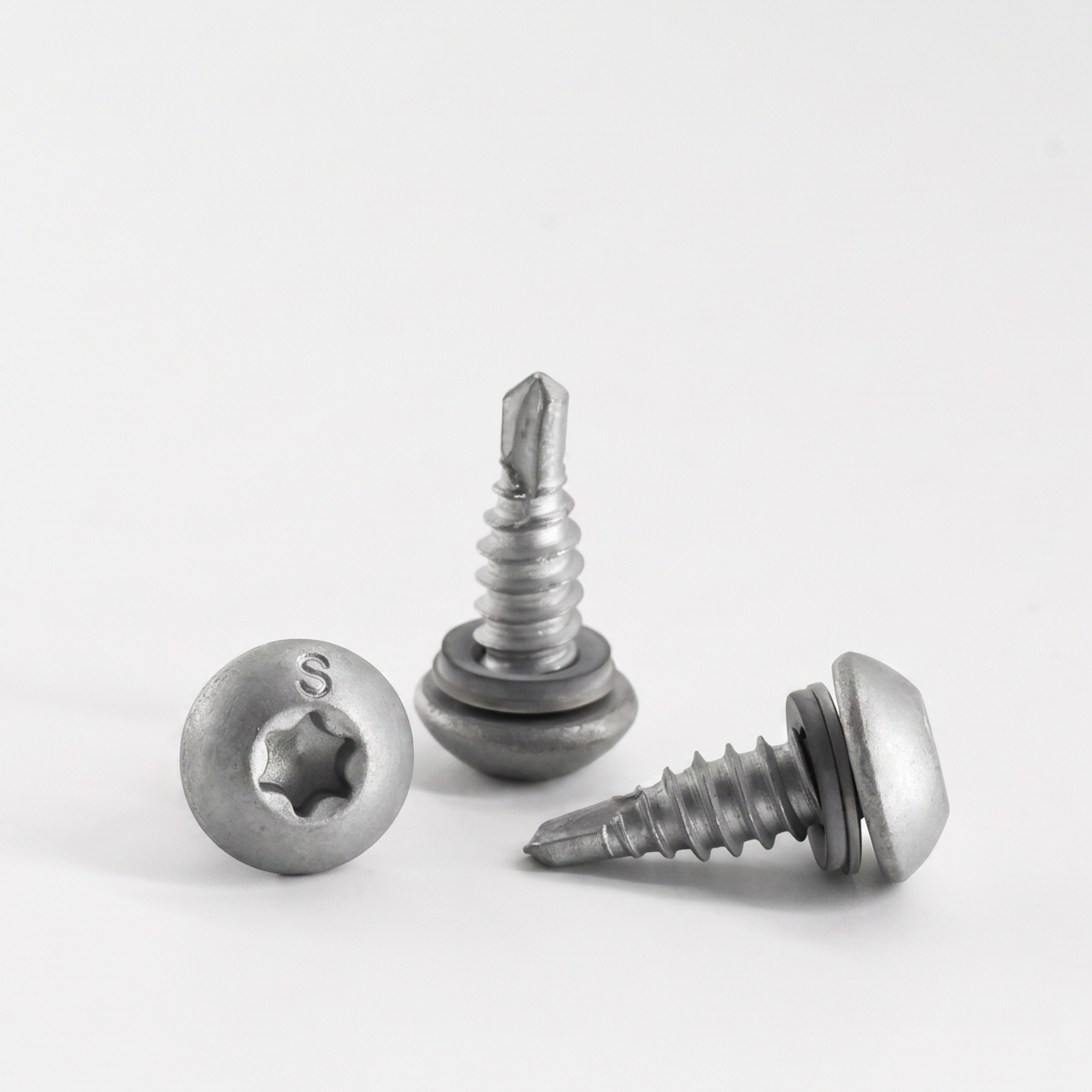
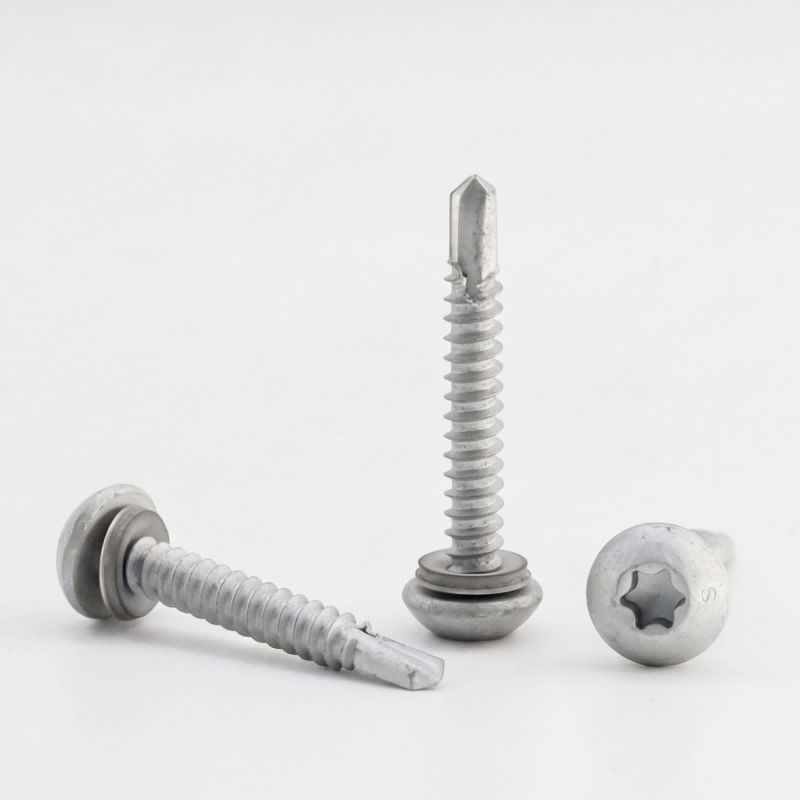
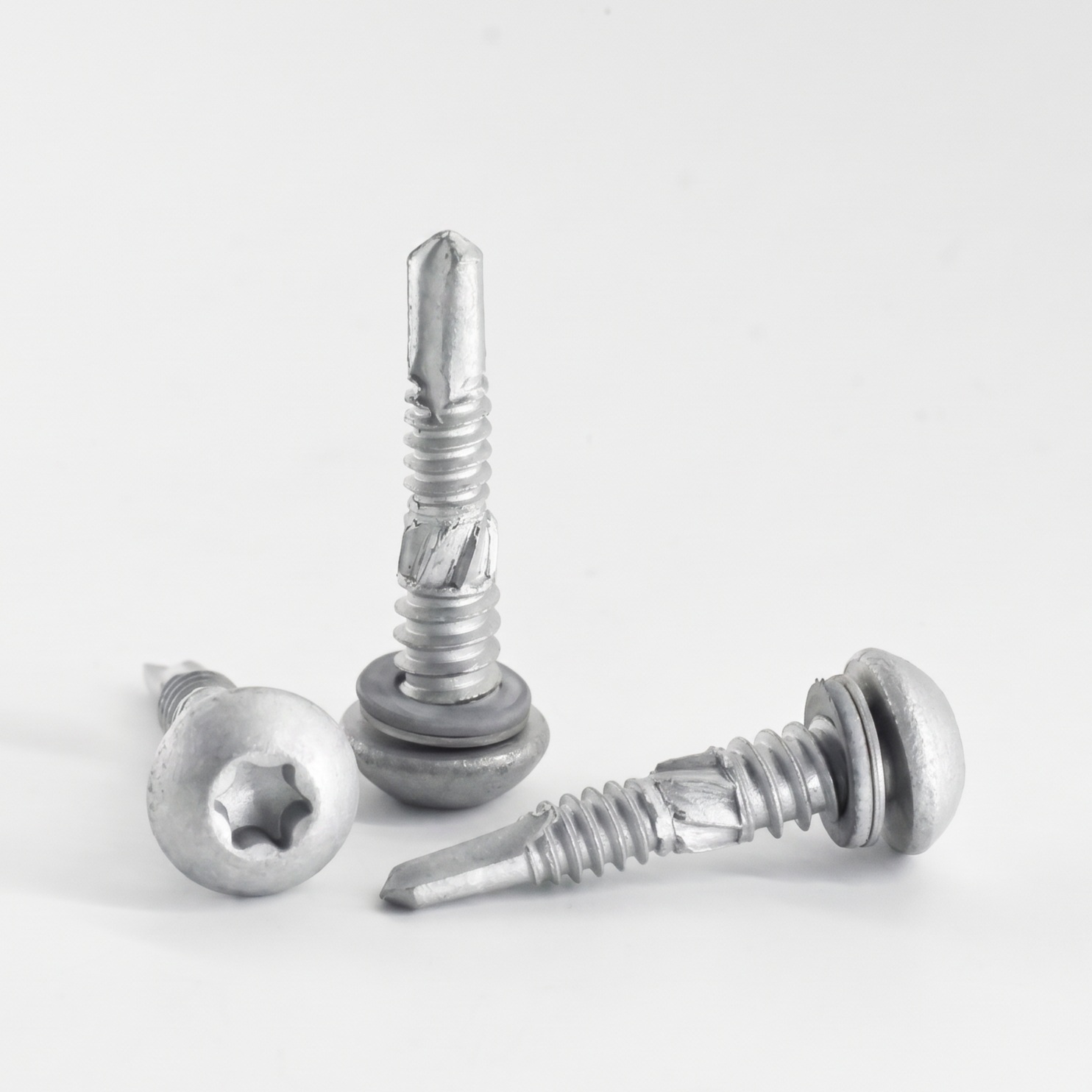
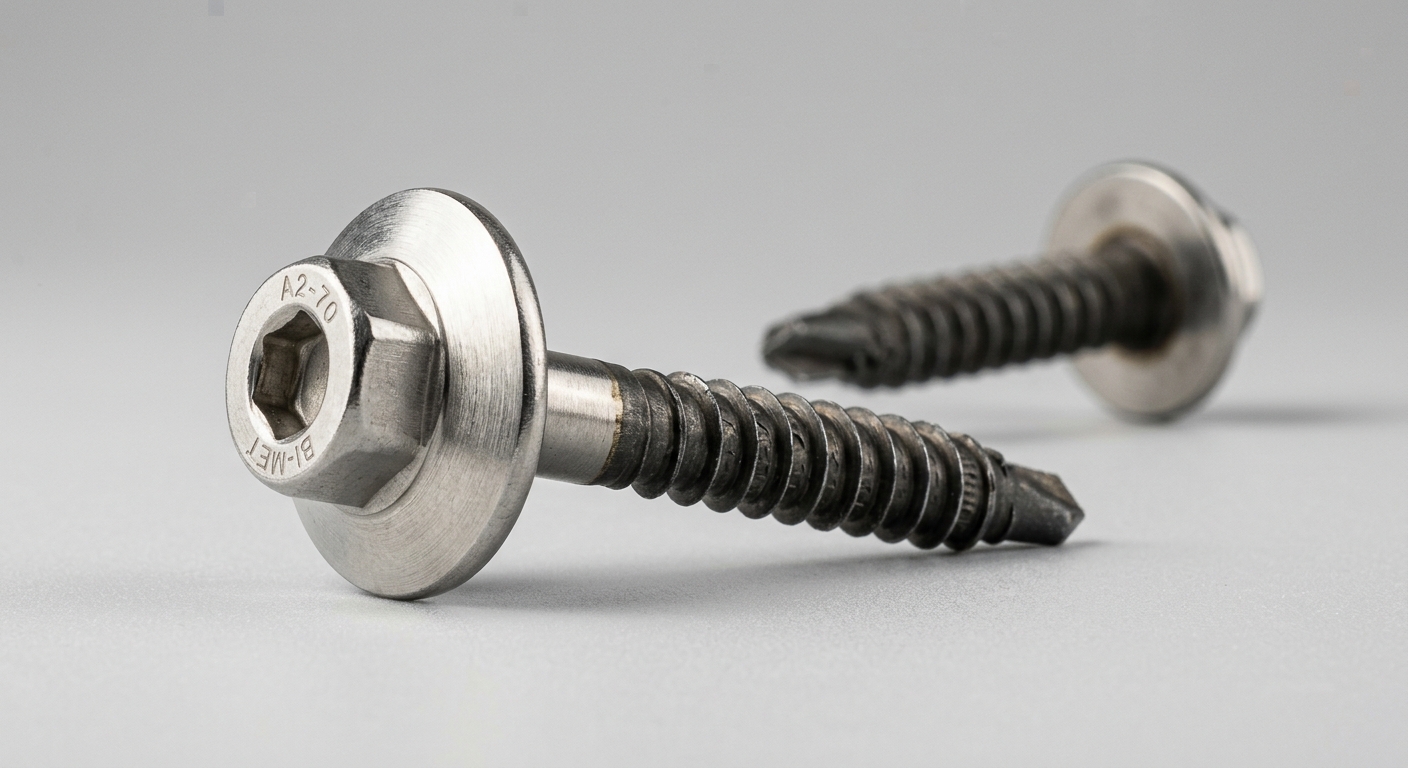
The defining engineering feature of a flange bimetallic structural screw is the bi-material cold forging process that bonds a high-carbon or case-hardened steel shank to a stainless steel (typically A2 or A4 grade) or heavily coated head in a single manufacturing operation. Unlike mechanically assembled two-piece fasteners, cold-forged bimetallic construction creates a metallurgical bond at the material interface — eliminating the crevice corrosion risk that would otherwise develop between separately assembled components.
The functional role division is precise: the carbon steel shank provides the hardness profile necessary for thread-forming in timber, the torsional strength required to resist cam-out during installation, and the tensile capacity to meet structural load classifications. The stainless steel or corrosion-resistant head serves as the electrochemical barrier between the fastener and the external environment, preventing the oxidation cascade from initiating at the most exposed and most mechanically stressed zone of the assembly.
This architecture also resolves the galvanic compatibility problem at the substrate interface. When a stainless steel head contacts an aluminum racking profile, the electrochemical potential difference is substantially smaller than in a carbon steel-to-aluminum contact — reducing galvanic current density and extending the corrosion-free service life by a factor of four to six under equivalent exposure conditions.
The Role of the Flange in Corrosion Defense
The integrated flange geometry performs a dual function that a standard hex-head or countersunk screw cannot replicate. Mechanically, the enlarged bearing surface distributes the fastener’s clamping load across a greater substrate area, reducing stress concentration at the fastener hole perimeter — a critical advantage in aluminum extrusions and engineered timber products where localized crushing can initiate premature joint loosening.
Environmentally, the flange acts as a primary seal against moisture ingress at the fastener-substrate interface. When torqued to specification, the flange’s underside compresses against the substrate surface, creating a mechanical barrier that prevents capillary water migration into the fastener hole. This is particularly significant in facade cladding applications where wind-driven rain creates sustained hydrostatic pressure at connection points. Eliminating the moisture pathway interrupts the galvanic cell before it can establish — addressing corrosion at the mechanism level rather than relying solely on material resistance.
Performance Comparison
| 매개변수 | Standard Carbon Steel Screw | Stainless Steel Screw | Flange Bimetallic Structural Screw |
|---|---|---|---|
| 내부식성 | 낮음 | 높음 | 높음 |
| 인장 강도 | 높음 | Medium | 높음 |
| Galvanic Compatibility (Al/Steel) | Poor | 보통 | 우수 |
| Cost Index | 낮음 | 높음 | Medium |
| Flange Sealing | 아니요 | Optional | Integrated |
| Salt-Spray Rating (hrs, typical) | 200–500 | 1,000+ | 1,000–1,500+ |
Populate with verified product-specific data before publication.
Technical Specifications & Compliance Standards
Key Mechanical and Material Parameters
Flange bimetallic structural screws are manufactured across a shank diameter range of 4.8 mm to 8.0 mm, with lengths spanning 40 mm to 220 mm to accommodate varying substrate thicknesses. Thread geometry is typically optimized for timber engagement — featuring a coarse outer thread pitch for high pull-out resistance and a reduced core diameter that minimizes timber splitting during installation without pre-drilling in most softwood species.
Drive configurations include TX (Torx) and combination hex-Torx profiles, both engineered to transmit the elevated installation torque required for structural-grade thread forming without drive recess failure. Minimum torque ratings for M6-equivalent bimetallic structural screws typically range from 8–14 Nm depending on substrate density, with characteristic pull-out strength values in C24 timber exceeding 12 kN for 160 mm embedment lengths.
The stainless steel head component conforms to EN ISO 3506-1 (A2-70 or A4-80) property classes, ensuring minimum tensile strength of 700–800 MPa at the head. The carbon steel shank is surface-treated with zinc-flake coating or hot-dip galvanizing to ISO 10684 specification, providing supplementary corrosion protection at the shank-to-timber interface.
Relevant Industry Standards and Certifications
Structural fasteners for load-bearing timber connections must comply with Eurocode 5 (EN 1995-1-1) design provisions, which govern characteristic values for withdrawal capacity, lateral resistance, and minimum spacing requirements. European Technical Assessments (ETA) issued under ETAG 001 or EAD 250000 provide the product-specific characteristic values required for structural calculation and building permit submission.
For projects specifying FM Global compliance — common in industrial roofing and solar installations — fastener assemblies must demonstrate performance under FM 4471 or FM 4476 test protocols. Salt-spray testing to ASTM B117 or ISO 9227 at 1,000+ hours without red rust formation is the standard acceptance criterion for C4/C5 environment classification. Procurement teams should request test certificates and ETA documentation as part of the supplier qualification process.
Application Scenarios & Commercial Value
Primary Use Cases Across Industries
Timber-frame construction with steel connectors is the highest-volume application. Bimetallic structural screws connect engineered timber beams (LVL, GLT) to galvanized steel joist hangers, brackets, and holddowns — a connection type where galvanic risk is inherent and structural load requirements are non-negotiable.
Solar mounting systems represent the fastest-growing application segment. Aluminum racking profiles secured to steel purlins or roof decking using bimetallic screws eliminate the isolation tape and additional washers previously required to prevent galvanic corrosion — reducing installation time per fastener point by approximately 40%.
Facade cladding and rainscreen systems rely on the flange’s sealing capability to maintain weathertight performance over 25–30 year design service lives. Modular and prefabricated structures benefit from the procurement consolidation advantage: a single bimetallic screw specification covers both interior structural and exterior envelope connections.
Total Cost of Ownership vs. Single-Material Alternatives
At the unit price level, flange bimetallic structural screws carry a 30–60% premium over equivalent carbon steel screws. However, the total cost of ownership calculation reverses this relationship when lifecycle factors are included. Eliminating one re-fastening cycle over a 20-year service period — conservative for C4 environments — recovers the entire fastener premium plus labor differential. Extended warranty periods (typically 25 years for bimetallic vs. 10 years for coated carbon steel in exposed applications) reduce liability reserve requirements for contractors. Single-SKU procurement across mixed-material zones reduces inventory holding costs and eliminates on-site substitution errors.
자주 묻는 질문
1. Can a flange bimetallic structural screw be used directly in aluminum-to-steel connections without additional isolation tape?
Yes. The stainless steel head’s electrochemical compatibility with aluminum significantly reduces galvanic current density at the contact interface. For C3 and below environments, direct installation without isolation tape is generally acceptable per ETA documentation. In C4/C5 environments, consult the specific ETA or manufacturer’s technical data sheet for guidance on supplementary isolation requirements.
2. What is the maximum salt-spray test rating for a standard flange bimetallic structural screw?
Standard-grade flange bimetallic structural screws typically achieve 1,000–1,500 hours without red rust formation per ISO 9227 / ASTM B117. Premium A4 stainless head variants with zinc-flake-coated shanks can exceed 1,500 hours, qualifying for C5-M (marine) environment classification.
3. How does the flange geometry affect load distribution compared to a standard hex-head structural screw?
The integrated flange increases the bearing area by 40–70% compared to a standard hex-head profile of equivalent drive size. This reduces substrate surface pressure at the fastener hole perimeter, lowering the risk of localized crushing in aluminum extrusions and cross-grain splitting in timber. The result is a higher characteristic withdrawal resistance value and improved joint stiffness under cyclic loading.
결론
The flange bimetallic structural screw represents a precision-engineered response to a fundamental conflict in mixed-material structural design: the incompatibility between corrosion resistance and mechanical performance in single-material fasteners. By combining a high-tensile steel shank with a stainless or corrosion-resistant head through cold-forged bi-material bonding — and integrating a load-distributing, moisture-sealing flange — this fastener delivers full structural load capacity alongside long-term electrochemical protection.
For procurement engineers specifying fasteners in timber-steel, aluminum-steel, or facade cladding assemblies, the technical and commercial case is clear. Compliance with ETA, EN 1995, and ISO 9227 standards provides the documentation basis for structural calculations and warranty commitments. The lifecycle cost advantage over carbon steel alternatives becomes decisive in C4/C5 environments or wherever re-fastening access is constrained. Specifying the flange bimetallic structural screw as the standard connection fastener for mixed-material assemblies is not a premium decision — it is the most cost-efficient structural choice over the project’s design service life.