
Abstrak
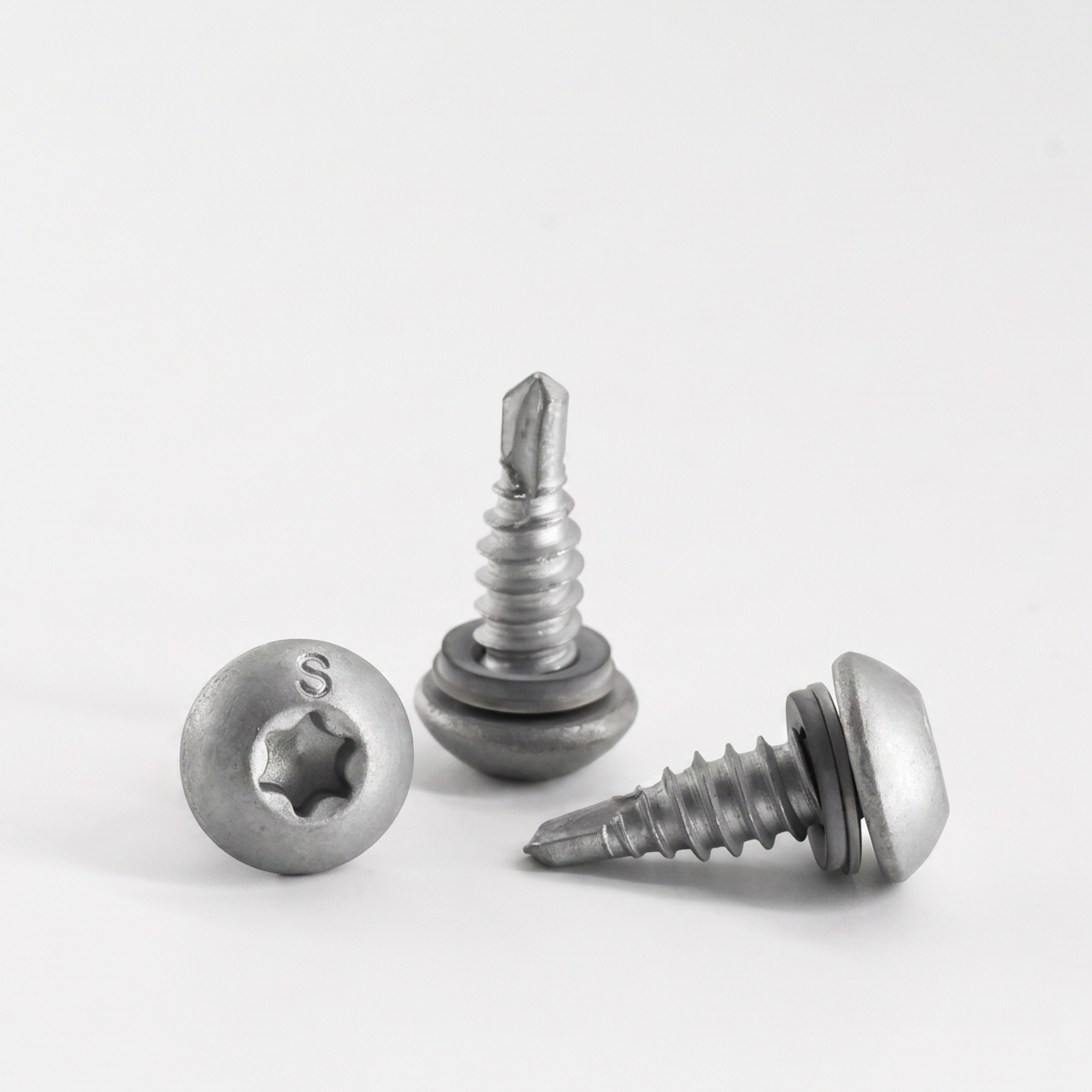
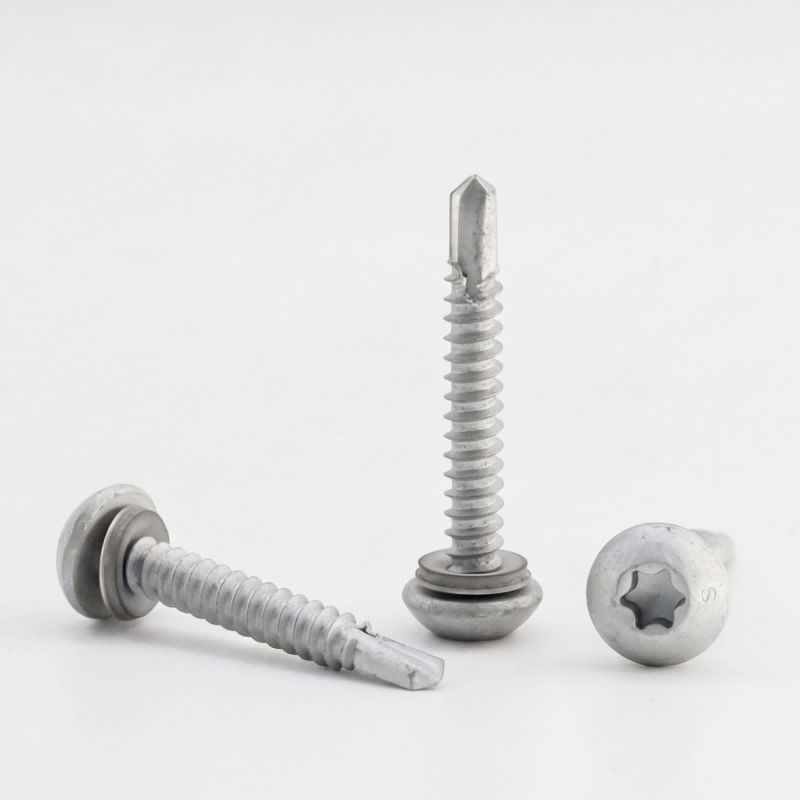
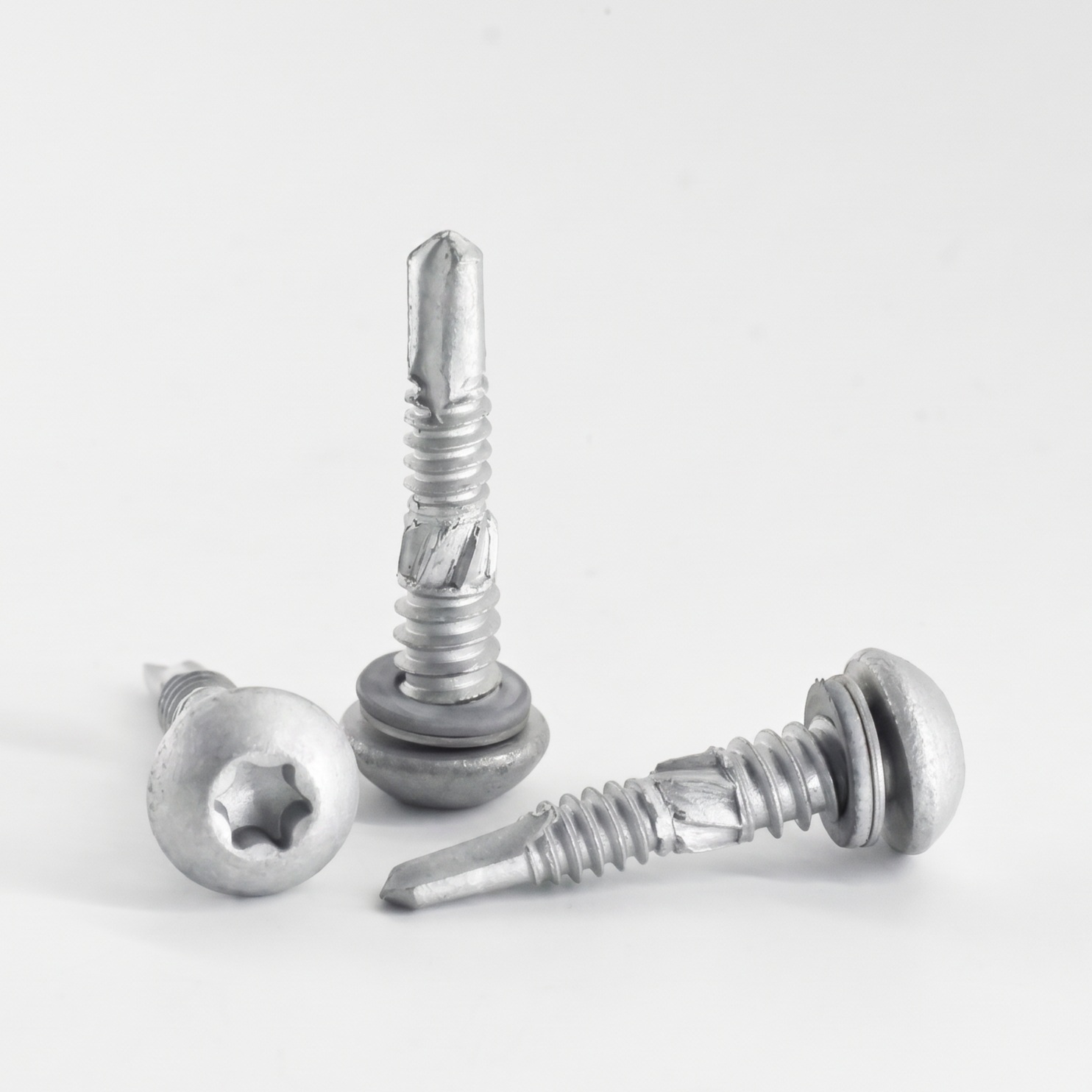
Stainless Steel Stitching Screws are purpose-engineered fasteners designed to create secure, weather-resistant metal-to-metal connections in roofing, cladding, and sheet metal assembly. Unlike general-purpose fasteners, stitching screws address the specific mechanical demands of overlapping panel joints — delivering consistent clamping force, corrosion resistance, and long-term seal integrity in environments where standard carbon steel fasteners would fail prematurely.
This article examines the mechanical principles behind stitching screw performance, the critical dimensional and material specifications procurement teams must evaluate, compliance standards applicable to roofing and industrial environments, and practical guidance for sourcing at scale. Whether specifying fasteners for standing seam roofing, metal wall cladding, or light-gauge steel framing, understanding how material grade, head design, and thread geometry interact with substrate variables is essential for achieving reliable, cost-effective panel connections.
1. Mechanical Role of Stainless Steel Stitching Screws in Metal Panel Fastening
1.1 How Stitching Screws Create Metal-to-Metal Connections
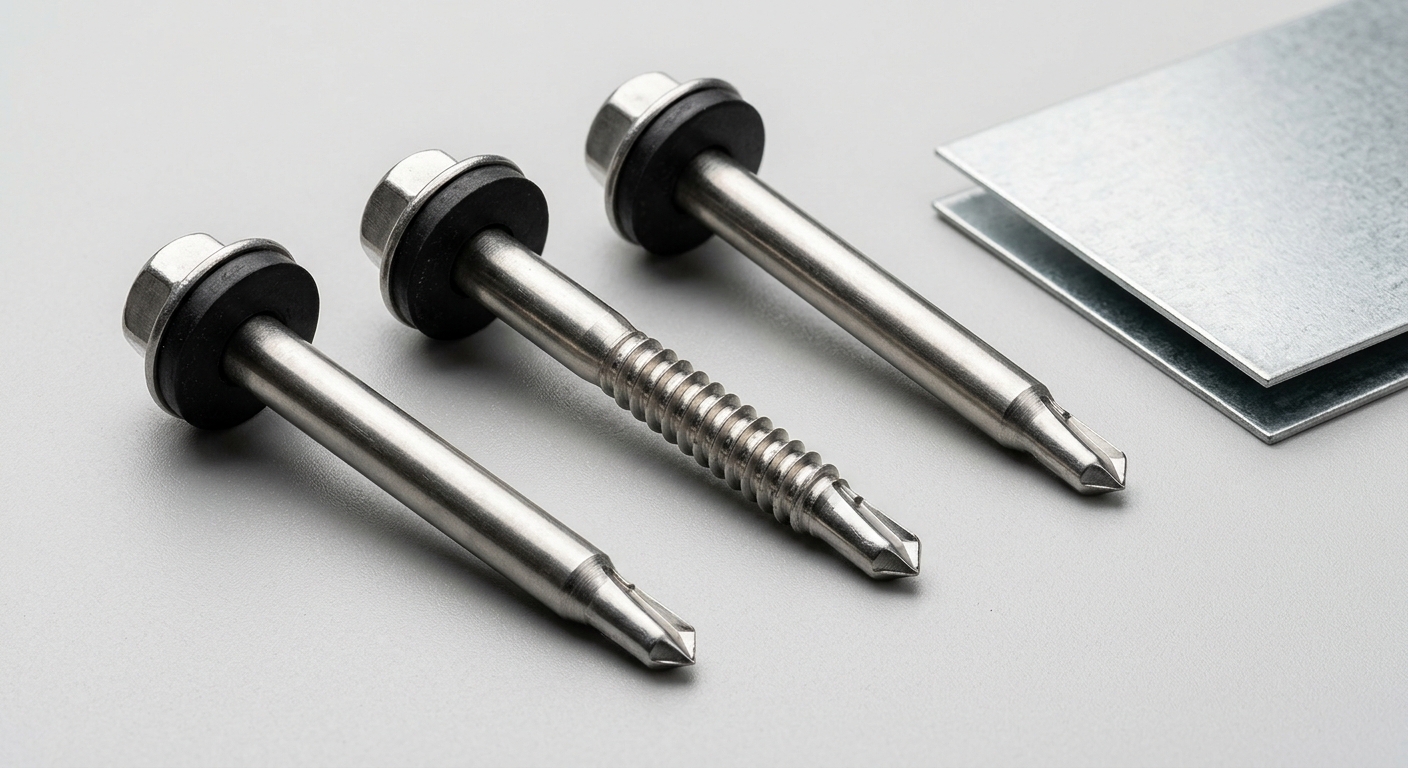
Stitching screws function by threading through two or more overlapping metal panels — without requiring a pre-drilled receiver or structural backing — to generate a controlled clamping force that draws the panel faces into firm contact. This mechanism is fundamentally different from structural roofing screws that anchor panels to purlins or subframes. The stitching screw’s role is lateral joint consolidation: preventing panel separation, reducing water infiltration at laps, and maintaining alignment under thermal cycling and wind load.
The thread geometry is central to this function. Stitching screws typically feature a fine-to-medium thread pitch optimized for thin metal gauges, allowing the fastener to engage both panel layers simultaneously without stripping the upper sheet. The point type — either a sharp self-tapping point for pre-punched applications or a self-drilling (TEK) point for direct installation — determines whether pilot hole preparation is required. Self-drilling variants reduce installation time significantly in high-volume roofing and cladding projects.
Clamping force distribution is influenced by the head bearing area and washer configuration. A larger bearing surface reduces the risk of pull-over failure in thin-gauge materials, while the thread engagement depth in the lower panel determines pull-out resistance. For overlapping panels in the 0.4–1.2 mm gauge range, proper thread engagement typically requires a minimum of three full thread turns in the base material.
1.2 Why Stainless Steel Outperforms Standard Carbon Steel in Panel Joints
Carbon steel fasteners — even when zinc-plated or galvanized — are susceptible to accelerated corrosion at the fastener-panel interface, particularly when moisture is trapped within the lap joint. Corrosion at this point generates iron oxide expansion that distorts the panel, breaks the seal, and ultimately compromises joint integrity. Stainless steel eliminates this failure mode through inherent passive-layer corrosion resistance.
Grade 304 stainless steel provides reliable performance in standard atmospheric and light industrial environments, with a chromium content of 18% providing effective passive layer formation. Grade 316 adds 2–3% molybdenum, significantly improving resistance to chloride-induced pitting — the dominant corrosion mechanism in coastal, marine, and chemical processing environments. For applications where the fastener contacts dissimilar metals such as aluminum or Galvalume-coated steel, stainless steel’s electrochemical stability minimizes galvanic reaction risk when correctly specified.
Service life advantage is measurable: independent salt spray testing consistently demonstrates that 316 stainless stitching screws outperform hot-dip galvanized carbon steel equivalents by a factor of 3–5× in chloride-rich environments, translating directly to reduced maintenance cycles and lower total cost of ownership for building owners and contractors.
2. Key Specifications and Head Design Considerations
2.1 Critical Dimensional Parameters for Stitching Screws
Selecting the correct stitching screw specification requires matching four interdependent parameters: diameter, length, thread type, and point configuration. The following table provides a practical reference for common B2B procurement scenarios:
| Diameter | Rentang Panjang | Jenis Ulir | Applicable Panel Thickness | Recommended Application | Kelas Bahan | Jenis Kepala |
|---|---|---|---|---|---|---|
| #10 (4.8 mm) | 16–25 mm | Self-tapping | 0.4–0.8 mm | Roofing lap joints | 304 / 316 SS | Hex washer |
| #12 (5.5 mm) | 20–38 mm | Self-drilling (TEK 1) | 0.6–1.2 mm | Wall cladding joints | 304 / 316 SS | Hex washer |
| #14 (6.3 mm) | 25–50 mm | Self-drilling (TEK 2) | 0.8–2.0 mm | Light-gauge steel framing | 410 / 316 SS | Hex washer / Pan |
| #10 (4.8 mm) | 16–20 mm | Self-tapping | 0.4–0.7 mm | HVAC duct stitching | 304 SS | Low-profile pan |
For overlapping panel applications, screw length should be calculated to ensure the tip extends a minimum of 1.5× the thread pitch beyond the lower panel face. Undersized length results in insufficient thread engagement; excessive length can create protrusion hazards or interference with insulation layers.
2.2 Head and Washer Design Impact on Sealing and Load Distribution
The hex washer head with an integrated EPDM bonded washer is the industry-standard configuration for exposed roofing and cladding stitching applications. The hexagonal drive format allows consistent torque application with standard power tools, while the EPDM washer — typically 16–19 mm in diameter — compresses against the panel surface to create a watertight seal around the fastener penetration point.
EPDM (ethylene propylene diene monomer) washers are preferred over neoprene for UV-exposed applications due to superior ozone and weathering resistance, maintaining effective compression seal performance across a service temperature range of approximately −40°C to +120°C. For interior or concealed joints where weatherproofing is secondary, low-profile pan head variants reduce material cost while maintaining adequate load distribution.
Pull-over resistance — the force required to draw the panel material over the screw head — is directly proportional to the washer bearing area. In thin-gauge panels (≤0.6 mm), specifying a larger-diameter bonded washer or a saddle washer configuration provides measurable improvement in joint stability under wind uplift loading.
3. Compliance Standards and Material Selection for Roofing Applications
3.1 Relevant Industry Standards and Corrosion Ratings
Stainless Steel Stitching Screws for commercial and industrial roofing applications are evaluated against two primary standards frameworks. ASTM A193 (and its fastener-specific companion ASTM F593) governs stainless steel fastener mechanical properties and alloy composition in North American markets. ISO 3506 provides the internationally recognized equivalent, defining property classes for austenitic (A2/A4), ferritic, and martensitic stainless fasteners — with A2 corresponding to 304 and A4 to 316 grade.
Salt spray testing per ASTM B117 is the standard accelerated corrosion benchmark. A4/316 stainless stitching screws typically achieve 1,000+ hours without red rust formation — a threshold that qualifies them for coastal and marine-adjacent building applications. For industrial environments with chemical exposure, procurement teams should request supplier test reports confirming compliance with the specific exposure conditions relevant to their project.
RoHS and REACH compliance documentation is increasingly required by European and export-market buyers, particularly for projects subject to environmental certification schemes such as LEED or BREEAM.
3.2 Matching Screw Material Grade to Substrate and Environment
| Environment | Substrate | Recommended Grade | Rationale |
|---|---|---|---|
| Inland / suburban | Galvanized steel | 304 (A2) | Cost-effective; adequate passive layer performance |
| Coastal (≤1 km from sea) | Galvalume / aluminum | 316 (A4) | Chloride resistance; galvanic compatibility |
| Industrial / chemical | Pre-coated steel | 316 (A4) | Acid/alkali resistance; coating compatibility |
| Interior HVAC / ductwork | Galvanized / plain steel | 304 (A2) | Dry environment; cost optimization |
Pre-coated and PVDF-finished panels require careful fastener selection to avoid coating damage during installation. Self-drilling points should be matched to the panel thickness to minimize heat generation and burr formation that can compromise coating adhesion at the fastener site.
4. Application Scenarios and Procurement Guidance for B2B Buyers
4.1 Primary Use Cases: Roofing, Cladding, and Sheet Metal Assembly
Standing seam roofing overlaps represent the highest-volume application for stitching screws. At eave and ridge lap zones, panels require consolidation prior to or during cap flashing installation. Stitching screws placed at 300–600 mm centers along the lap prevent panel lift and maintain weathertight contact.
Metal wall cladding joints — particularly horizontal lap cladding systems — use stitching screws to secure panel-to-panel overlap without visible fastener penetration through the outer face, depending on profile geometry. Correct screw placement within the overlap zone is critical to maintaining the drainage plane.
HVAC ductwork assembly uses smaller-diameter stitching screws (typically #8 or #10) to join sheet metal duct sections and fittings. Here, the primary requirement is air-seal integrity and vibration resistance rather than weather exposure, making 304-grade appropriate in most cases.
Light-gauge cold-formed steel framing applications use stitching screws to connect track and stud members in non-structural and semi-structural configurations, where the fastener must penetrate two layers of 0.8–1.6 mm steel without pre-drilling.
4.2 Evaluating Suppliers and Ordering Considerations
B2B procurement teams should evaluate stainless stitching screw suppliers against the following criteria:
- Certification documentation: Request mill certificates confirming alloy composition (Cr, Ni, Mo content), mechanical property test reports, and salt spray test results. Suppliers unable to provide lot-traceable documentation present quality assurance risk.
- MOQ flexibility: High-volume roofing contractors typically require pallet-quantity orders (10,000–50,000 units per SKU), while specialty fabricators may need smaller mixed-specification orders. Confirm whether the supplier supports both supply models.
- Packaging format: Bulk box, strip-collated, or compartmentalized packaging affects installation efficiency and waste. For power-tool installation, collated formats reduce handling time significantly.
- Lead time benchmarks: Standard stainless stitching screws in common specifications (304 hex washer, #10–#12, 16–38 mm) should be available from stock. Custom lengths or 316-grade variants may carry 2–4 week lead times from specialist manufacturers.
- RoHS/REACH compliance: Mandatory for EU-destined projects and increasingly required by sustainability-focused procurement policies globally.
PERTANYAAN YANG SERING DIAJUKAN
Q1: What is the difference between a stitching screw and a standard self-drilling screw for metal panels?
A stitching screw is specifically designed to join two metal panel layers together — metal-to-metal — without requiring a structural substrate beneath. Standard self-drilling roofing screws are engineered to fasten panels to purlins, rails, or structural framing members. Stitching screws typically feature a finer thread pitch, a shorter point, and a lower-profile head optimized for thin-gauge panel-to-panel engagement rather than deep substrate penetration.
Q2: Which stainless steel grade — 304 or 316 — is recommended for coastal roofing applications?
Grade 316 (A4) is strongly recommended for any roofing installation within approximately 1–5 km of a marine or coastal environment. The molybdenum content in 316 provides substantially superior resistance to chloride pitting, which is the primary corrosion mechanism in salt-laden atmospheres. Grade 304 is acceptable for inland and suburban environments where chloride exposure is minimal.
Q3: How do I determine the correct screw length and thread pitch for overlapping metal panel thicknesses?
Calculate total material thickness by adding the gauge of both overlapping panels. Select a screw length that allows the point to extend at least 1.5× the thread pitch beyond the lower panel face after full installation. For example, two 0.6 mm panels (1.2 mm total) with a 16 mm screw provides approximately 14.8 mm of thread engagement — sufficient for most #10 stitching screws. Consult the manufacturer’s engagement table for confirmation across specific gauge combinations.
Kesimpulan
Stainless Steel Stitching Screws deliver measurable improvements in joint integrity, corrosion resistance, and long-term performance for metal panel assemblies across roofing, cladding, and sheet metal applications. The performance advantage over carbon steel fasteners is most pronounced in moisture-exposed and chemically aggressive environments, where the total cost of ownership benefit of stainless — despite higher unit cost — is unambiguous.
Procurement teams should prioritize material grade alignment with the operating environment (304 for standard conditions, 316 for coastal and industrial exposure), head and washer selection matched to panel gauge and sealing requirements, and supplier qualification based on traceable certification documentation. With correct specification and a qualified supply chain, stainless stitching screws provide decades of reliable service in demanding metal panel applications.