


Pendahuluan
Using the wrong fasteners in pressure-treated lumber is a costly, premature failure waiting to happen. While copper-based preservatives like ACQ and CA guarantee the timber won’t rot, they create a highly corrosive environment for bare metal. The fasteners you drive today dictate whether your deck stands for thirty years or structurally degrades in less than five.
When it comes to framing, galvanized carbon steel nails are the industry standard—but not all galvanization is created equal. The structural lifespan of these fasteners in treated wood hinges on three non-negotiable metrics: zinc coating thickness, the specific wood chemistry, and environmental moisture exposure. Here is the field data and code-compliance truth you need before purchasing your framing hardware.
What Are Galvanized Carbon Steel Nails and How Are They Made?
Before evaluating their lifespan, it helps to understand the engineering behind these fasteners. Galvanized carbon steel nails start with a high-strength, cost-effective carbon steel core. To prevent rust, this core is coated with zinc through a process called galvanization. The zinc layer acts as a sacrificial barrier—it corrodes deliberately to shield the structural steel underneath.
The Hexagonal Small Flange Design
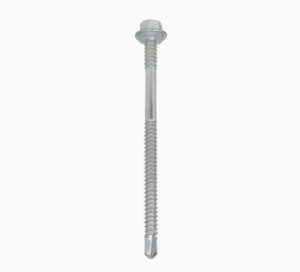
This guide focuses specifically on the hexagonal small flange structural nail. Designed with a hex head and a partial thread, these specialized fasteners are engineered to secure color-coated steel panels to structural framing.
-
Hexagonal Head: Delivers superior driving torque compared to standard round heads, allowing for seamless power-tool installation.
-
Partial Thread: Ensures maximum clamping force and secure fastening without over-penetrating thin steel panels.
-
Small Flange: Distributes the load evenly across the surface, significantly reducing the risk of material pull-through.
The Galvanization Process
A nail’s long-term corrosion resistance depends entirely on its zinc coating. However, the industry uses two distinct manufacturing methods that yield vastly different protection levels:
-
Hot-Dipped Galvanizing (HDG): Nails are submerged directly into molten zinc. This creates a thick layer—typically 3 to 5 mils (75–125 µm)—that forms a permanent metallurgical bond with the steel, leaving a dull gray, textured surface.
-
Electro-Galvanizing (EG): This method uses an electrochemical bath to deposit a micro-layer of zinc (less than 0.5 mils / 12 µm). While it produces a shiny, smooth, and aesthetically pleasing finish, the protection is minimal.
The Takeaway for Your Project:
Choose Hot-Dipped (HDG) for exterior projects, heavy moisture exposure, and pressure-treated wood.
Reserve Electro-Galvanized (EG) strictly for indoor, dry, and non-structural environments.
While electro-galvanized options save on upfront costs, the performance gap is non-negotiable. For a structure built to last, always spec hot-dipped.
Hot-Dipped vs. Electro-Galvanized: The Performance Gap
Understanding the distinction between these two coating methods prevents premature structural failure. The application process directly dictates the zinc thickness, which determines exactly how many years the fastener can withstand corrosive timber treatments.
Hot-Dipped Galvanized (HDG)
During manufacturing, steel cores are submerged in molten zinc, initiating a metallurgical reaction. This creates interconnected zinc-iron alloy layers topped with pure zinc.
-
Coating Thickness: 3.0 to 5.0 mils (75 to 125 µm)—roughly ten times thicker than electroplated alternatives.
-
Surface Texture: A dull gray, noticeably rough, and slightly uneven finish.
-
Best Applications: Essential for exterior framing, high-moisture exposure, and pressure-treated lumber.
Industry authorities, including the Canadian Wood Council, explicitly state that hot-dipped galvanized fasteners are the baseline standard for treated wood. Field data demonstrates that this metallurgical bond prevents the aggressive chemical compounds in modern lumber from reaching the steel core for decades.
Electro-Galvanized (EG)
Electro-galvanizing applies zinc via a cold, electrochemical bath. While this achieves high dimensional precision, the resulting layer lacks the thickness required for harsh chemical environments.
-
Coating Thickness: Less than 0.5 mils (12 µm)—providing minimal sacrificial material.
-
Surface Texture: Perfectly smooth, uniform, and highly reflective.
-
Best Applications: Restricted strictly to dry, indoor trim, or non-structural temporary staging.
When exposed to highly corrosive alkaline copper quaternary (ACQ) treatments, an electro-galvanized layer degrades rapidly. In high-humidity conditions, these fasteners can exhibit severe rust within twelve to eighteen months, followed by rapid structural degradation of the inner carbon steel core.
Spotting the Difference on the Job Site
Telling these two types apart requires no specialized testing equipment—the visual cues are immediate:
| Metric | Hot-Dipped Galvanized (HDG) | Electro-Galvanized (EG) |
| Visual Appearance | Dull, matte gray color | Bright, shiny, silver chrome look |
| Tactile Feel | Slightly gritty, textured surface | Completely smooth to the touch |
| Packaging Spec | Typically lists ASTM A153 Class D | Typically lists ASTM A641 or “interior use” |
If you are sourcing materials for an outdoor deck or structural framing and the fasteners have a bright, shiny aesthetic, they will not provide the necessary longevity. For pressure-treated lumber, always verify the HDG specification before installation.
How Do Different Wood Treatments Affect Galvanized Carbon Steel Nails?
The chemicals used to treat wood have changed over the years, and that matters for fastener corrosion. When you select galvanized carbon steel nails for a project, the wood treatment is a critical factor.
CCA-Treated Wood (Older)
CCA (chromated copper arsenate) was the standard for decades. It contains copper, chromium, and arsenic. Galvanized carbon steel nails in CCA-treated wood show a relatively predictable corrosion rate. One US Forest Service study found that after 14 years of exposure to high humidity, nails in CCA-treated wood lost 16 to 18 percent of their weight. After 17 years buried in soil, the weight loss was 3 to 4 percent.
The corrosion rate for galvanized carbon steel nails in wood appears to remain fairly constant over time. This means you can estimate lifespan based on the corrosion rate rather than worrying about accelerating degradation.
ACQ-Treated Wood (Newer)
ACQ (alkaline copper quaternary) is the modern replacement for CCA. It contains higher concentrations of copper and no arsenic or chromium. The higher copper content makes ACQ more corrosive to steel fasteners—including galvanized carbon steel nails.
In one controlled study, nails and screws were exposed to ACQ-treated wood at 27°C and 100% relative humidity for 12 months. The results showed significant corrosion, with hot-dipped galvanized nails performing better than electro-galvanized but still showing some degradation.
The rule of thumb: ACQ is harder on galvanized carbon steel nails than CCA was. If you are working with ACQ-treated lumber, you need a heavier galvanized coating. Some ACQ treatments have retention levels that require stainless steel fasteners rather than galvanized carbon steel nails.
LOSP-Treated Wood
Light organic solvent preservative (LOSP) treatment is associated with reduced corrosion, especially for galvanized carbon steel nails. If your wood is LOSP-treated, galvanized carbon steel nails will last longer than in ACQ or CCA treatments.
Untreated Wood
In untreated wood, corrosion is driven primarily by moisture and the natural acidity of the wood. Galvanized carbon steel nails will last longer in untreated wood than in treated wood—but the difference depends on the specific treatment and environmental conditions.
How Long Do Galvanized Carbon Steel Nails Actually Last in Treated Wood?
Here is the question you came for. Let us look at the numbers for galvanized carbon steel nails in real-world conditions.
In Treated Wood (ACQ/CCA)
-
Hot-dipped galvanized carbon steel nails: 15–20 years or more in most conditions. Most decks are built to last 15 to 20 years, which is easily within the life of a properly maintained galvanized fastener. In severe environments (coastal, high humidity), expect the lower end of that range.
-
Electro-galvanized nails: 1–5 years in ACQ-treated wood. The thin zinc coating is quickly consumed by the copper compounds in the wood. After that, the carbon steel core corrodes rapidly. This is why we do not recommend electro-galvanized carbon steel nails for treated wood.
In Untreated Wood or Indoor Environments
-
Hot-dipped galvanized carbon steel nails: 30–50 years or more. Without the aggressive chemicals of treated wood, the zinc coating lasts much longer.
-
Electro-galvanized nails: 10–20 years in dry indoor conditions. In humid environments, significantly less.
The “Bright Nail” Baseline
For comparison, uncoated “bright” carbon steel nails in treated wood will begin to rust within weeks and may lose structural integrity within a decade. In ACQ-treated wood, a common steel nail can begin seriously rusting within weeks. This is why building codes in most places require galvanized carbon steel nails—or other corrosion-resistant fasteners—in contact with pressure-treated wood.
What Factors Shorten the Lifespan of Galvanized Carbon Steel Nails?
Even the best galvanized carbon steel nails will fail eventually. Here is what accelerates the process.
Moisture and Humidity
This is the biggest factor. Wood absorbs and retains moisture, and moisture is required for the galvanic reaction that consumes zinc. In high-humidity environments or applications where the wood stays wet, the zinc coating on your galvanized carbon steel nails will be consumed faster.
Copper Content in Treated Wood
As we discussed, ACQ and other copper-based preservatives are corrosive to galvanized coatings. The higher the copper retention level, the faster the corrosion. Some ACQ treatments have retention levels that require stainless steel fasteners rather than galvanized carbon steel nails.
Salt Exposure
Coastal environments are brutal on all metals. Salt accelerates corrosion dramatically. Even hot-dipped galvanized carbon steel nails may not hold up in coastal applications—stainless steel is often recommended instead.
Mechanical Damage to the Coating
The galvanized coating on galvanized carbon steel nails is only effective where it is intact. Driving nails with a high-pressure nail gun can damage the coating, exposing the steel underneath. This is why some building codes restrict the use of pneumatic nailers for hot-dipped galvanized nails in treated wood.
Wood Acidity
Wood is naturally acidic. The acid can slowly attack the zinc coating over time. This effect is more pronounced in some wood species—Douglas-fir and western larch have been associated with stress corrosion cracking of tempered galvanized carbon steel nails.
Comparing Galvanized Carbon Steel Nails to Other Fastener Options
How do galvanized carbon steel nails stack up against the alternatives? This comparison helps you decide whether they are the right choice for your project.
| Fastener Type | Tahan Korosi | Biaya | Best For |
|---|---|---|---|
| Hot-dipped galvanized carbon steel nails | Good—15–20 years in treated wood | Sedang | Most treated wood applications, decks, and framing |
| Electro-galvanized nails | Poor—1–5 years in treated wood | Rendah | Indoor use only, dry applications |
| Stainless steel (304/316) | Excellent—50+ years | Tinggi | Coastal environments, high-retention ACQ, maximum service life |
| Bright (uncoated) carbon steel | None—fails within months to years | Lowest | Indoor, dry, non-critical use |
The Cost-Benefit Calculation
Hot-dipped galvanized carbon steel nails cost more than electro-galvanized, but the lifespan is 3 to 10 times longer in treated wood. For a deck that costs thousands of dollars, the extra cost for proper galvanized carbon steel nails is trivial compared to the cost of replacing corroded nails and loose boards.
Stainless steel offers the best corrosion resistance but at a significant premium. For most residential and commercial applications, hot-dipped galvanized carbon steel nails provide the right balance of cost and performance. For coastal environments or high-retention ACQ, stainless steel is the smarter choice.
How to Identify the Right Galvanized Carbon Steel Nails for Your Project
When you are standing in the aisle or scrolling through a supplier catalog, here is what to look for in galvanized carbon steel nails.
Check the Coating
Look for “hot-dipped galvanized” or “HDG” on the packaging. If it just says “galvanized” without specifying, assume it is electro-galvanized. The dull gray, rough surface is a dead giveaway for hot-dipped galvanized carbon steel nails.
Look for ASTM Standards
Hot-dipped galvanized carbon steel nails should meet ASTM A153 Class D standards. This specification requires a minimum average coating weight of 1 oz/ft² for nails 3/8 inch or smaller. Electro-galvanized nails typically meet ASTM A641, which has a much thinner coating. Always check the standard when buying galvanized carbon steel nails.
Consider the Application
If you are fastening into treated wood outdoors, hot-dipped galvanized carbon steel nails are the minimum acceptable choice. For structural applications in treated wood, check your local building code—many jurisdictions require specific corrosion ratings for galvanized carbon steel nails.
If the product is described as suitable for “indoor environments” only, treat it as such. The hexagonal small flange structural nail from Deep Fastener is an excellent fastener for its intended use—securing color-coated steel panels to structural members indoors. But for outdoor decks or pressure-treated lumber, you would want galvanized carbon steel nails with a heavier galvanized coating and an exterior rating.
How to Extend the Lifespan of Galvanized Carbon Steel Nails
You cannot stop corrosion entirely, but you can slow it down. Here is how to get the most from your galvanized carbon steel nails.
Choose the right nail from the start. This is the single most important factor. Hot-dipped galvanized carbon steel nails beat electro-galvanized every time in treated wood. Do not compromise on your galvanized carbon steel nails.
Avoid damaging the coating during installation. Use the correct driving tool and technique. If you are using a pneumatic nailer, check that it is not stripping the coating off your galvanized carbon steel nails.
Keep the wood dry. Proper drainage, flashing, and moisture barriers all help. The drier the wood, the slower the corrosion of your galvanized carbon steel nails.
Seal the nail heads. If you are concerned about cosmetic rust staining, sealing the nail heads with caulk can help. But note that the wood itself absorbs and retains enough moisture for the galvanic reaction to proceed—sealing only the head does not protect the shaft embedded in the wood.
Consider stainless steel for critical applications. If the structure is load-bearing, in a coastal area, or using high-retention ACQ, stainless steel is worth the extra cost over galvanized carbon steel nails.
Kesimpulan
When fastening into pressure-treated lumber, your choice of hardware directly dictates the lifespan of the entire structure. In ACQ or legacy CCA-treated wood, heavy hot-dipped galvanized fasteners reliably deliver a 15 to 20-year service life under standard conditions. Conversely, electro-galvanized alternatives will degrade within 1 to 5 years, while uncoated bright steel elements risk structural failure within a decade.
The decisive factor is the zinc protective barrier. Hot-dipped options provide a metallurgical shield up to ten times thicker than electroplated variants, serving as the sole defense between the inner carbon steel core and aggressive timber chemicals.
Before starting your next build, always verify the product specifications on the packaging:
-
For Outdoor Decks & Treated Lumber: Ensure the hardware explicitly meets ASTM A153 Class D standards for hot-dipped performance. For severe marine or coastal environments, upgrade directly to stainless steel.
-
For Controlled Indoor Applications: Specialized designs—like the hexagonal small flange structural nail—are highly effective for securing color-coated steel panels to framing, where heavy-duty environmental zinc coatings are not required.
Matching the zinc coating thickness to your specific wood treatment and climate ensures your structure remains safe, compliant, and durable for decades.