
الخلاصة
ال Torx pan head structural screw represents a significant engineering advancement over conventional wood screws and lag bolts. Its defining characteristics—a six-lobe Torx drive recess and a low-profile pan head—are not cosmetic choices. They are precision-engineered features that directly influence installation reliability, clamping force distribution, and long-term structural performance in demanding load-bearing assemblies.
Industries ranging from residential construction and commercial framing to modular furniture manufacturing have progressively adopted this fastener type because it resolves two persistent problems with standard fasteners: cam-out failure during high-torque installation and inadequate bearing surface area under the head. When procurement teams specify fasteners for structural connections, the Torx pan head structural screw consistently delivers superior pull-out resistance, corrosion compliance, and installation speed compared to Phillips-drive wood screws or hex-head lag bolts. This article examines the mechanical basis for those advantages, maps the primary application scenarios where this fastener excels, and provides actionable procurement guidance for construction and manufacturing buyers.
1. Understanding the Torx Pan Head Structural Screw
1.1 Drive Geometry & Head Profile
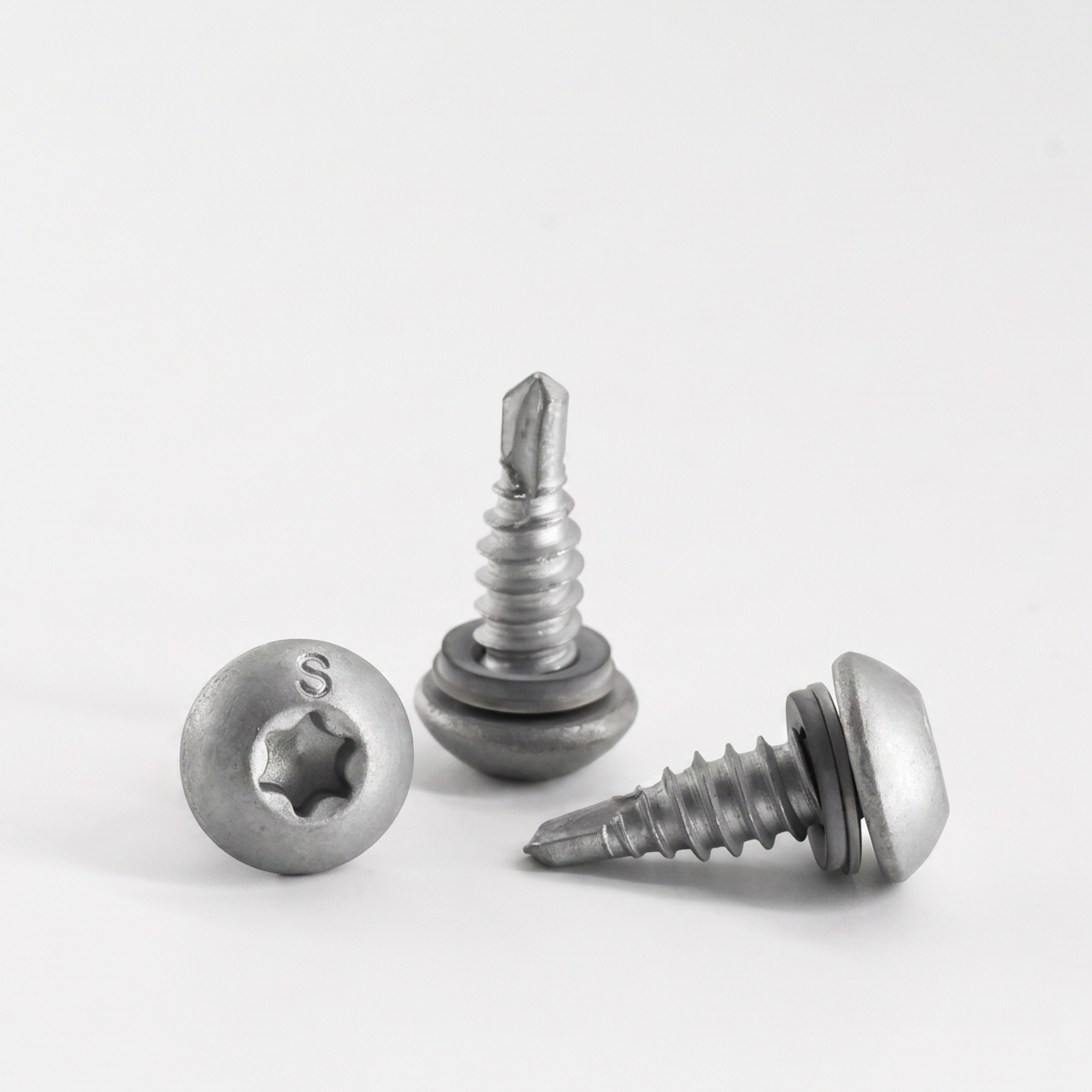
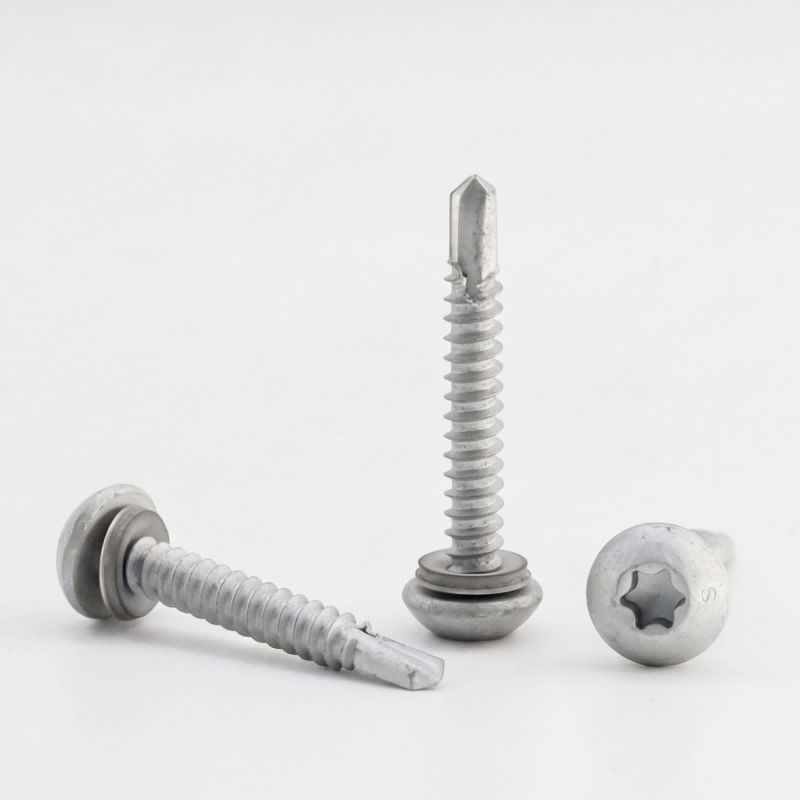
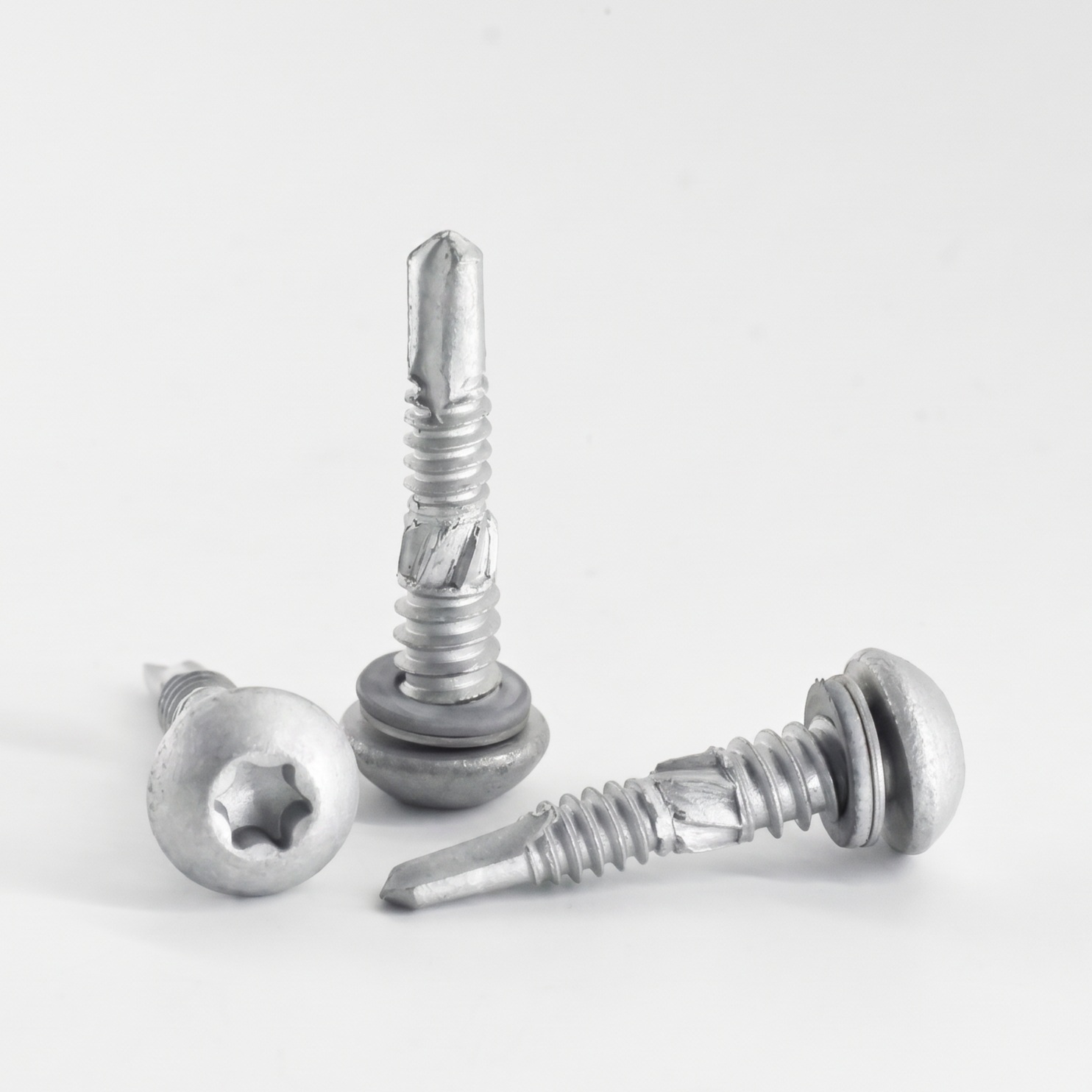
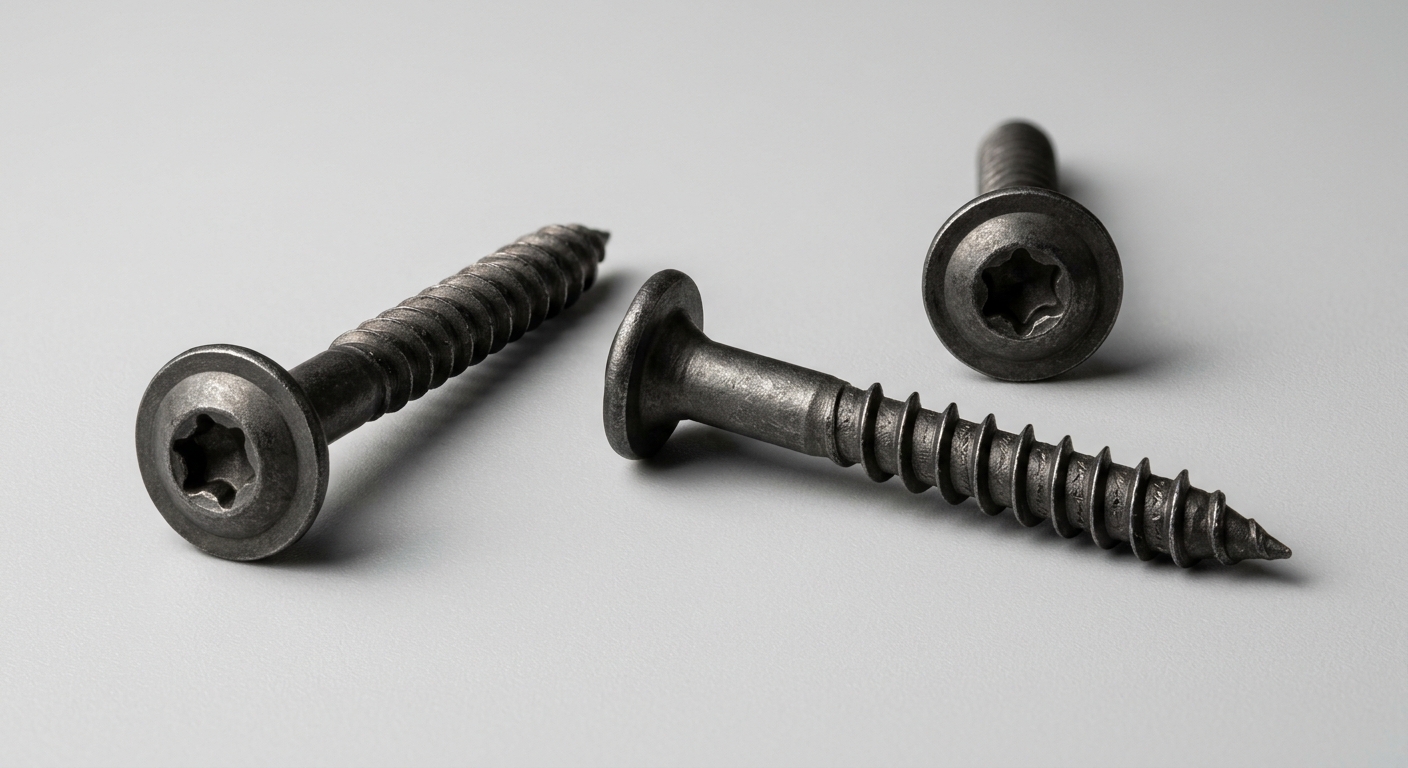
The Torx drive—standardized as the ISO 10664 six-lobe recess—transfers torque through vertical contact surfaces rather than the angled cam faces found in Phillips or Pozidriv drives. This geometry eliminates the axial force component that causes cam-out: the tendency of a driver bit to slip out of the recess under high rotational load. In structural applications where screws are driven into dense treated lumber or engineered wood products at high speed, cam-out is not merely inconvenient—it damages the fastener head, compromises seating depth, and creates inconsistent clamping force across a joint.
The pan head profile complements this drive advantage. Unlike a countersunk flat head, which requires a pre-drilled countersink and concentrates clamping load at the screw’s shank perimeter, the pan head presents a broad, flat bearing surface that distributes load across a larger area of the substrate. This is particularly valuable in softer wood composites such as LVL beams, OSB, and MDF, where a narrow bearing surface can crush fibers and allow the fastener to pull through under dynamic loading. Compared to a hex washer head, the pan head achieves a lower installed profile, reducing interference in flush-joint assemblies and visible cabinetry connections.
1.2 Core Mechanical & Material Specifications
Torx pan head structural screws are manufactured from carbon steel or stainless steel, with tensile strengths typically ranging from 120,000 to 150,000 psi depending on heat treatment grade. Thread design uses a coarse structural thread with an optimized pitch angle to maximize pull-out resistance in wood fiber without splitting the substrate along the grain.
| Specification Dimension | Torx Pan Head Structural Screw | Standard Wood Screw | Hex Head Lag Bolt |
|---|---|---|---|
| نوع القيادة | Torx T20–T40 (6-lobe) | Phillips / Pozidriv | Hex socket / wrench |
| نوع الرأس | Pan head (wide bearing) | Flat countersunk | Hex washer head |
| قوة الشد | 120,000–150,000 psi | 60,000–80,000 psi | 90,000–120,000 psi |
| Coating Options | ACQ-rated, ceramic, hot-dip galvanized | Zinc electroplate | Hot-dip galvanized |
| Recommended Substrate | Structural lumber, LVL, MDF, plywood | Softwood, light framing | Heavy timber, concrete ledger |
| Installation Tool | T-bit power driver | Phillips bit driver | Impact wrench / ratchet |
Common size ranges span #9 to #14 diameter and 1.5″ to 6″ length, covering the majority of structural wood-to-wood and wood-to-metal connections encountered in residential and light commercial construction.
2. Primary Application Scenarios
2.1 Structural Wood Construction: Decking & Framing
Outdoor decking and structural framing represent the highest-demand environment for any fastener. In deck ledger attachment—where a deck’s primary beam is bolted to the house rim joist—fasteners must sustain both shear loads (the deck’s dead and live weight pulling the ledger down) and withdrawal loads (wind uplift pulling the ledger away from the house). Torx pan head structural screws with ACQ-rated ceramic or hot-dip galvanized coatings are specifically engineered for this scenario.
ACQ (Alkaline Copper Quaternary) treated lumber, now the industry standard for outdoor framing, is highly corrosive to standard zinc-electroplated fasteners. The copper compounds in ACQ accelerate galvanic corrosion on thin zinc coatings, leading to fastener failure within two to five years. Ceramic-coated or hot-dip galvanized Torx pan head structural screws resist this corrosion mechanism, maintaining structural integrity for the design life of the assembly.
In joist-to-beam connections and post-to-beam connections, the screw’s high shear strength—often 30–50% greater than an equivalent-diameter standard wood screw—allows builders to meet IRC and IBC load table requirements with fewer fasteners, reducing labor time without compromising structural performance. The Torx drive also enables consistent seating depth with a power driver, which is critical when building inspectors verify fastener installation on commercial decking projects.
2.2 Furniture Assembly & Cabinetry
In furniture manufacturing and cabinetry, the Torx pan head structural screw addresses a different set of performance requirements. Here, the pan head’s low profile and wide bearing surface are commercially valuable because joints are often semi-visible or located near finished surfaces where a protruding hex head would be unacceptable.
On modular furniture and flat-pack production lines, torque consistency is a quality control parameter. The Torx drive’s cam-out resistance allows automated assembly tools to apply precise, repeatable torque without slipping, which reduces rework rates and ensures consistent joint clamping force across thousands of units. This is a measurable production efficiency advantage over Phillips-drive screws, which require torque-limiting clutches set conservatively low to prevent cam-out damage.
Substrate compatibility is broad: Torx pan head structural screws perform reliably in MDF (medium-density fiberboard), plywood, hardwood, and particleboard when the correct diameter and thread pitch are selected. In MDF specifically, the coarse structural thread’s higher pull-out resistance compared to a standard fine-thread screw is critical, since MDF has lower fiber density and is prone to fastener loosening under cyclical loading from drawer operation or shelf deflection.
3. Performance Advantages Over Standard Fasteners
3.1 Installation Efficiency & Tool Compatibility
The torque transfer efficiency of the Torx drive is measurably higher than Phillips or square drives. Independent testing consistently shows that Torx drives sustain full torque transfer up to the fastener’s mechanical limit, while Phillips drives begin slipping at 60–70% of that value. For a contractor driving several hundred screws per day in deck framing, this translates directly to reduced operator fatigue, fewer stripped heads requiring extraction, and faster project completion.
Torx bits are universally available in T20, T25, and T30 sizes—the most common sizes for structural screws—and are compatible with all standard cordless impact drivers and drill-drivers. No specialized tooling is required, which removes a procurement barrier for contractors transitioning from Phillips-drive fasteners. Bit longevity is also extended because the vertical lobe contact surfaces wear more slowly than the angled cam faces of Phillips bits.
3.2 Long-Term Structural Integrity & Compliance
For commercial and permitted residential projects, fastener compliance documentation is a procurement requirement, not a preference. Torx pan head structural screws from reputable manufacturers carry ICC-ES (International Code Council Evaluation Service) reports that publish verified load values—including allowable withdrawal load, lateral load, and shear load—for specific lumber species and thickness combinations. These published values allow structural engineers to specify fasteners with confidence and allow building inspectors to verify compliance without field testing.
Corrosion resistance compliance follows ASTM A153 (hot-dip galvanizing) and ASTM F1941 (electrodeposited coatings) standards. For coastal or high-humidity environments, stainless steel Type 316 variants meet the most stringent exposure class requirements. Procurement teams should request the specific ICC-ES evaluation report number and coating specification sheet from suppliers to ensure the fasteners they source match the engineer’s specification exactly.
4. Selecting the Right Torx Pan Head Structural Screw for Your Project
4.1 Key Procurement Criteria
Matching fastener geometry to load requirements begins with two variables: diameter and length. As a general rule, screw length should be 2.5 to 3 times the thickness of the top member being fastened, ensuring sufficient thread engagement in the receiving member. Diameter selection follows the load table in the applicable ICC-ES report—larger diameters deliver higher shear and withdrawal values but require pre-drilling in dense hardwoods to prevent splitting.
Coating selection must align with exposure class:
- Interior/dry service: Standard zinc electroplate (ASTM F1941) is cost-effective and adequate.
- Exterior/above-ground: ACQ-rated ceramic coating or hot-dip galvanized (ASTM A153, minimum 1.5 oz/ft²).
- Ground contact/coastal: Hot-dip galvanized Type 316 stainless steel for maximum corrosion resistance.
For commercial projects, bulk packaging with lot traceability documentation supports quality management requirements. Reputable suppliers provide mill certificates, coating compliance reports, and ICC-ES report references on request. Procurement teams should establish these documentation requirements in their supplier qualification process rather than at the point of order to avoid project delays.
الأسئلة الشائعة
Q1: What is the load-bearing difference between a Torx pan head structural screw and a standard coarse-thread wood screw in a deck ledger application?
In a typical deck ledger connection using Southern Yellow Pine, a #10 × 3″ Torx pan head structural screw with an ICC-ES-rated design achieves allowable withdrawal values of 250–350 lbs and lateral shear values of 150–200 lbs per fastener. A standard #10 coarse-thread wood screw without structural rating typically delivers 100–140 lbs withdrawal and 80–110 lbs lateral—roughly 40–60% lower across both load modes. This performance gap means engineers can meet the same connection load requirement with fewer structural screws, or achieve a higher safety factor with equivalent fastener count.
Q2: Are Torx pan head structural screws compliant with ICC-ES or local building codes for framing connections?
Yes, provided the specific product carries a current ICC-ES Evaluation Report (ER). These reports are product-specific and list approved substrates, load values, and installation requirements. Contractors and engineers should verify the ER number with the manufacturer and confirm the report is current, as ICC-ES conducts periodic re-evaluations. Local amendments to the IBC or IRC may impose additional requirements, so confirming compliance with the Authority Having Jurisdiction (AHJ) is always recommended for permitted work.
Q3: What coating specification should I require when sourcing Torx pan head structural screws for ACQ-treated lumber in outdoor environments?
For ACQ-treated lumber in above-ground outdoor exposure, specify hot-dip galvanized coating meeting ASTM A153 with a minimum zinc weight of 1.5 oz/ft², or a ceramic/polymer coating rated specifically for ACQ compatibility by the manufacturer. For ground-contact or coastal environments, specify Type 316 stainless steel. Avoid standard electroplated zinc coatings (ASTM F1941 Class 25 or lower)—they do not provide adequate protection against the copper-accelerated corrosion mechanism present in ACQ-treated wood.
الخاتمة
The Torx pan head structural screw earns its place as a preferred fastener across structural wood construction and furniture manufacturing by delivering measurable advantages in four areas: cam-out-free drive reliability, optimized load distribution through its pan head geometry, verified structural compliance through ICC-ES load tables, and corrosion resistance matched to exposure class requirements.
For procurement teams evaluating fastener specifications, the business case is straightforward. Higher installation efficiency reduces labor cost per connection. Verified ICC-ES compliance eliminates substitution disputes during inspections. Appropriate coating selection extends service life and reduces warranty exposure in outdoor assemblies. And the broad substrate compatibility—from treated dimensional lumber to engineered wood products and MDF—means a single fastener specification can cover multiple connection types within a project, simplifying inventory management.
When upgrading from standard wood screws or transitioning away from hex-head lag bolts in applications where they are overspecified, the Torx pan head structural screw represents a technically sound and commercially practical choice. Specify the correct size, coating, and ICC-ES-rated product for your application, and request full documentation from your supplier to ensure every fastener on your project performs to its rated capacity.